Thursday 3rd September 2015 – Oudomxay Laos to Jinghong, China
Up at 5.00am this morning to get organised as we are leaving for the border at 7.00am. Headed off down the street after 6am to get some breakfast but most restaurants were closed but there was one man 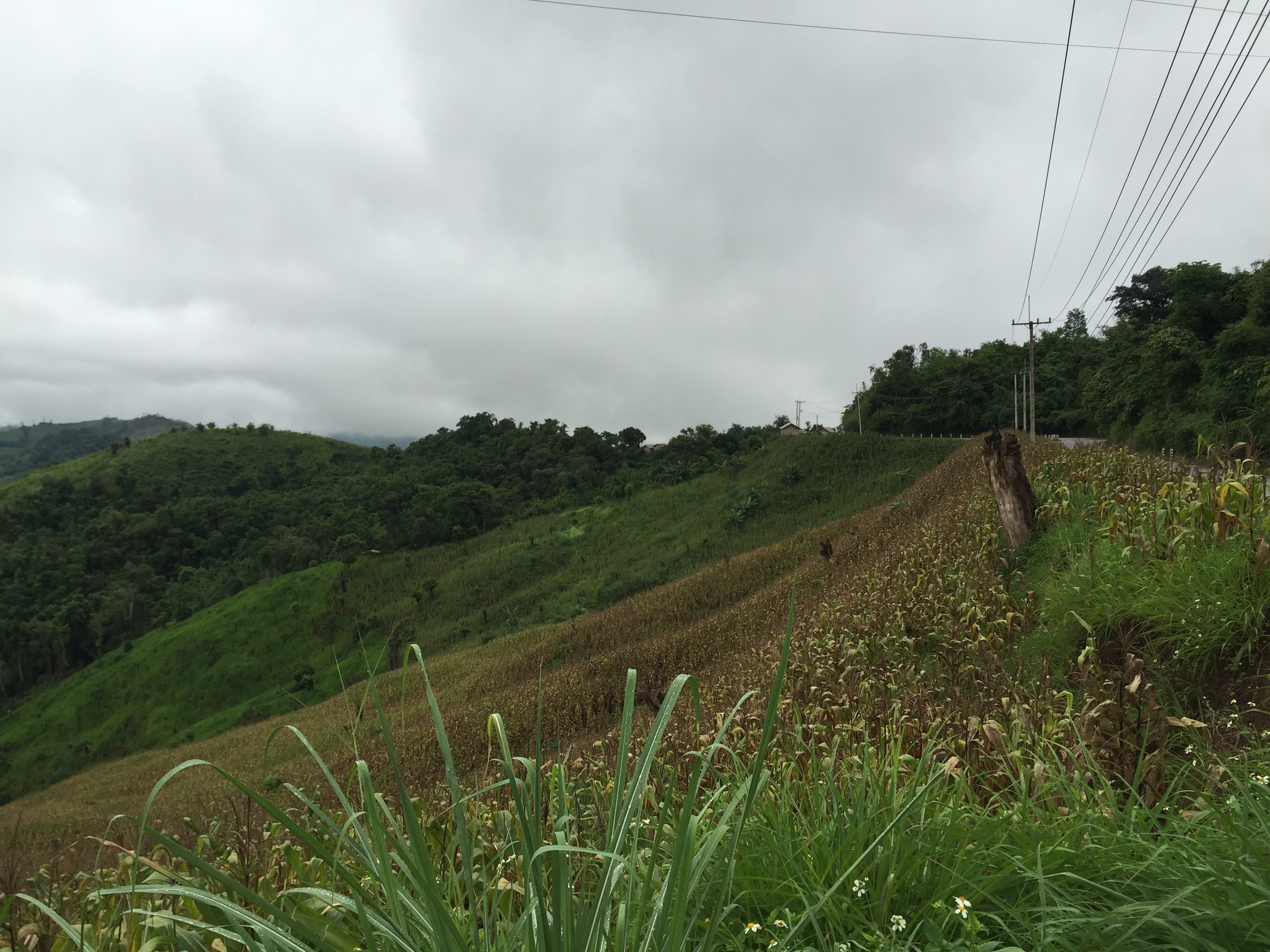 cooking Laotian/Chinese style breakfast on the side of the street outside his restaurant. He had noodles, chicken, pork, beef and vegetables with a selection of condiments such as garlic, chillies, and various herbs such as coriander. I had noodles, chicken and vegetables topped with a generous helping of coriander. We have become adept at using chopsticks as generally there are no other eating implements available except for a spoon. It is also interesting trying to communicate as very often in some areas no English whatsoever will be understood so you communicate by signs and expressions.
 This will be one of the long days of travel not only due to the distance to be travelled but also all the issues around leaving one country, completing the exit documents, the bag checks and then the issues around entering China which brings a certain amount of apprehension.
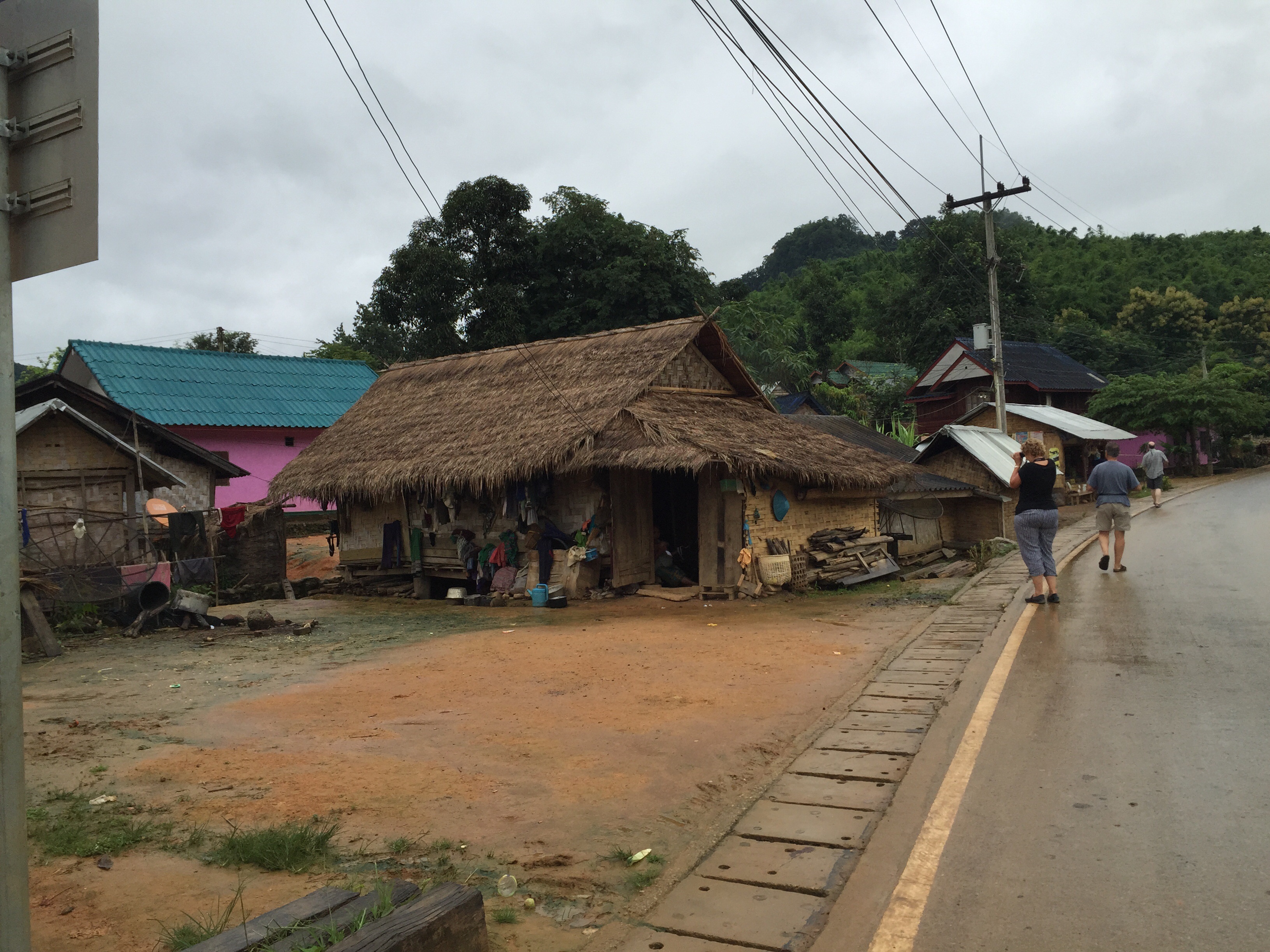
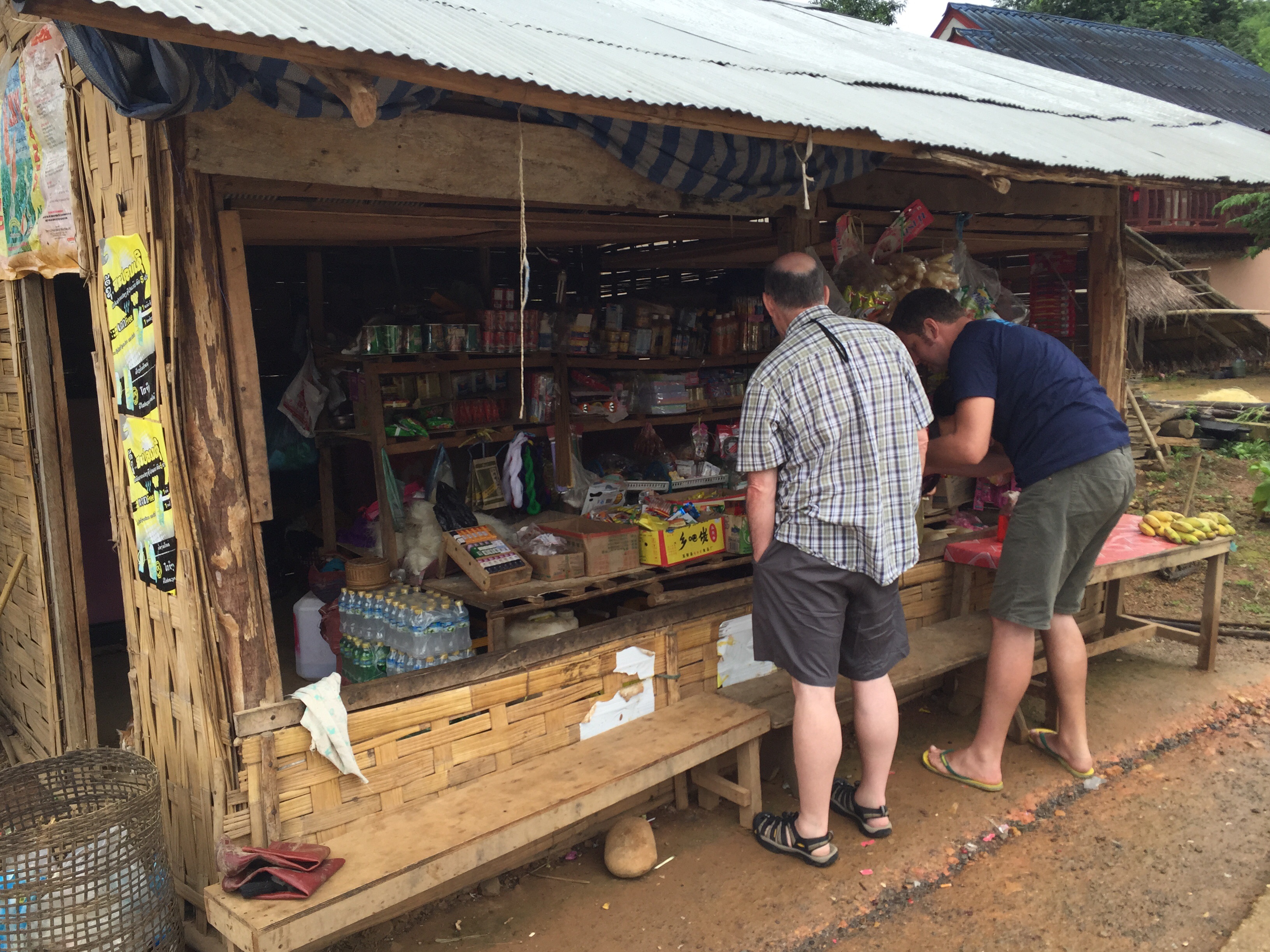 Along the route to the border we stopped in a small village threaded along the side of the road. There were two small wooden shops and a number of the group bought items from these shops. I purchased 6 small bananas for 2,000 kip. The lady running this
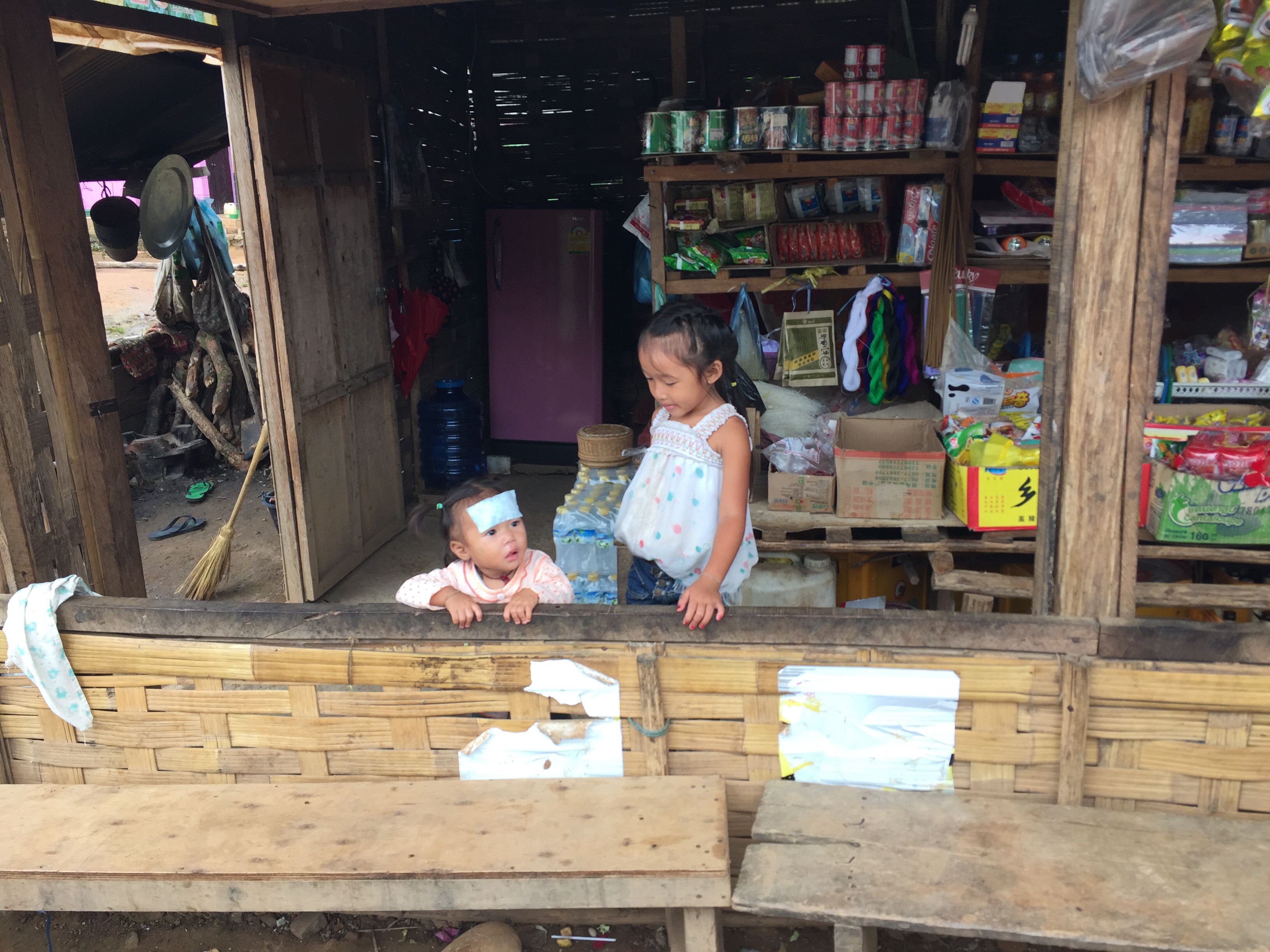 shop had two young girls, one a baby with a medicine patch on her head. Many of the sick children in Laos have these patches displayed when ill.
As we are leaving Laos it is time to reflect on our time here. I have really enjoyed the time we spent here. The people here are are not as well off as those in Thailand but they are friendly, happy and welcoming. I would certainly like to spend more time here and this is a country that I would like to come back and visit again in the future.
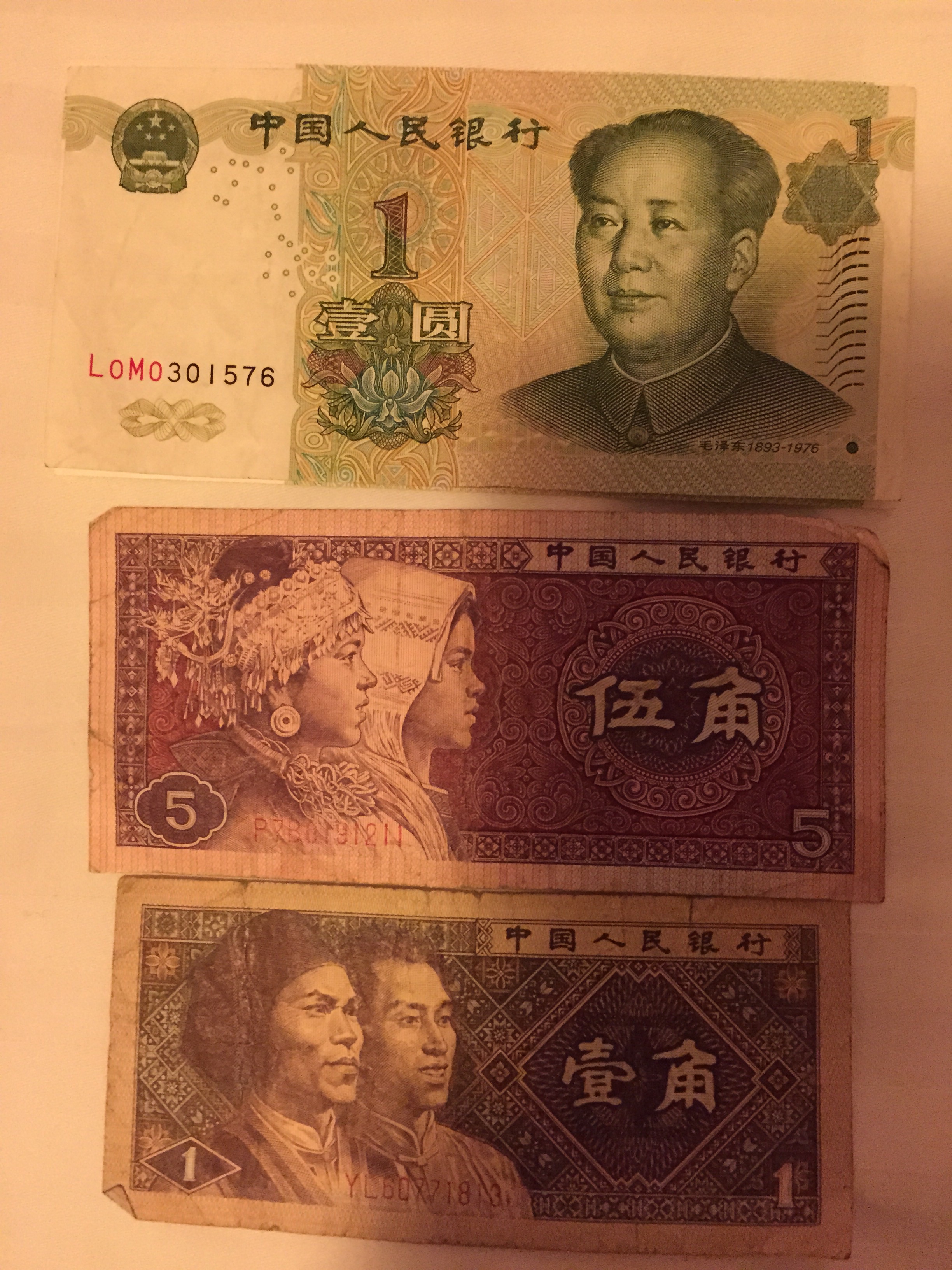
When we reached the Bolan immigration station we have to get off Penelope our truck as the truck has to be checked through first and then 4 kilometres further on we have to walk through the Laos Border Control. Then before we get to the Chinese side of the border we arrived at Bolan Duty Free Shopping Centre. We stopped at this centre and I exchanged U. S. Dollars at a rate of 6.3 Yuan to the Dollar. We are now on our third currency.
On to the Chinese Border Station where we meet our Chinese guide Anita. The Chinese Border Station is a modern, clean building with an artistic entrance. Our guide Anita was invaluable here as she helped with the completion of the entry forms and communication with the Border Control Staff. Thanks to Anita this operation went smoothly and without difficulty. We were somewhat apprehensive about this border crossing.
When we arrived through the Border Station we were met at the other side by a gaggle of money exchange hawks offering to exchange Yuan for U. S. Dollars. I found this surprising but obviously free enterprise is alive and working in China.
Next we had to make our way to the Police Transport Base in Mohan where we were issued with the Chinese Number Plate for Penelope and the truck was put through a road worthiness check. Our drivers were also issued with their Chinese Driving Permits. We then 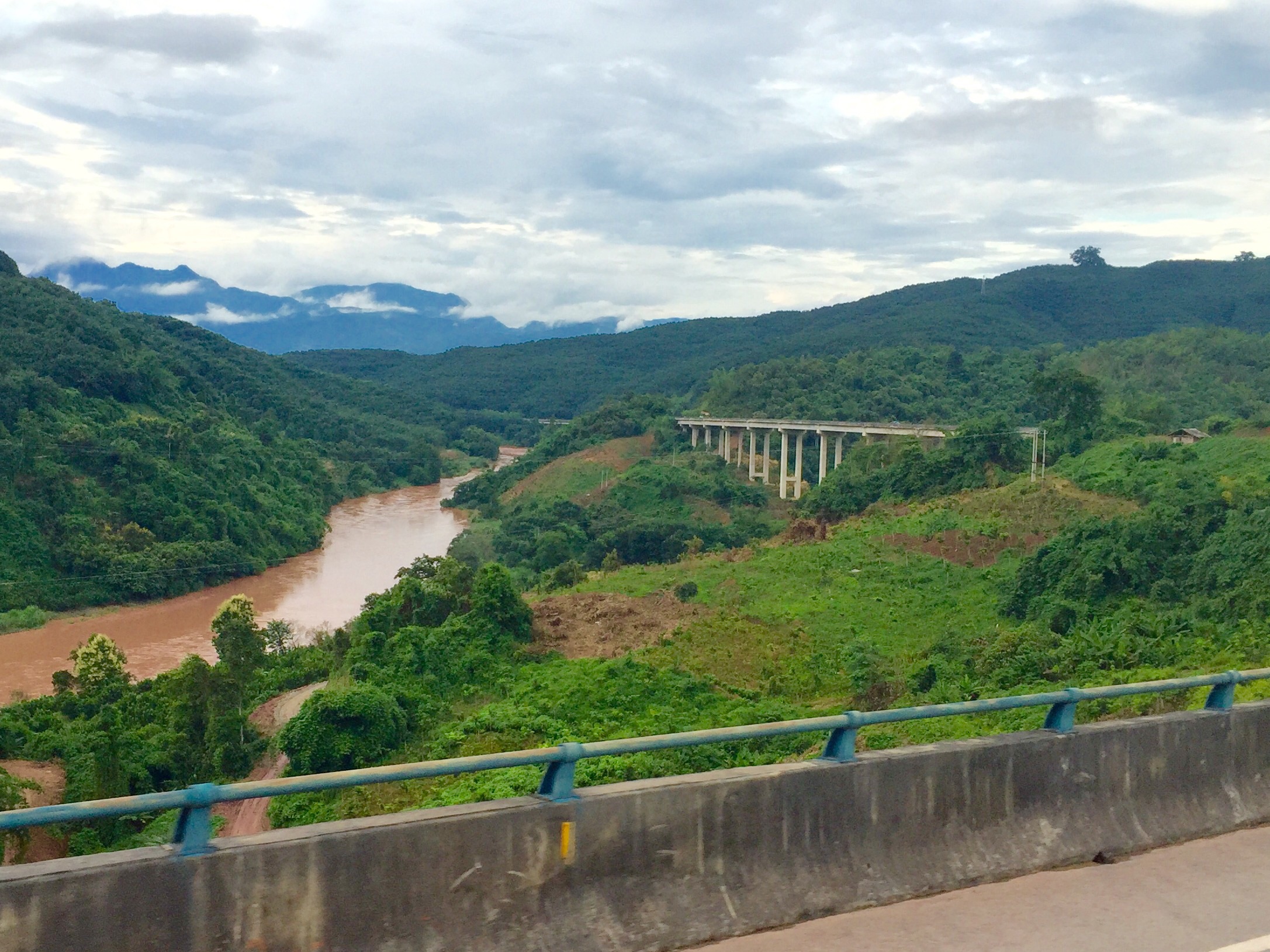 continued our journey to Jinghong and did not arrive there until 8.20pm. This was our longest road journey to date but the road system was far superior to the roads in Laos and was a modern motorway system with some amazing roads on stilts together with many tunnels.
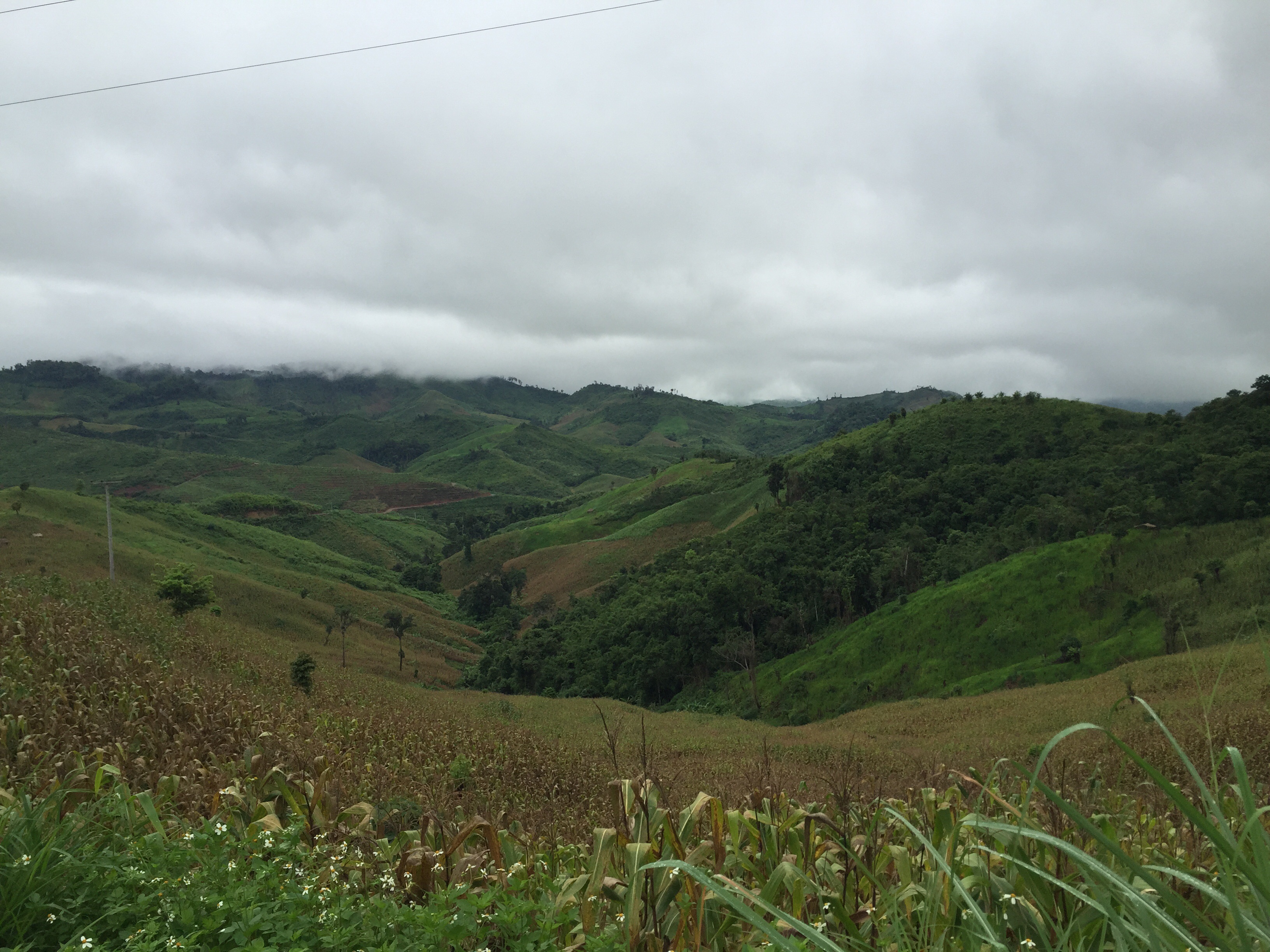
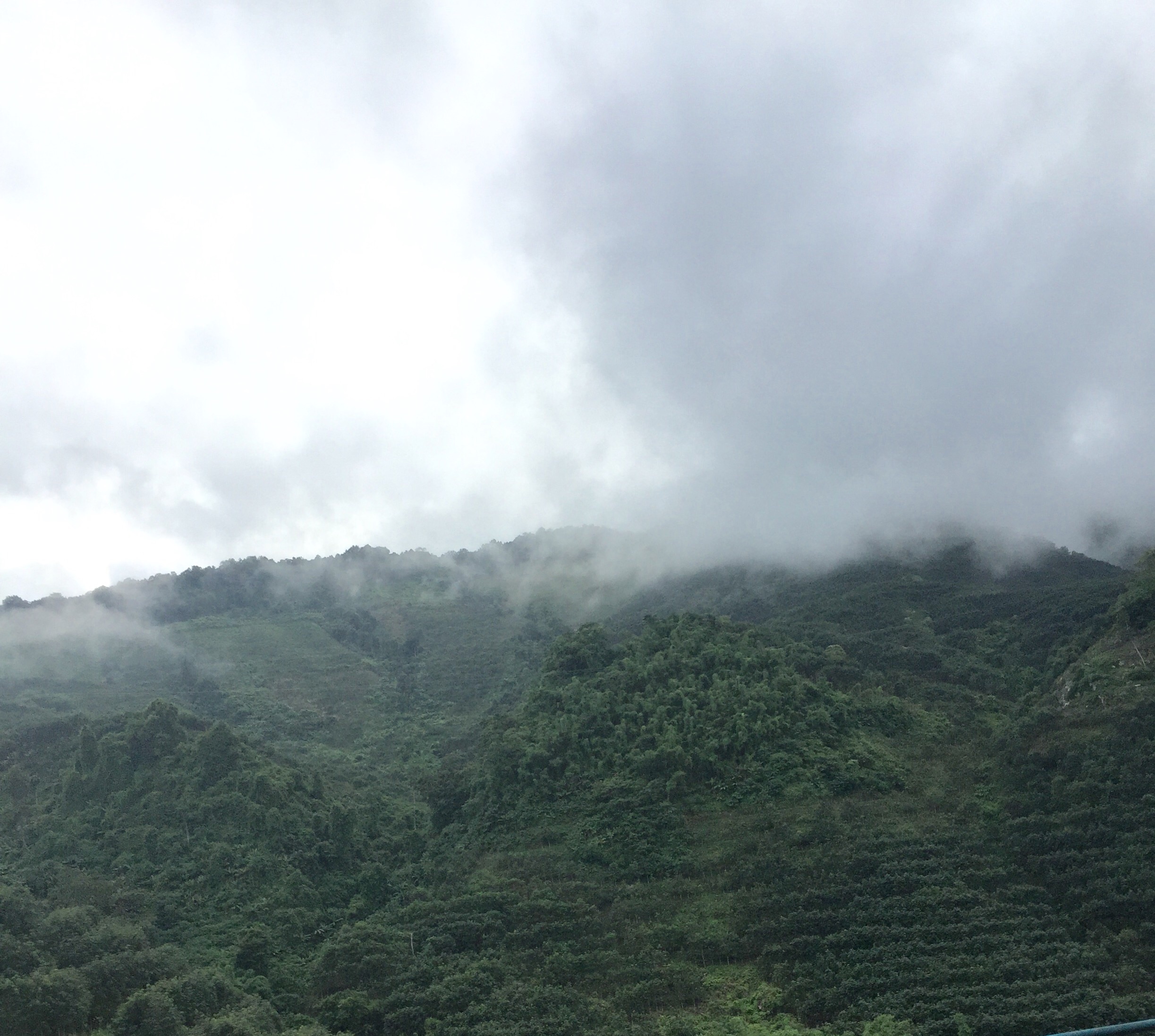 The scenery on this journey was breathtaking in places with mountain tops shrouded in cloud, some with wispy clouds and some with clouds cloaking the mountains and appearing to rest on the mountains. Every spare inch of
 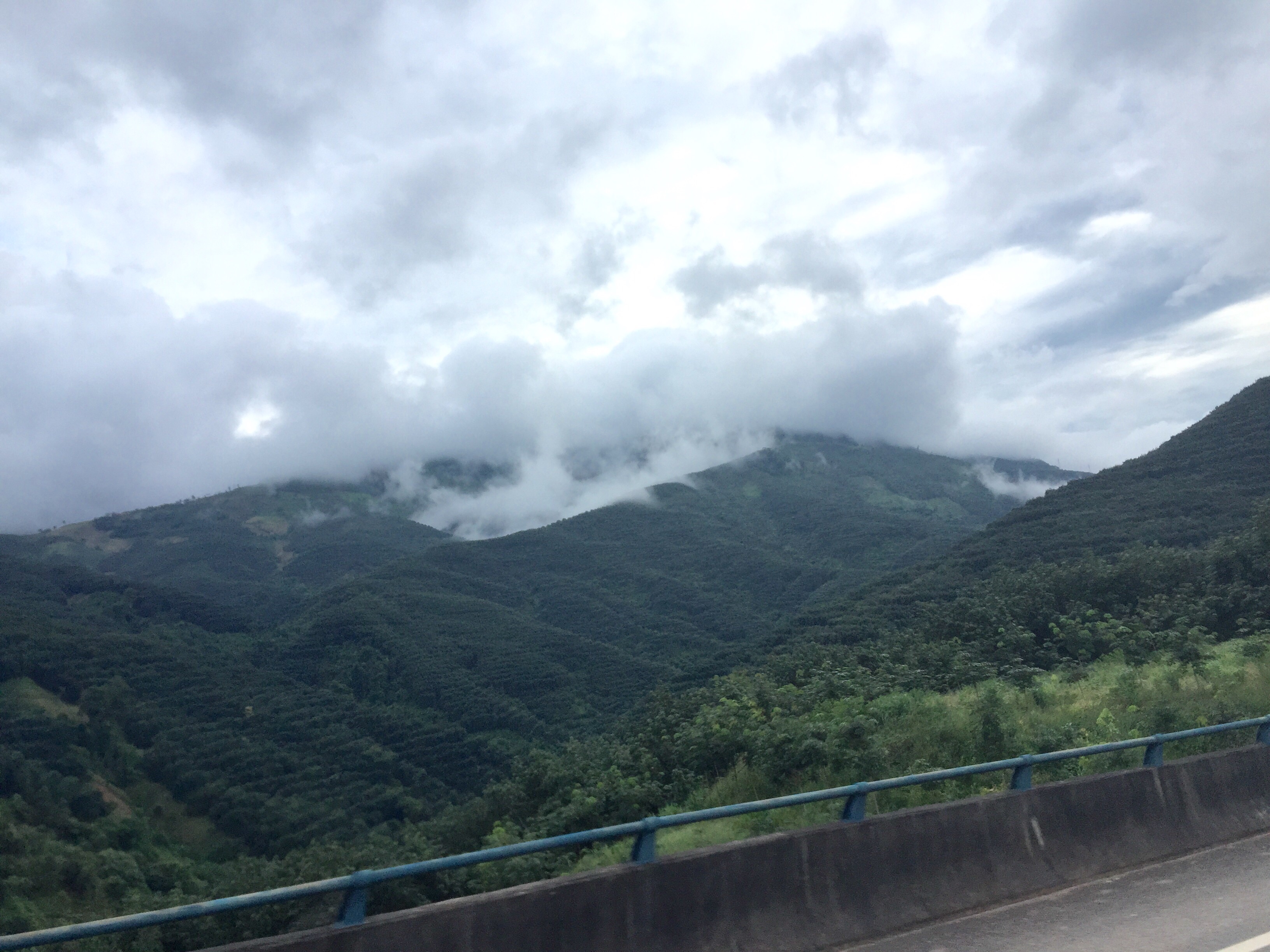 surface is utilised, cultivated and planted with trees such as teak, bamboo, corn and rice. Some of the hillsides are beautifully tiered. As in Laos you will see villages dotted along the roadside and at times individual houses on the side of the hills or in forested areas.
Once we were booked into our hotel we went out for food and settled on a restaurant where
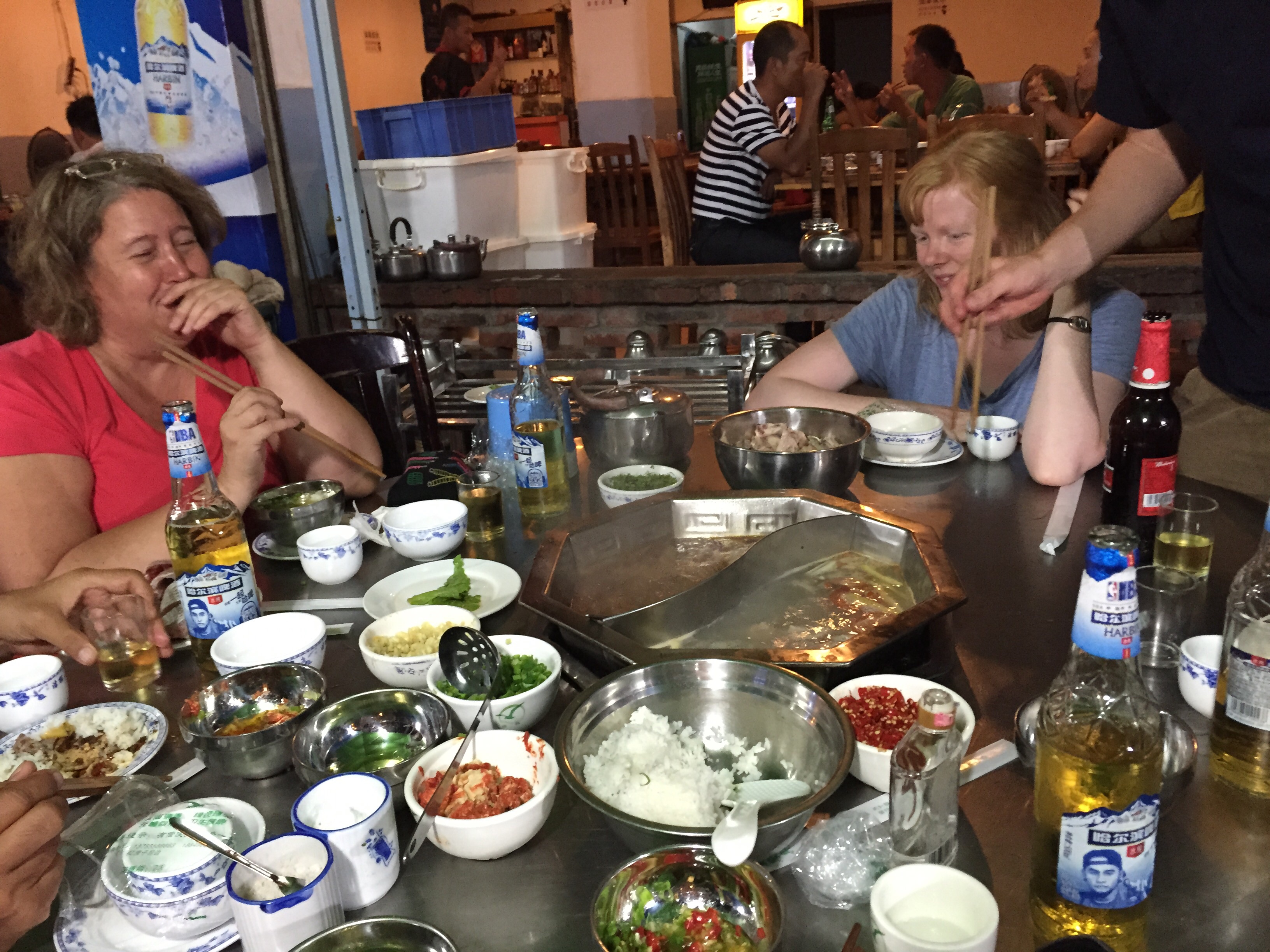
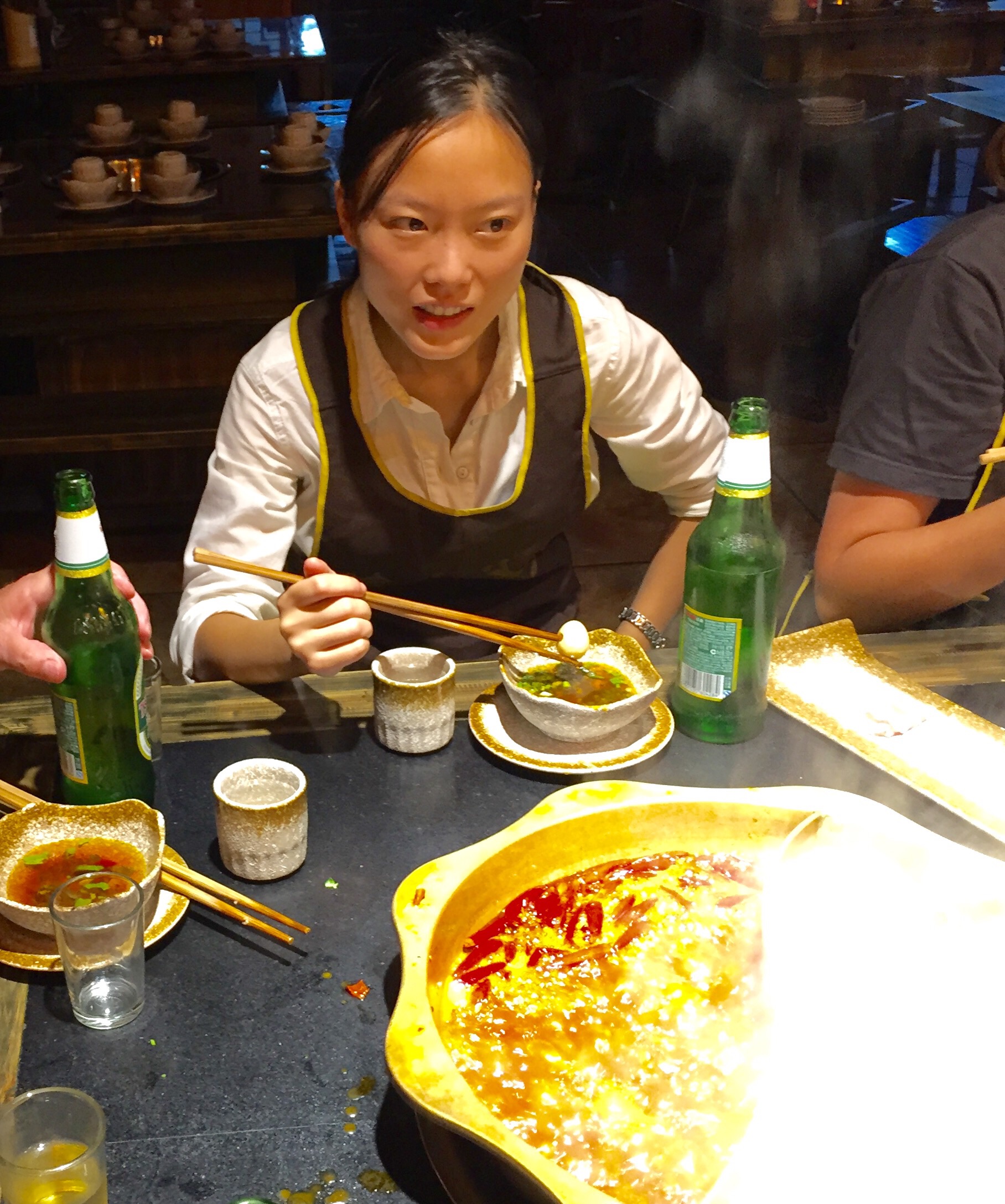
there were lots of local people. This restaurant specialised in hotpot and following much sign language we ordered chicken, beef, pork and a fish for the pot. Meat here is chopped with a cleaver and the chicken was chopped together
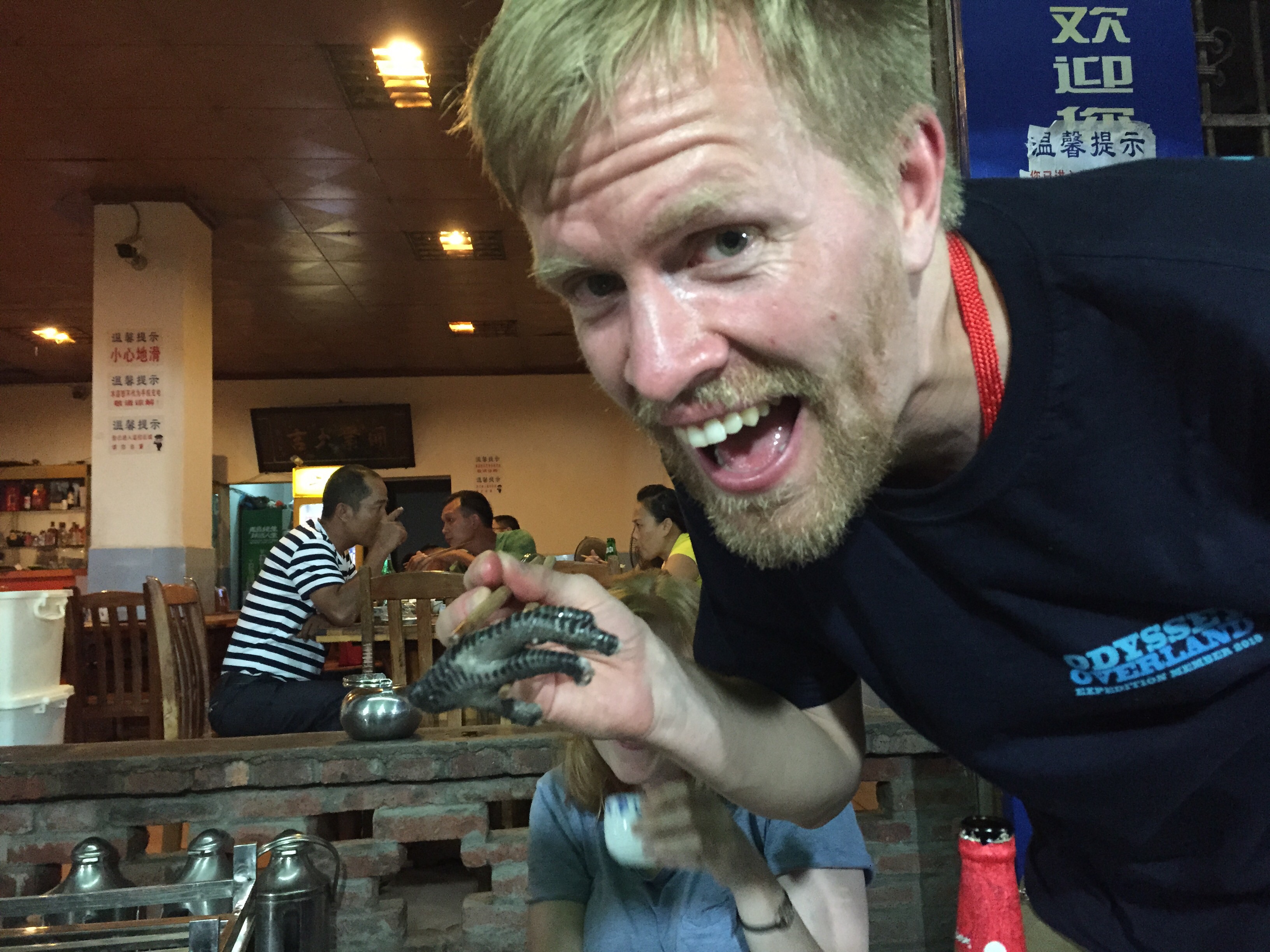
with the feet and head which all went into the pot. We were also supplied with bowls of chillies, garlic, spring onions and sesame oil to make our own sauce according to our individual tastes. The meal was immensely enjoyable and the local people were intensely interested to see how we would fare with the meal.
Friday 4th September Jinghong to Kunming
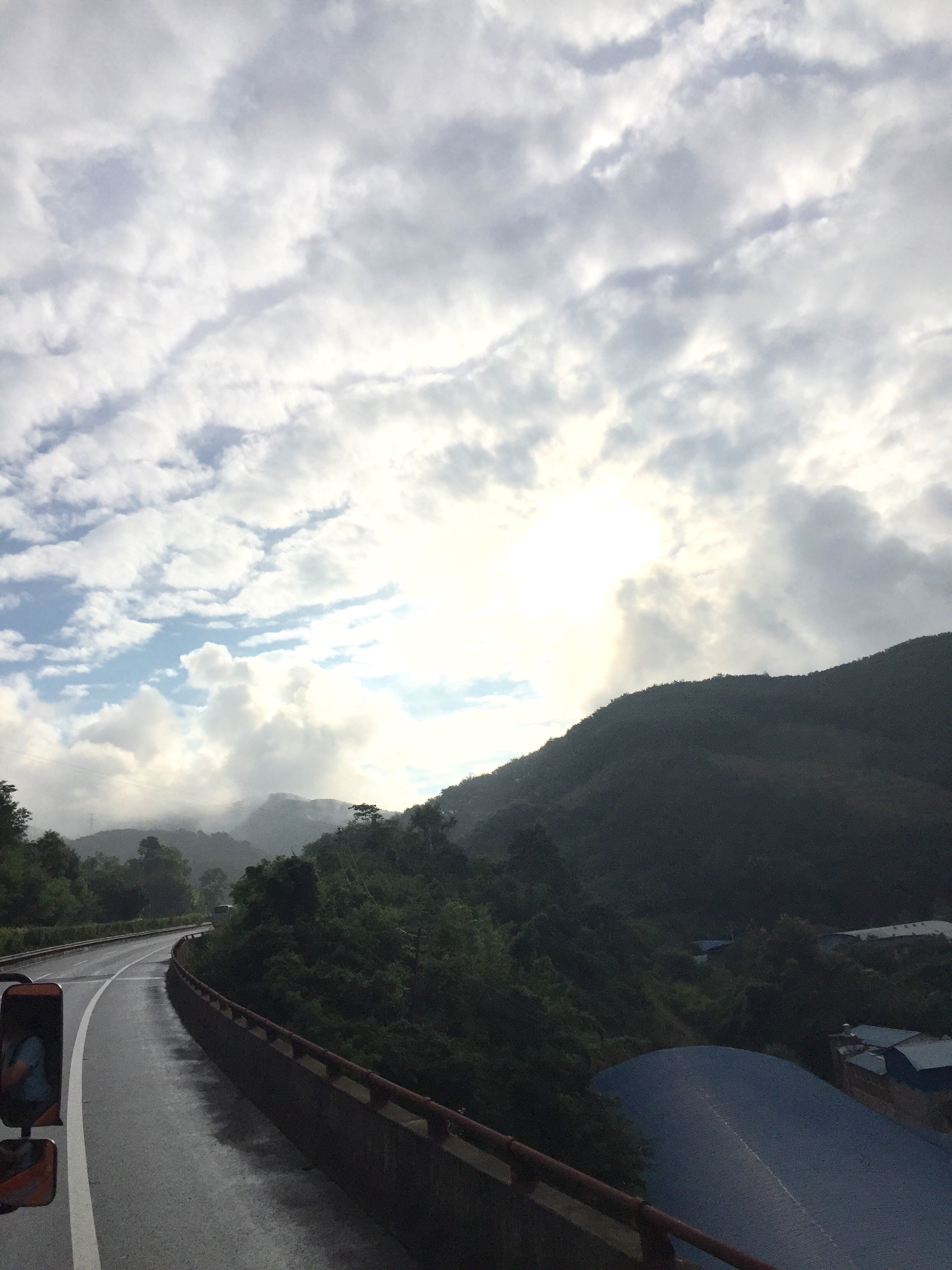
Up at 6.00am as we are leaving at 8.00 to travel the 500 kilometres to Kunming. This is again a lovely drive with spectacular scenery. A feature of the past two days has been the number of Police checkpoints and we have had to produce our passports on a few occasions. But in these situations the young police officers will smile.
The reaction of people to us has been great. When we stopped for lunch today people came over to our truck and one of the waitresses from the restaurant came onboard the truck to take a selfie with me, Other people are gobsmacked to see us as if we are aliens from another planet and then others are curious about the truck and our journey.
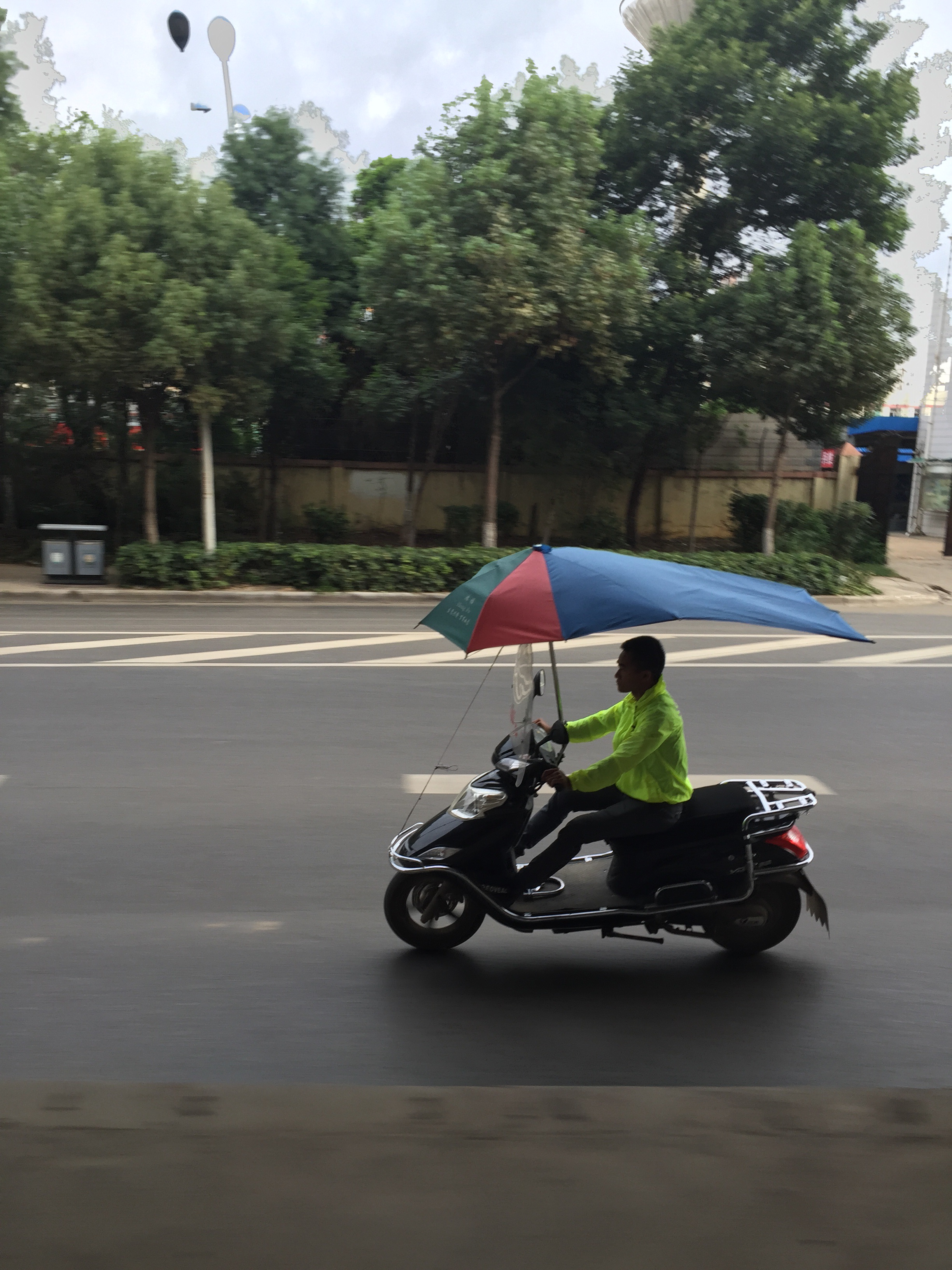 Kunming our location for tonight is a city of 14 million people and is now a modern city with many impressive buildings but it also has older neighbourhoods that were probably built in the fifties and sixties. It is a historic city going back many hundreds of years but we did not get a chance to explore the city as we did not arrive at our hotel until 6.30 pm.
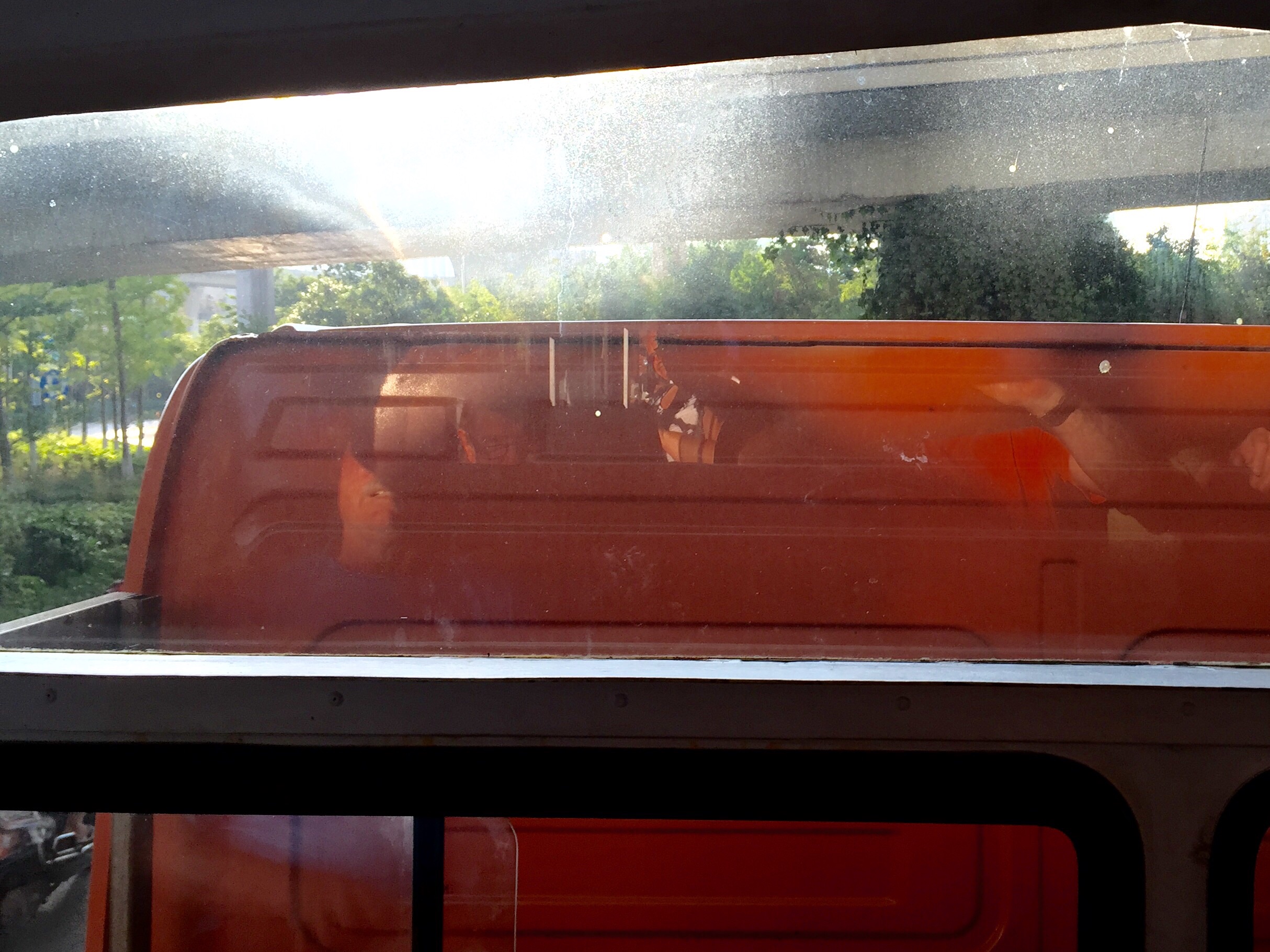
Indeed our arrival in the city caused a stir as we took a number of wrong turns, had to do a u turn on a busy street and ended up stopped near an underpass while we decided whether we could get under or not. Along the way we
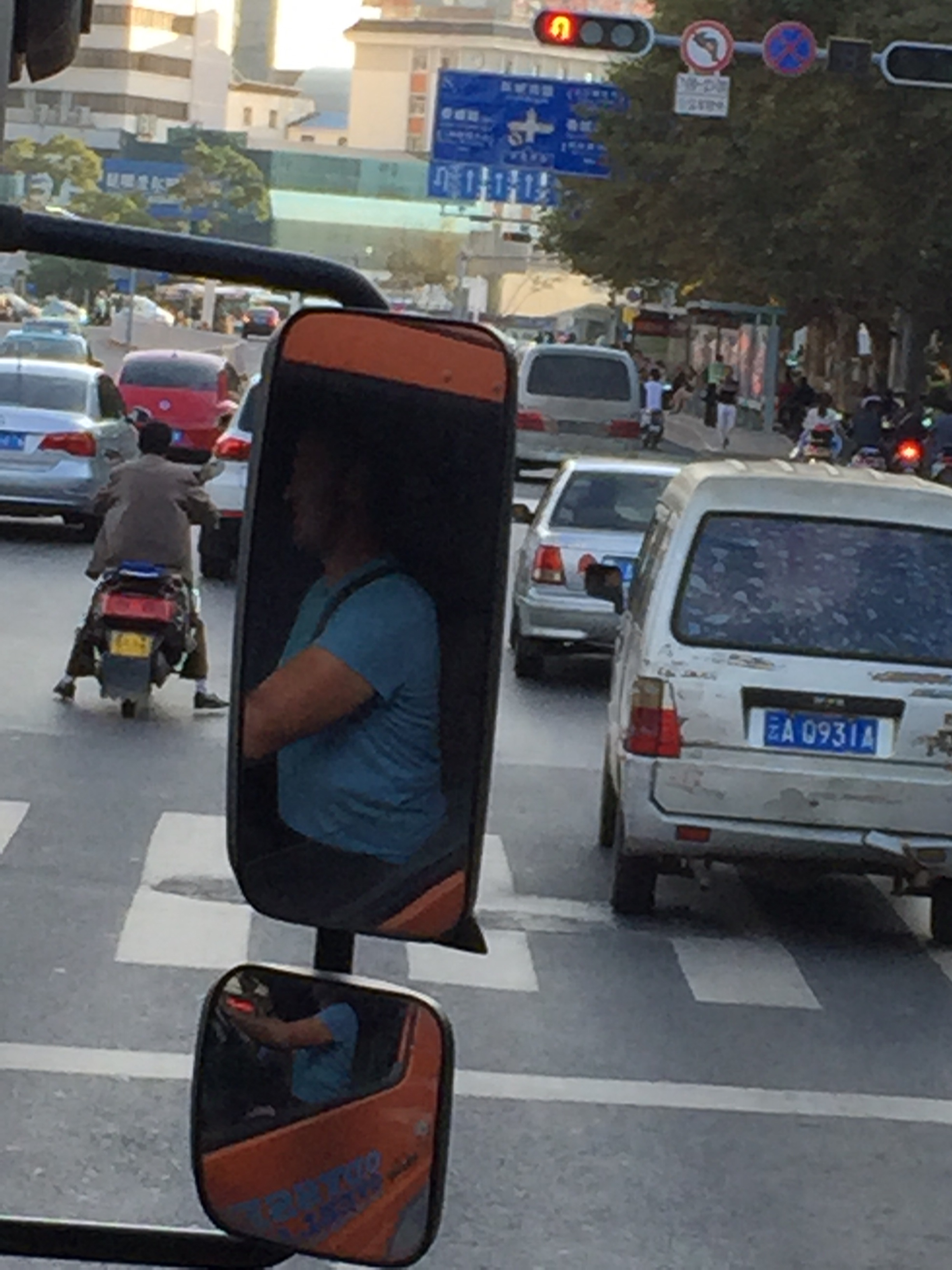
were followed by a local guy who was contrary, mouthy and berating our driver but who eventually for a fee became our guide to our hotel the Hong He.
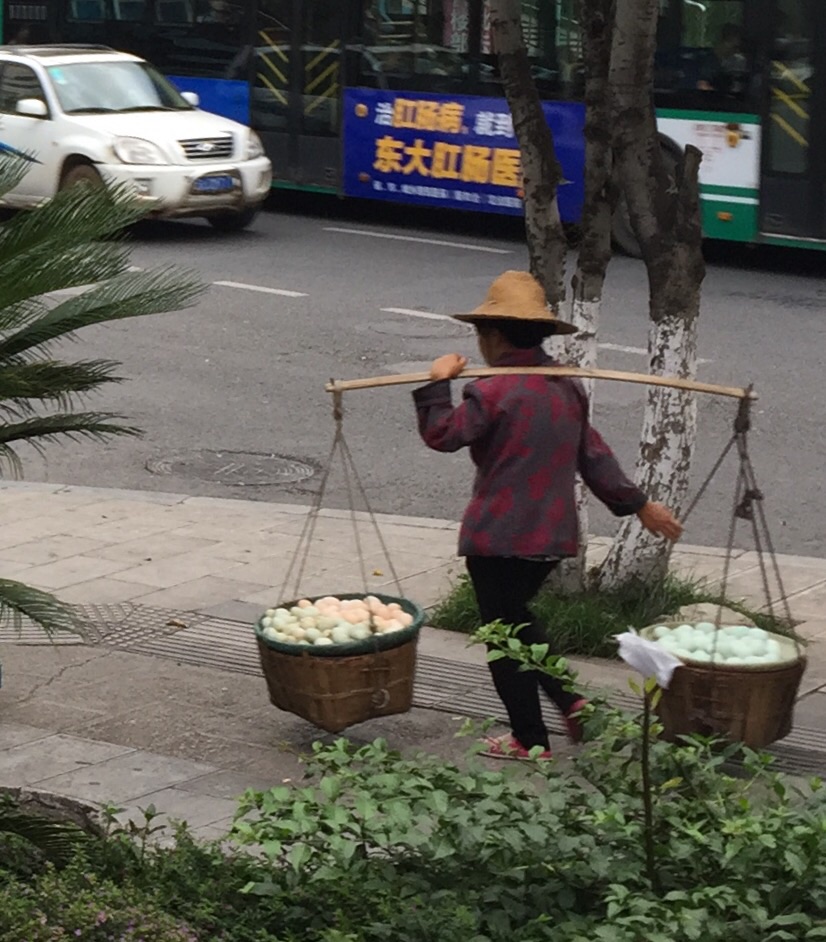
Once we were settled in to the hotel we went to restaurant next door for dinner. Our guide Anita ordered 7 dishes for us to share, 4 meat dishes and 3 vegetables plus rice. After dinner we strolled through the local food market.
Saturday 5th September Kunming to Dali
Days are starting to melt into one another as you lose track of the days of the week simply because specific days do not matter in terms of our journey and the events surrounding same.
Up at 6.00am as we are leaving Kunming at 8.00 and making our way to Dali. Breakfast is Chinese style and consists of rice, noodles, vegetables, small bread rolls and also some stir fried meat dishes.
A considerable volume of industry is based just outside Kunming. The infrastructure in China so far has been very impressive with modern road networks, modern shops, offices and apartments and some quite amazing feats of engineering.
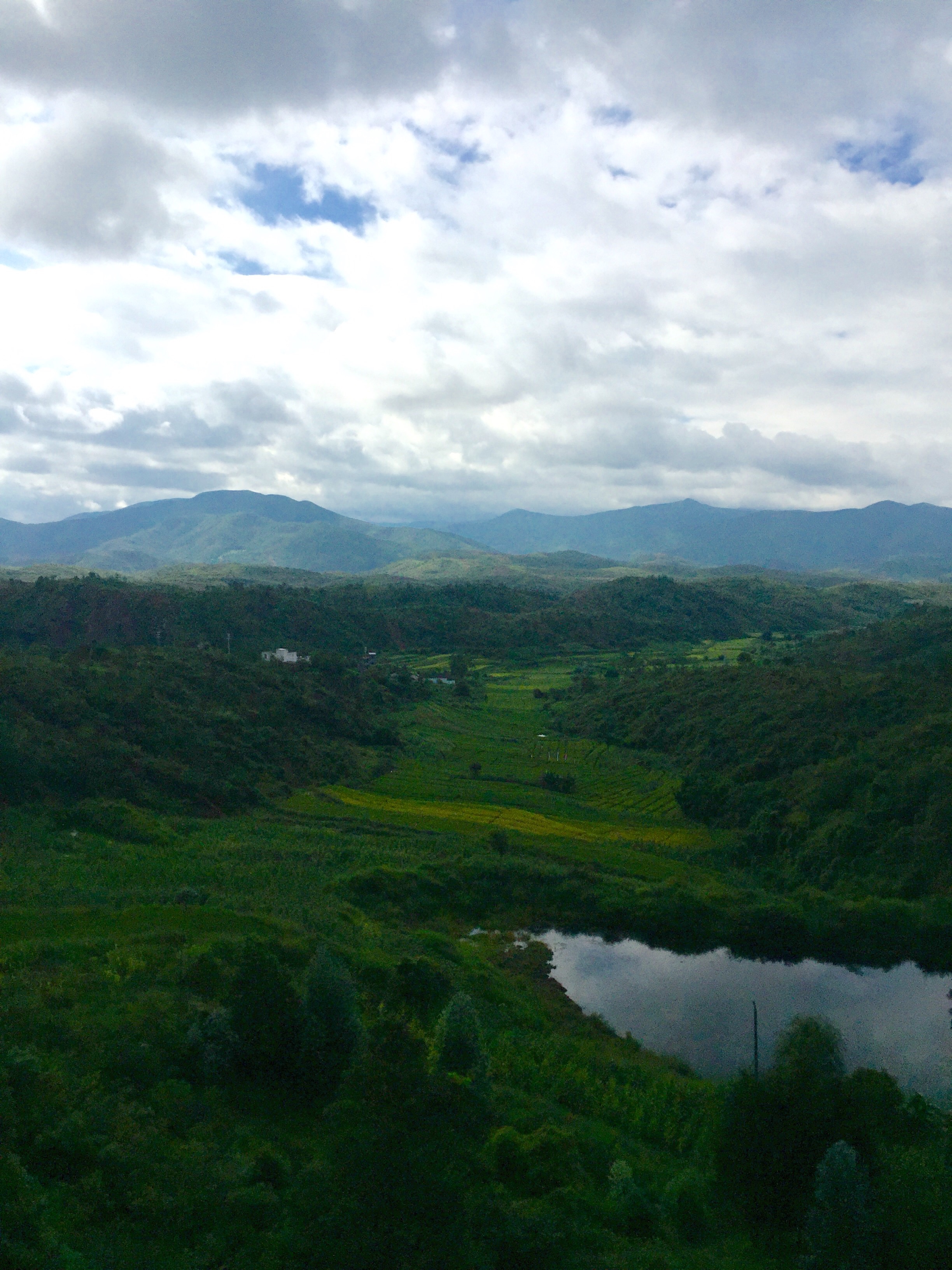
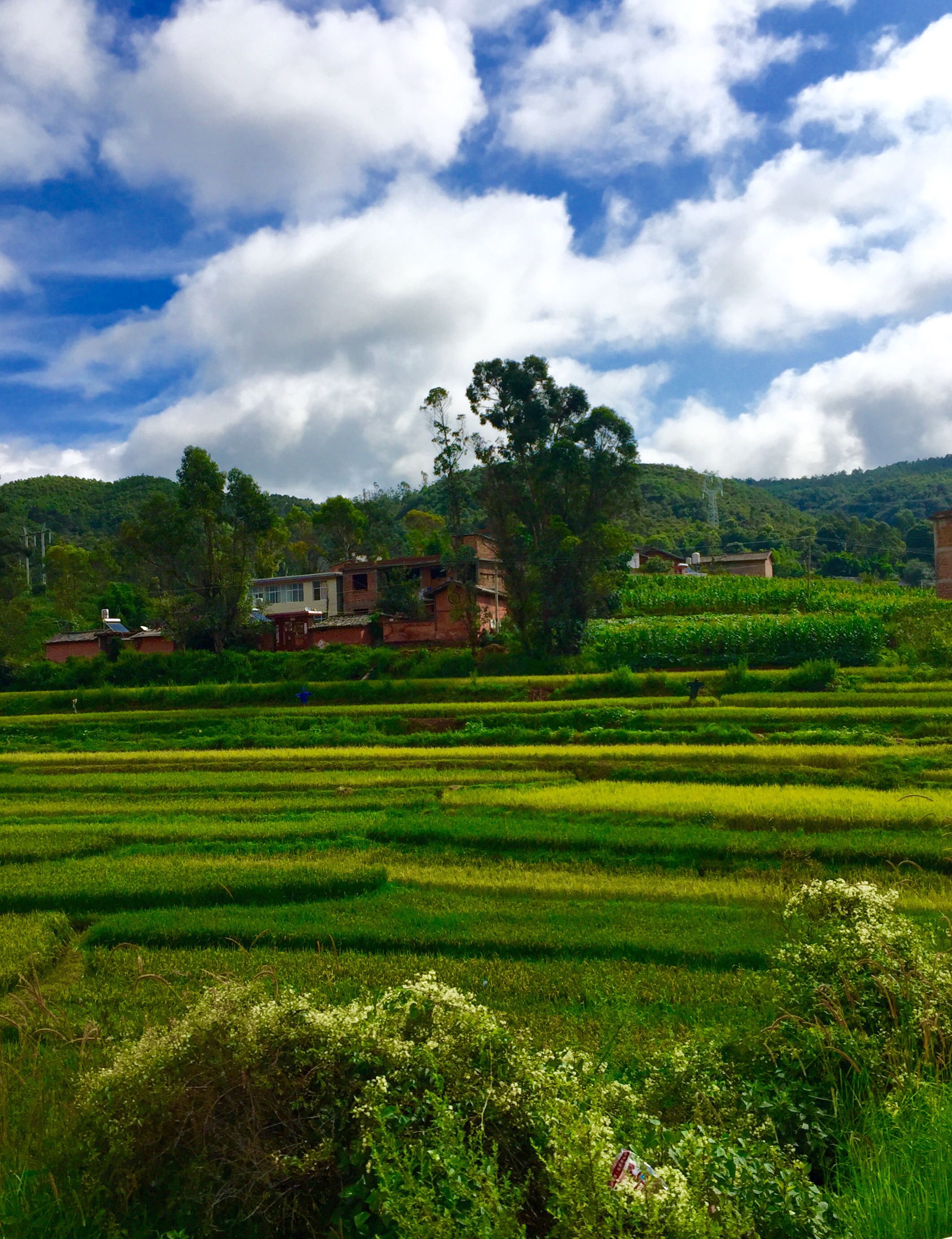
As we travel through the countryside you would notice that the planting of the various crops is almost artistic in its form and layout. You are struck by images of 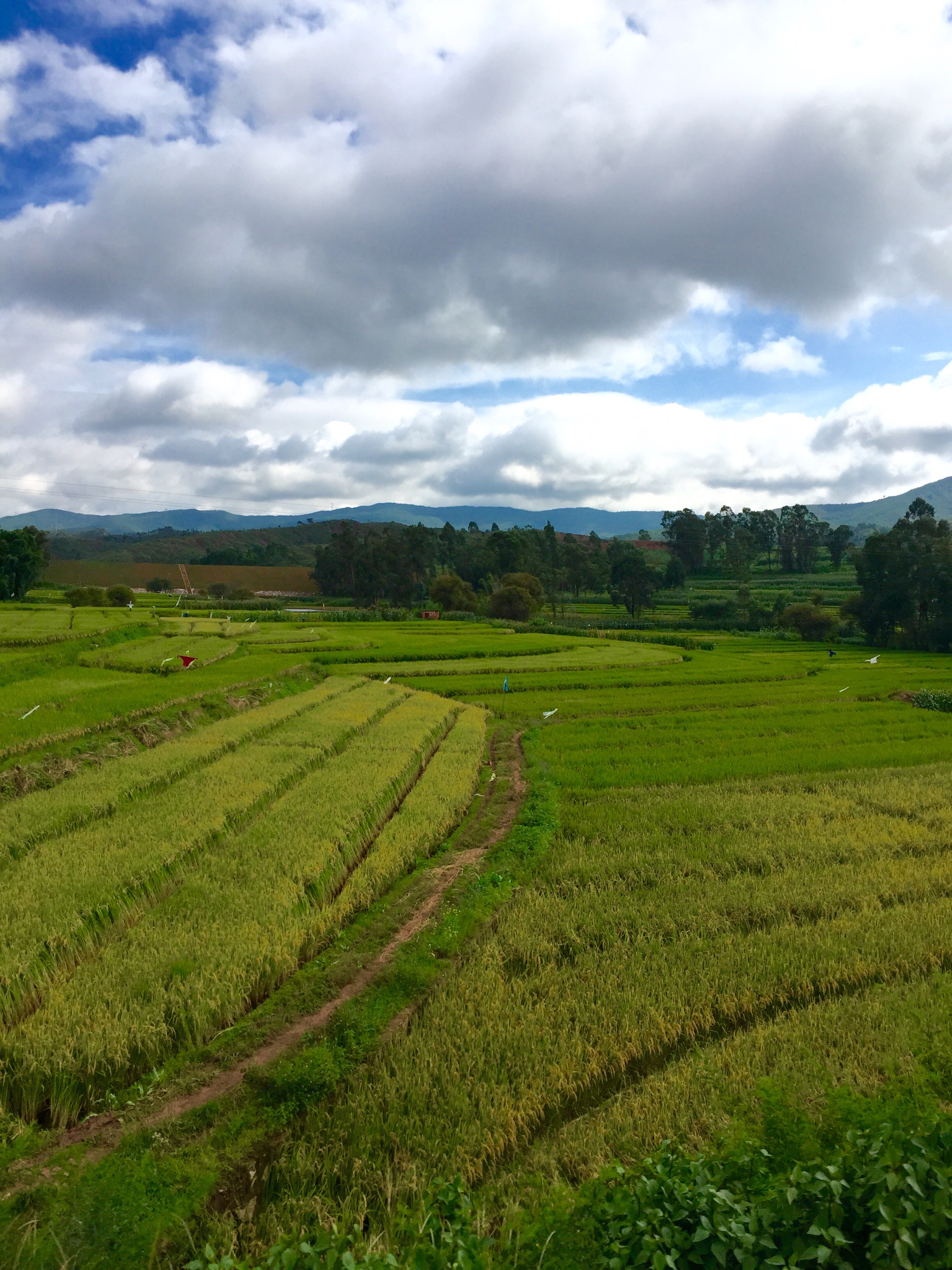 people working in the fields as has been the practice for centuries, bent to their task, traditional Chinese conical hats on their heads, others walking with large baskets on their backs. The Chinese conical hat has been worn for thousands of years and is designed to protect the head, neck and shoulders of the wearer from the sun.
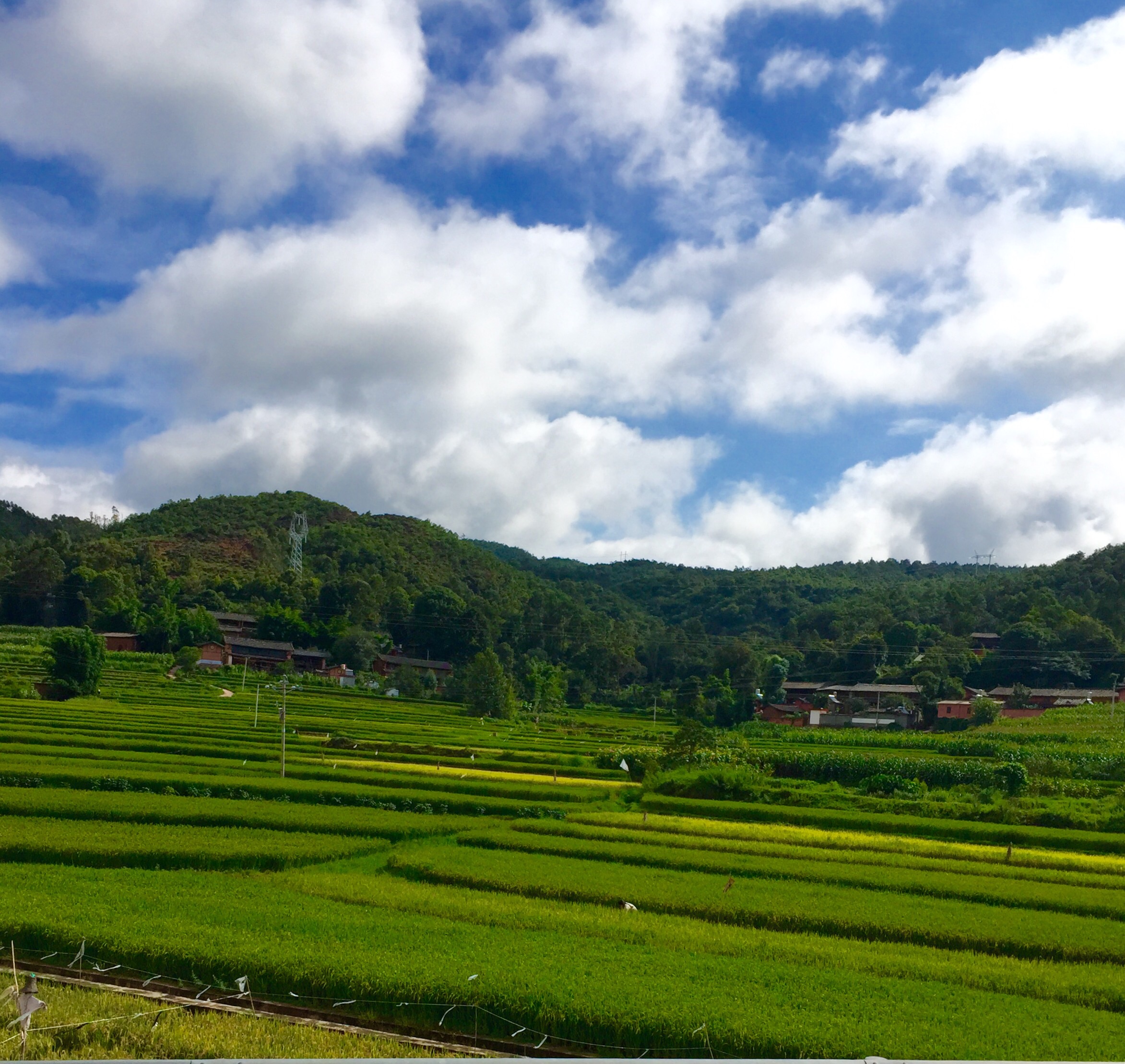 On our journey since we have entered China from Laos we have been travelling through and over mountains with some of the mountain passes reaching over 7,000 feet high and some tunnels stretching over 2 miles long. The scale of the mountain ranges is extraordinary and the mountain scenery is also most beautiful which is something that I had not anticipated.
Dali is an ancient city which was part of the Silk Road and now has a
modern city but also has the old walled town.
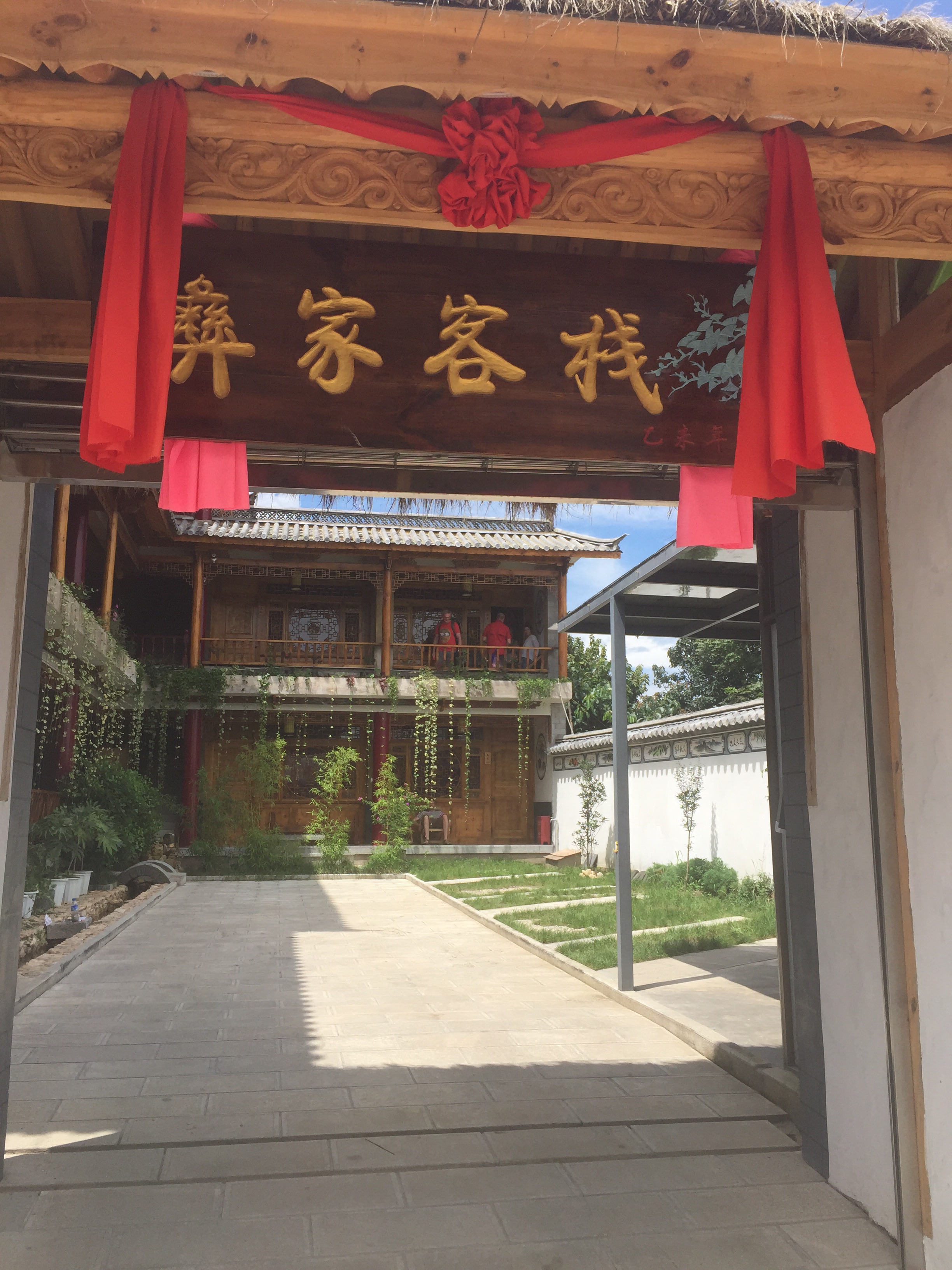
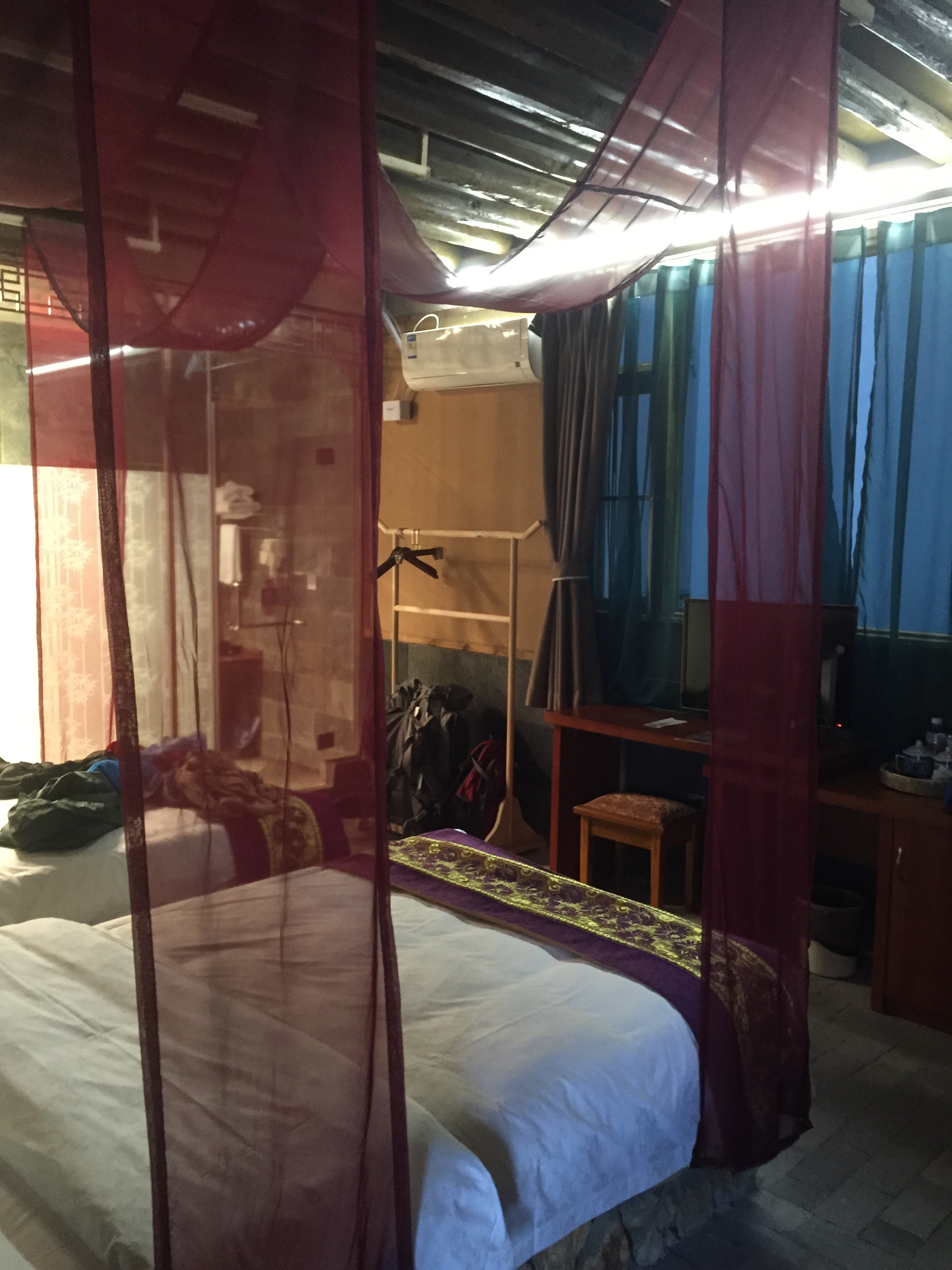
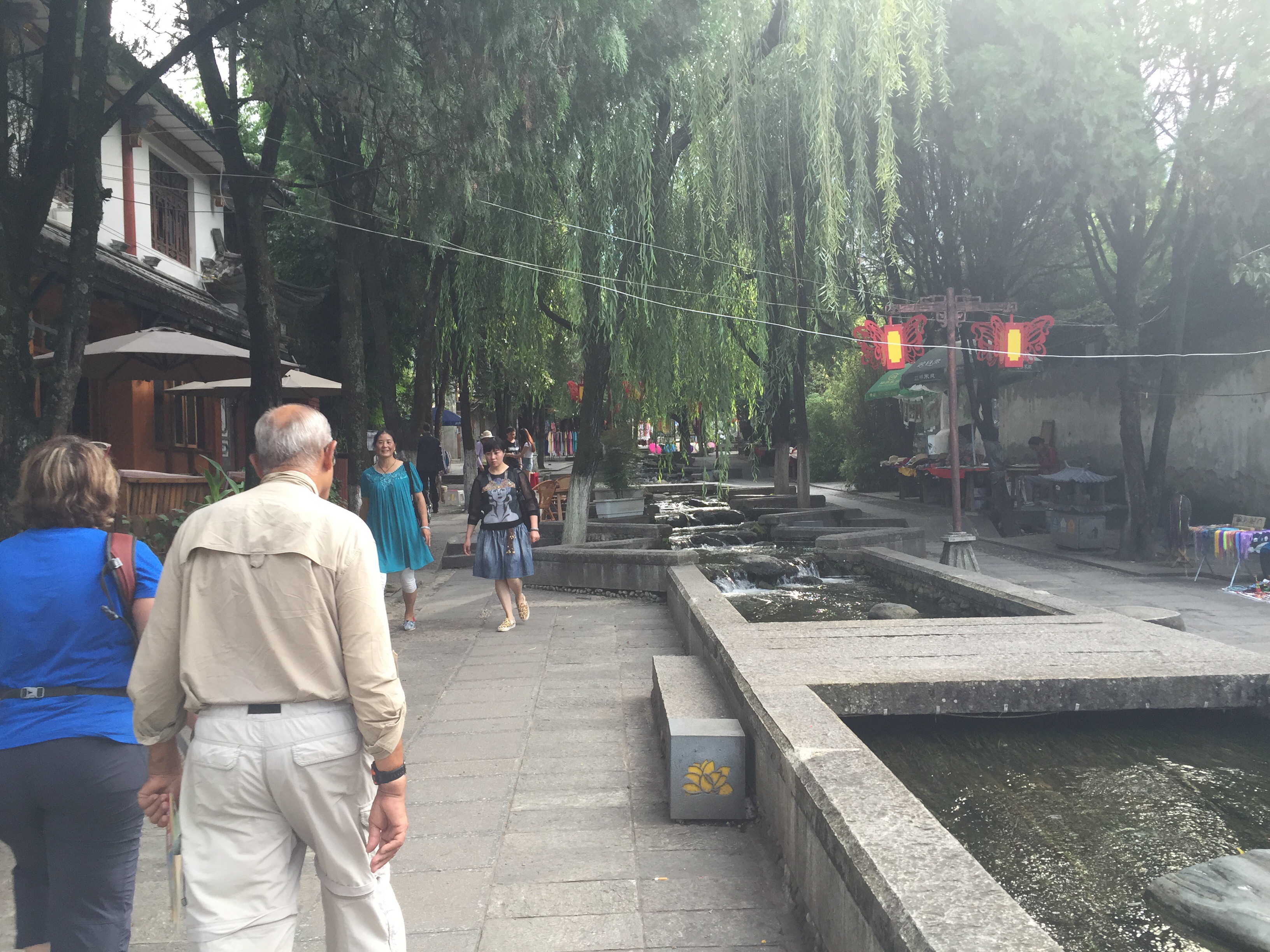
Our hotel is the Yijia Kezhon Hotel which is quite close to the old town and is built in traditional Chinese style with some lovely architectural features including nicely decorated bedrooms. Walking into the oldtown through the gate nearest to our hotel you come upon a beautiful treelined street with a lovely series of waterfalls and pools running down the middle towards the centre of the the town. The street is lined on both sides by shops and restaurants.

Myself, Kelly, Anil, Ed, Martha, and Kent went for lunch in the old 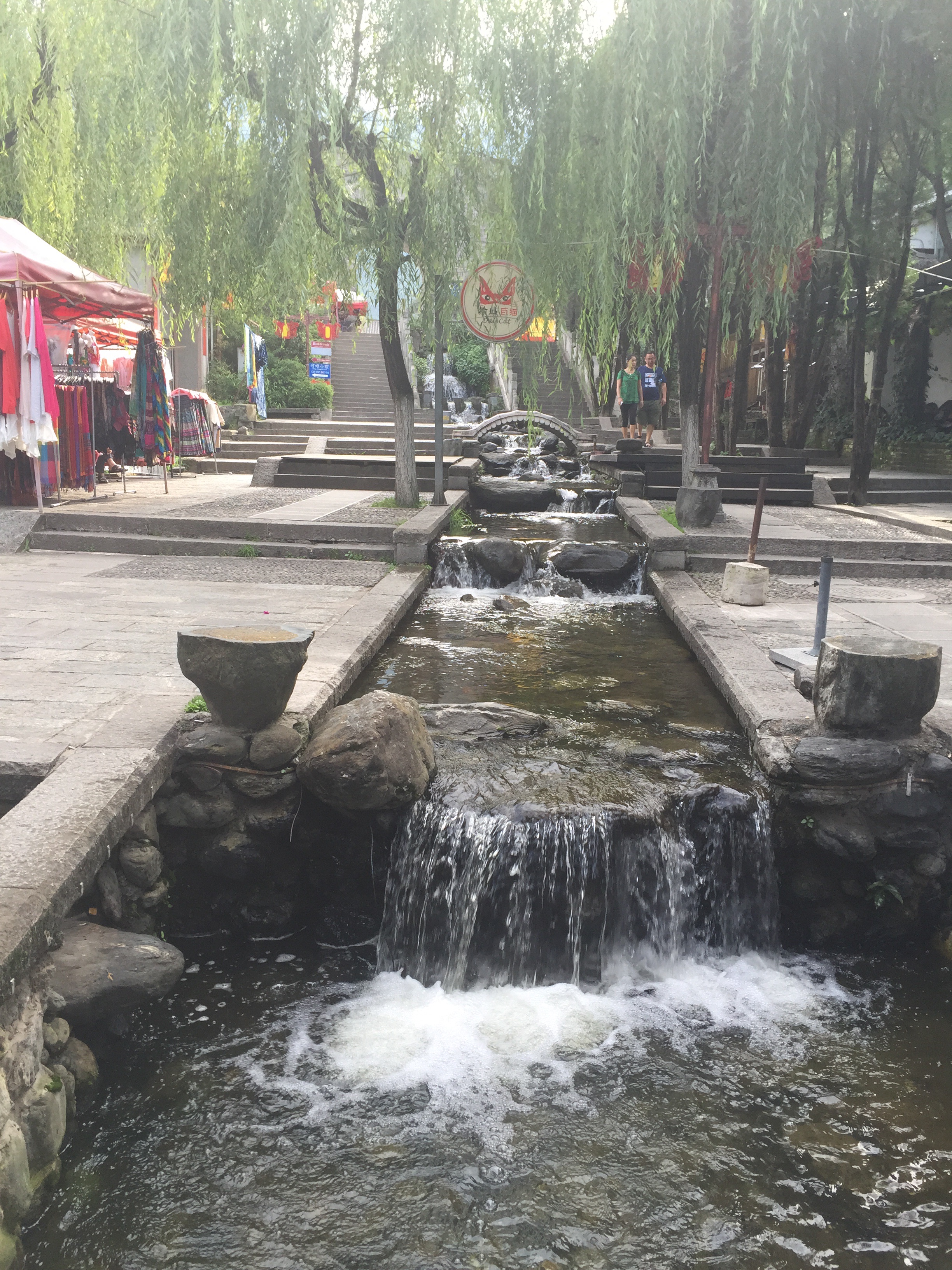 town. Prices here are different from what we have experienced in previous locations and are high by Chinese standards but would be cheap by our standards with lunch at this Dali restaurant costing 56 yuan or 9 U.S. Dollars.
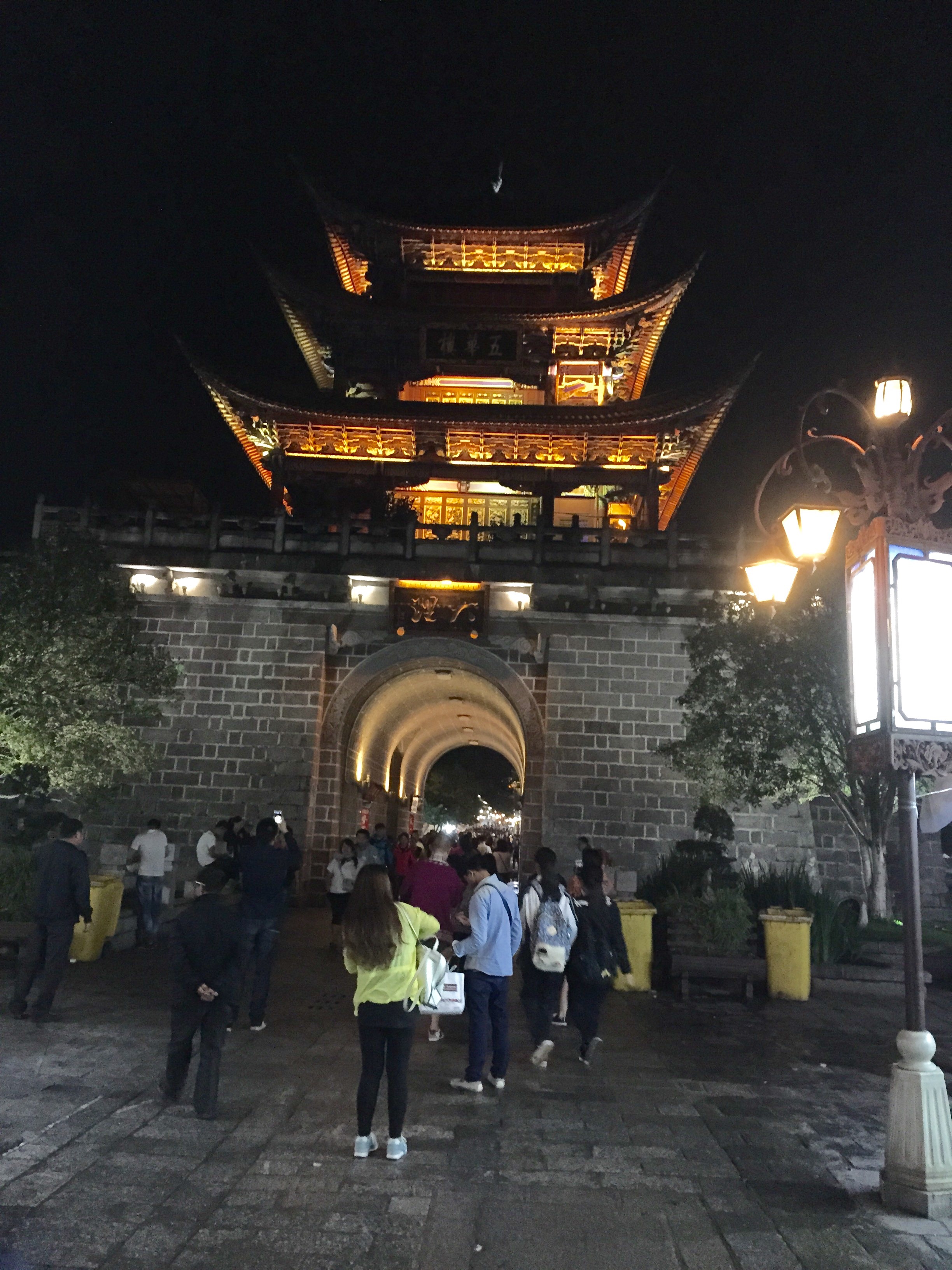
Following lunch we strolled through the old town where the streets were busy with Chinese tourists and this was the first occasion where Chinese tourists were noticeable due to their numbers. Our impression of Dali while walking these streets was disappointing because the old town has been given over to rampant commercialism with shop 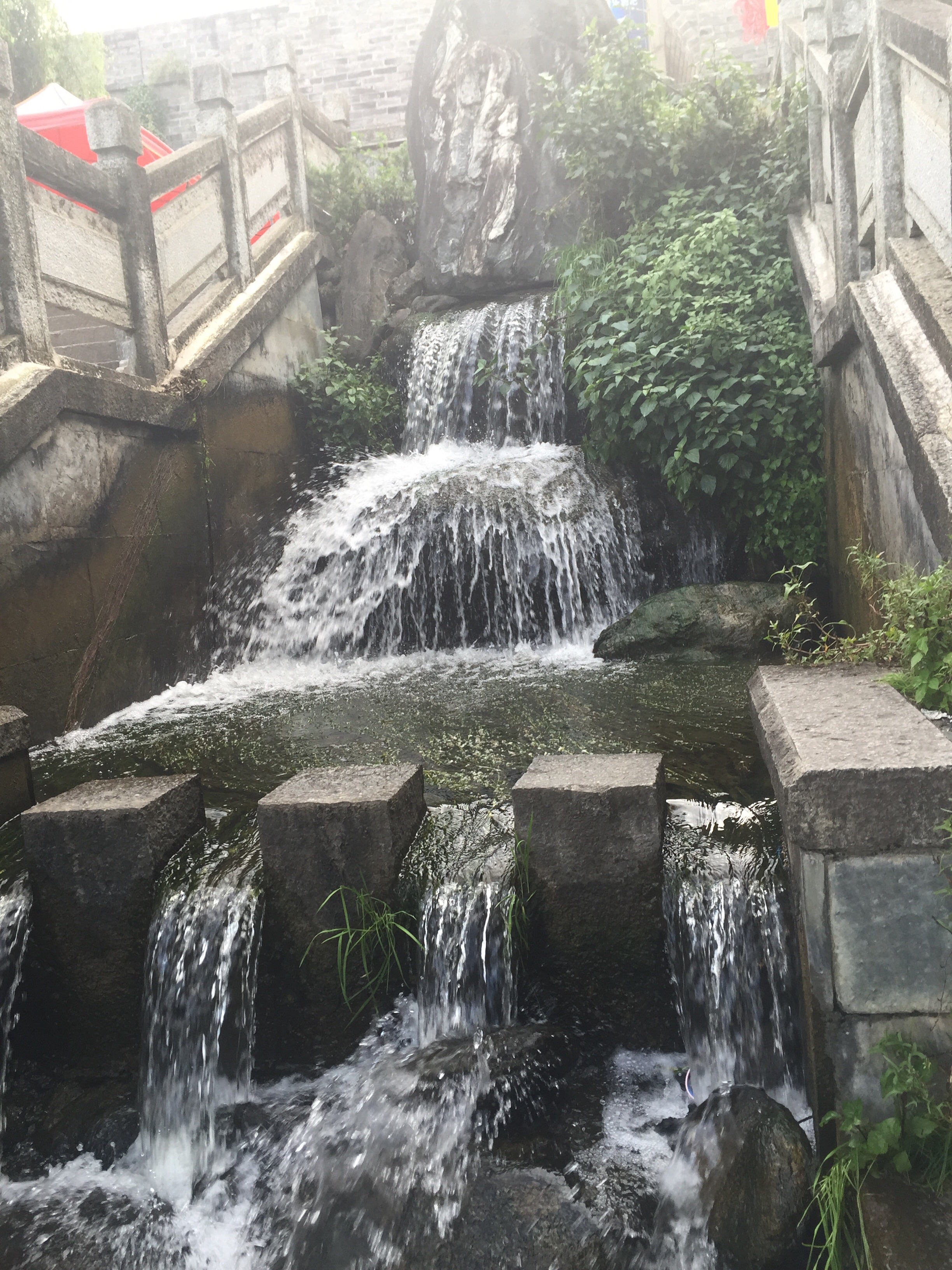 merchandise extending out into the streets and no effort made to retain the ancient character of the buildings in the old town. This contrasts considerably with the beautiful treelined street we walked down earlier.
The walls of the old town are amazing in their height, width and structure. We walked two sides of the old walls of the town and would have walked further but as the walls are not completely open to walk you have to return to the point where you ascended. Walking the walls
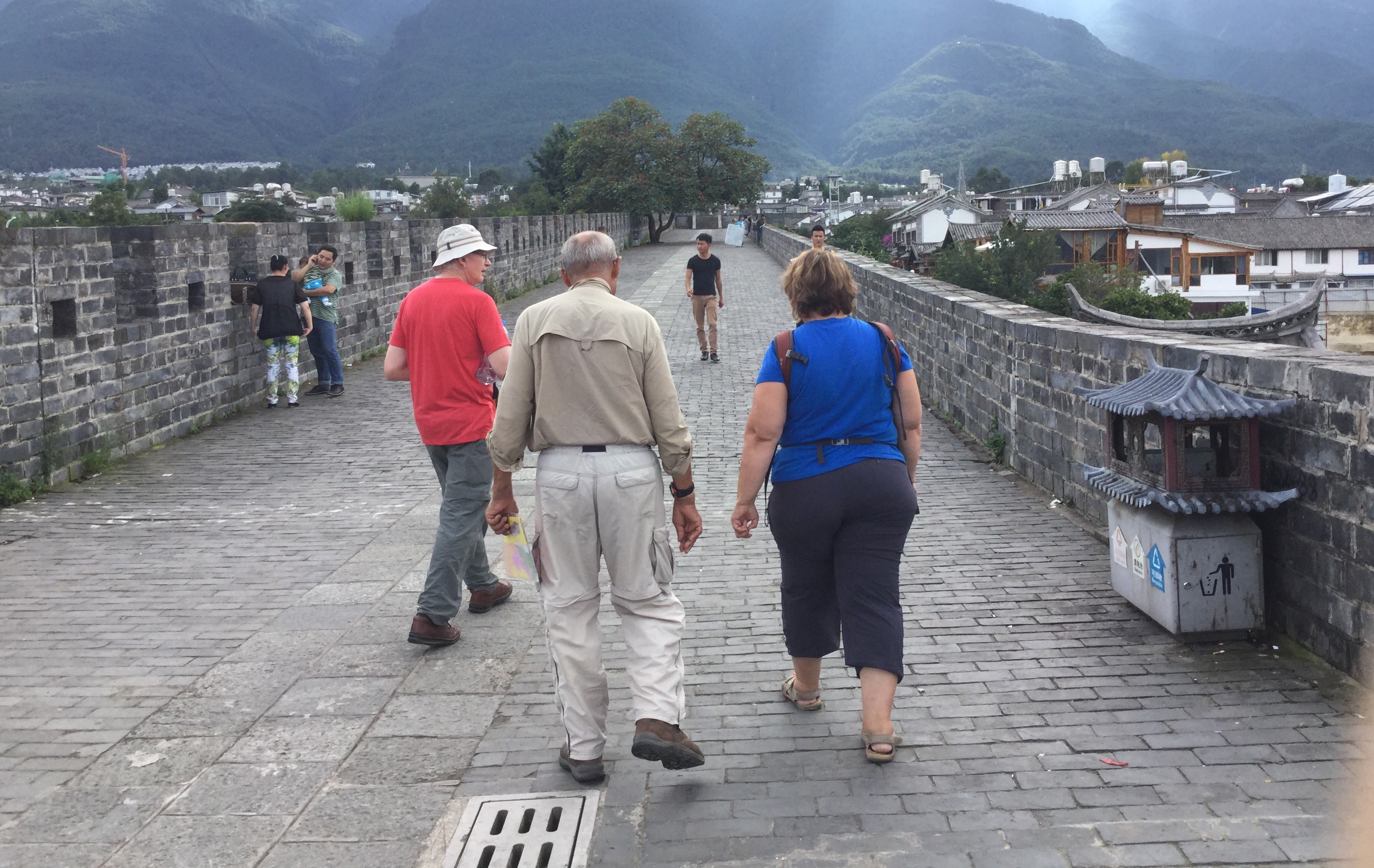
gives an interesting insight into activities both inside the old town and also what is happening outside the walls.
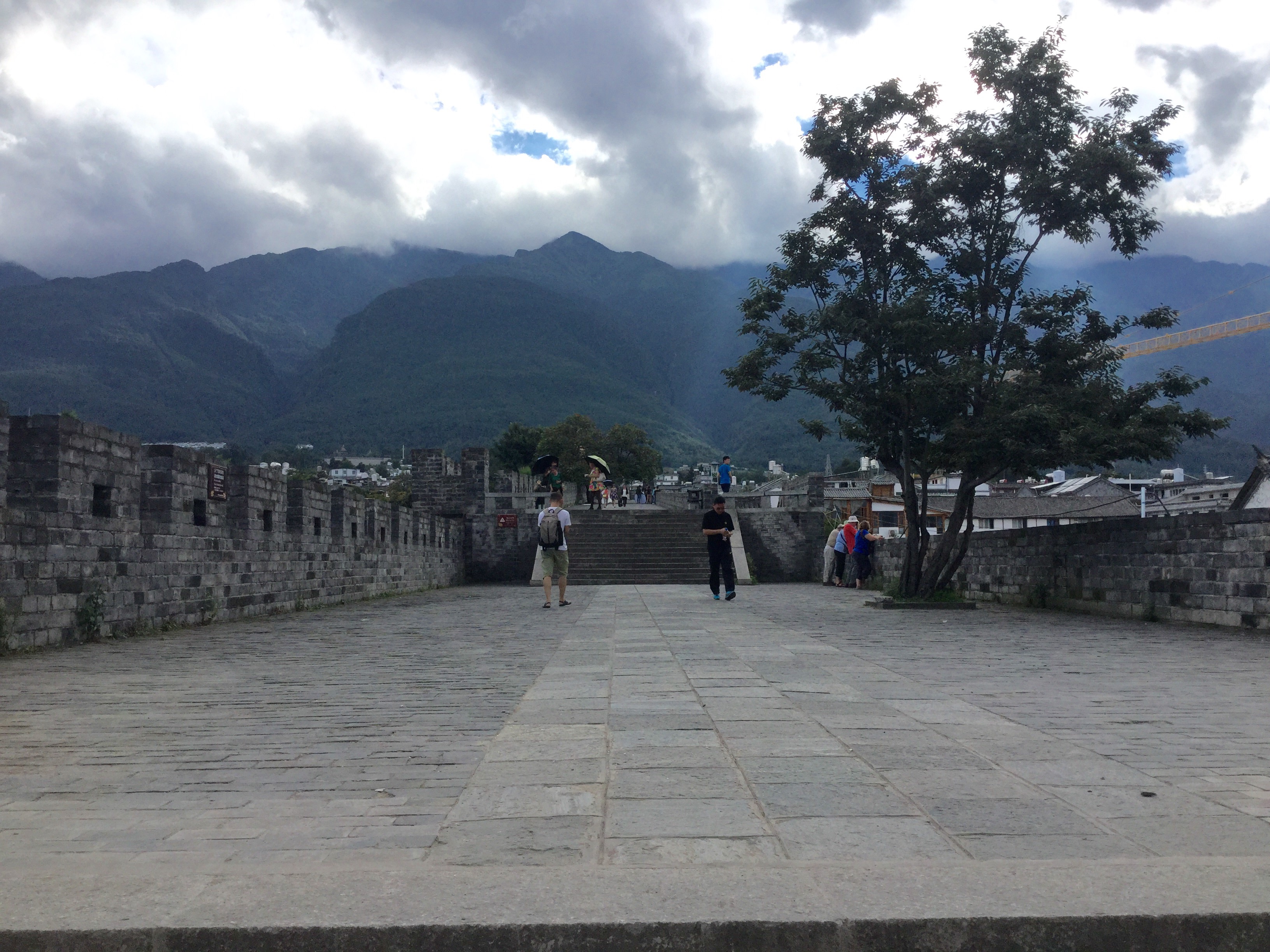
There were a number of photo shoots taking place at different locations along the walls and the strange feature of these shoots was that the exact same clothing style including the colours was being used in each of the photo shoots.
Rain has been forecast for Dali at some stage and as we walk back to our hotel we come upon 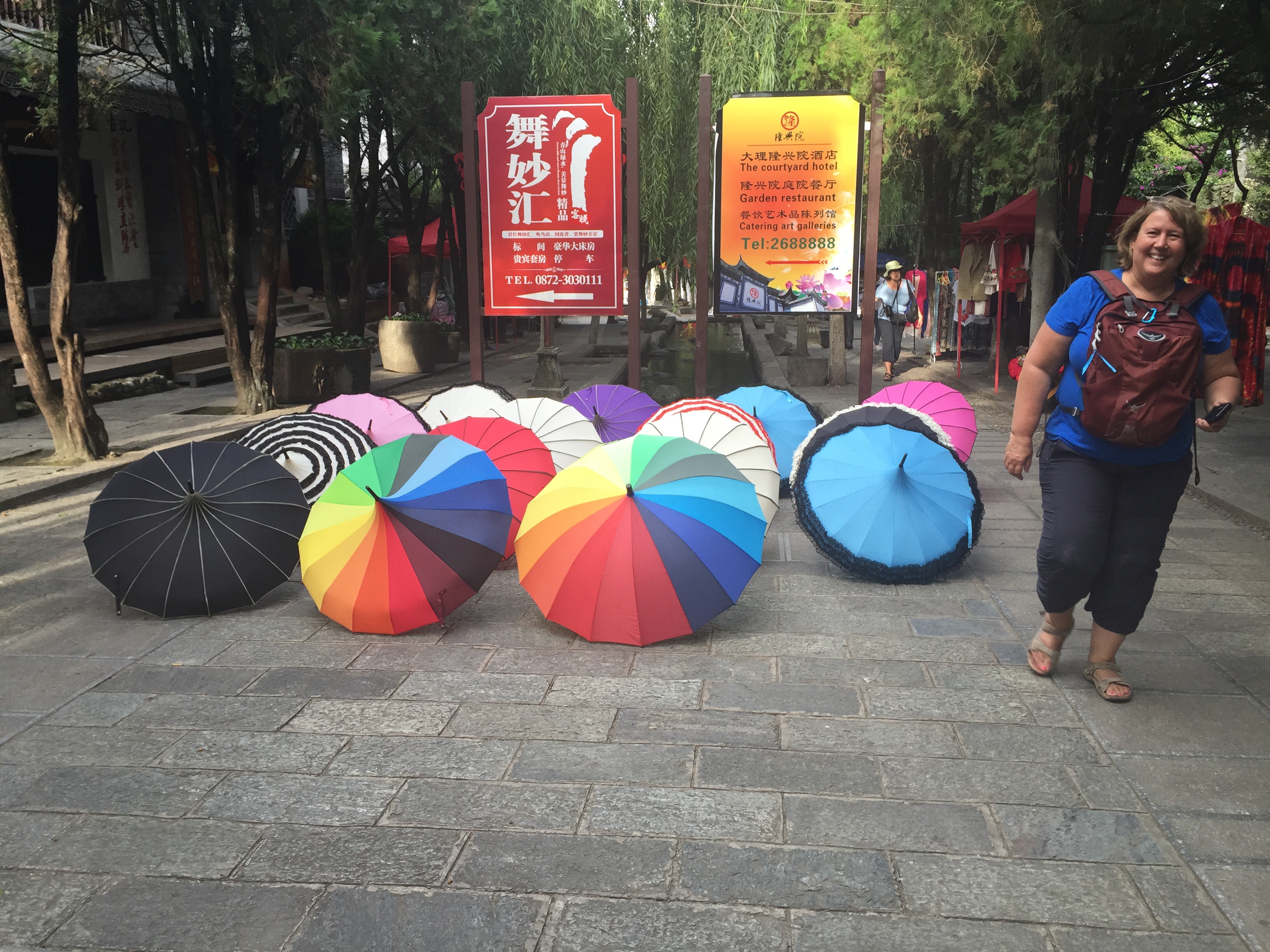 beautiful umbrellas opened up on the street by an enterprising merchant. The rain does not appear until later that night and when it comes it is a torrential downpour but of course we do not have umbrellas or jackets.
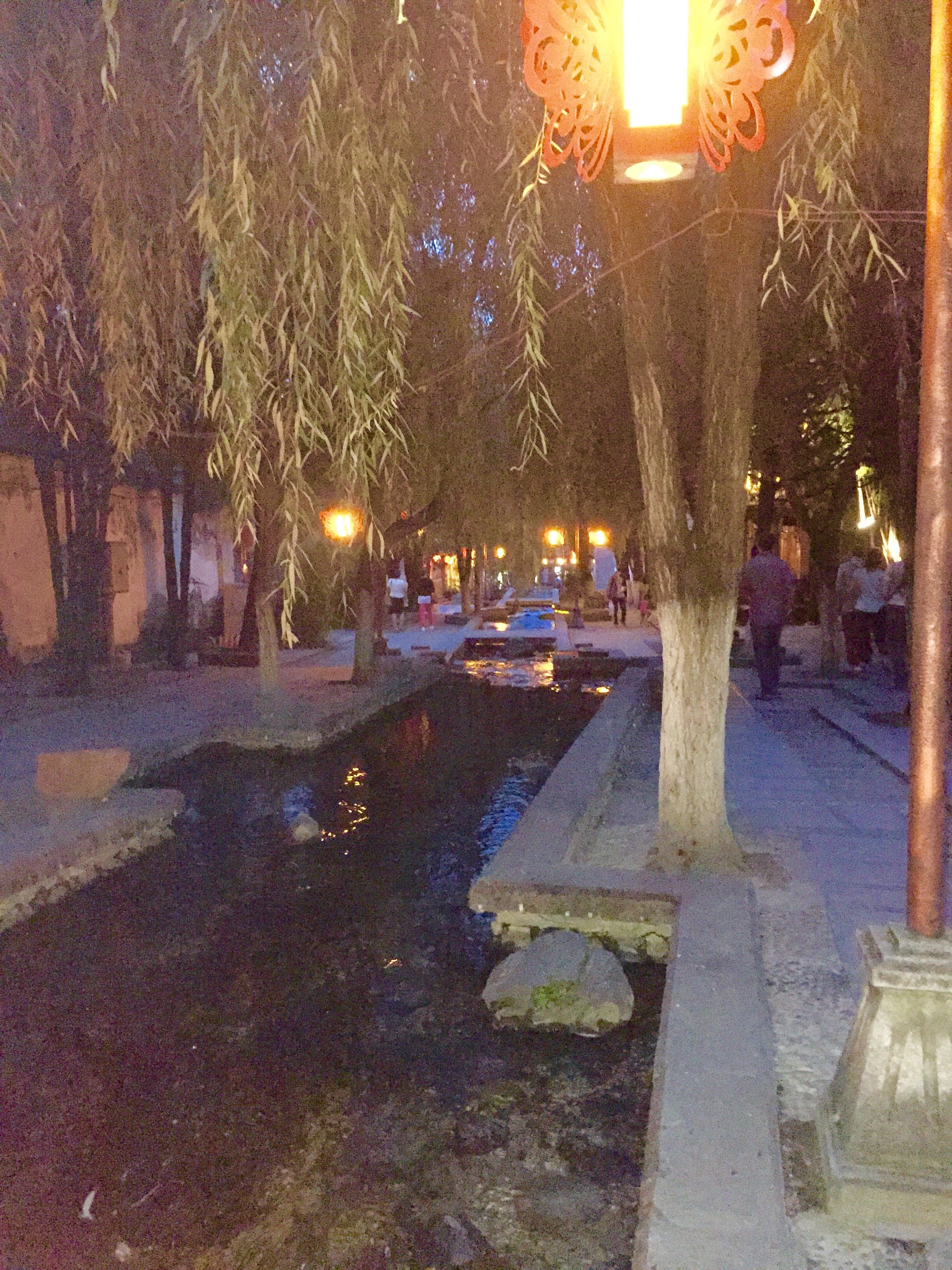
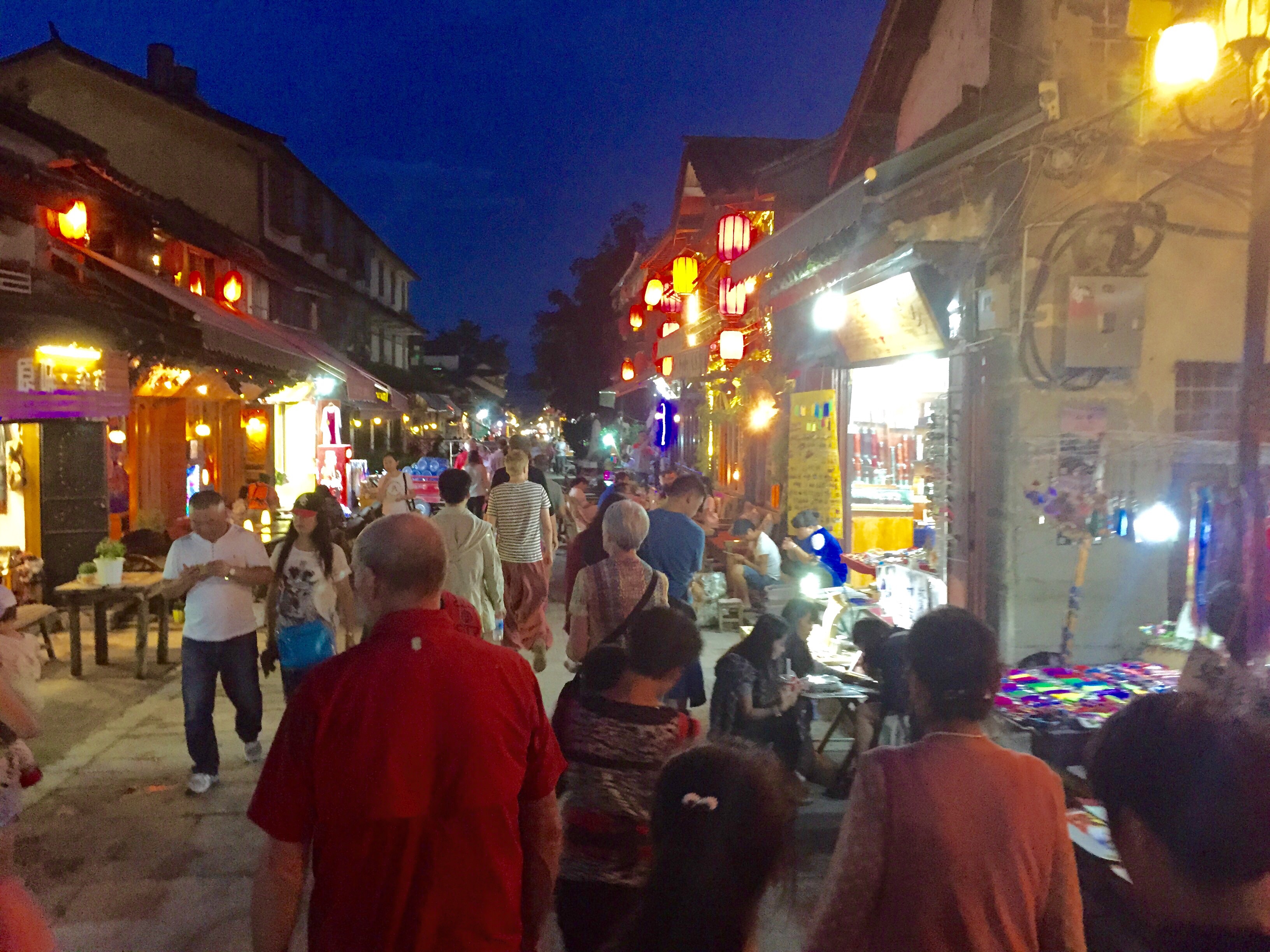
That evening we again walked through the streets as we were going for dinner and the streets were alive with people and colour. I ended up in The Blue Gecko Restaurant with Kelly as the original restaurant selected was too noisy and we were not comfortable there. In The Blue Gecko I ordered Yunnan Spicy Chicken which was a lovely dish but which had 3 chillies beside it on the menu to indicate that it was spicy hot but I did not find it too hot for me. We had an interesting experience in the restaurant as the young guy who came to serve us was from Nashville, U. S. A., was only 16 and was living in Dali with his parents who were missionaries. He was a most interesting young guy and worked in the restaurant on Saturday night.
Sunday 6th September Dali
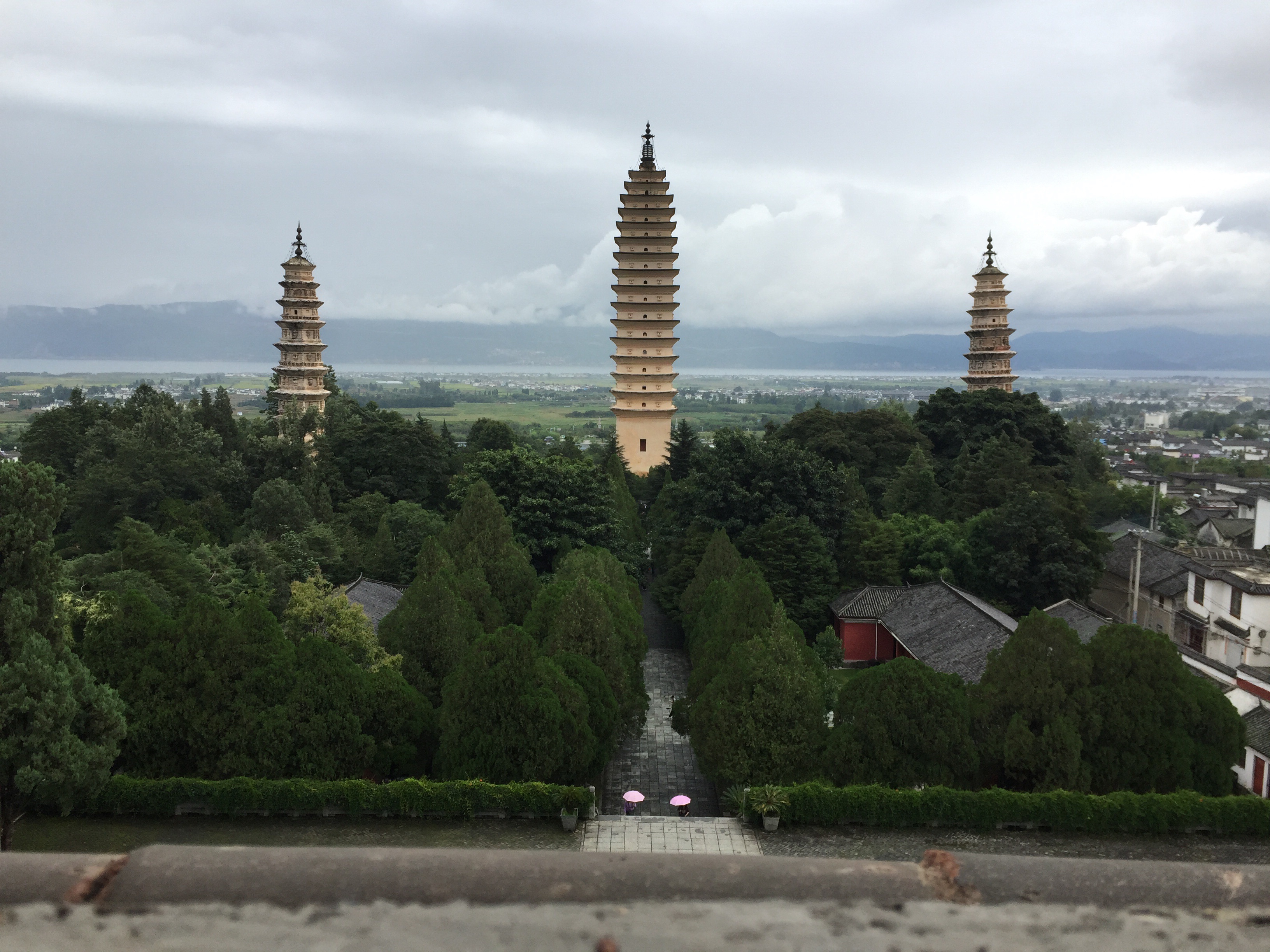
Today is our first day stop in 3 days and is very welcome. Originally Ed, Anil and I had intended to trek up one of the mountains which has a Temple on top but when we got up this morning the mountain was covered in cloud. The weather forecast is not good and therefore we
decided that we would go to the Three Pagodas site which is within walking distance of our hotel. The walk to the Three Pagodas took approximately 20 minutes. The cost for entry was 121 Yuan but my two
colleagues got in for half price as they are over 60. This is a very popular tourist attraction and thousands of Chinese visitors were viewing the sights here, paying their respects to Buddha, giving monetary offerings and lighting candles.
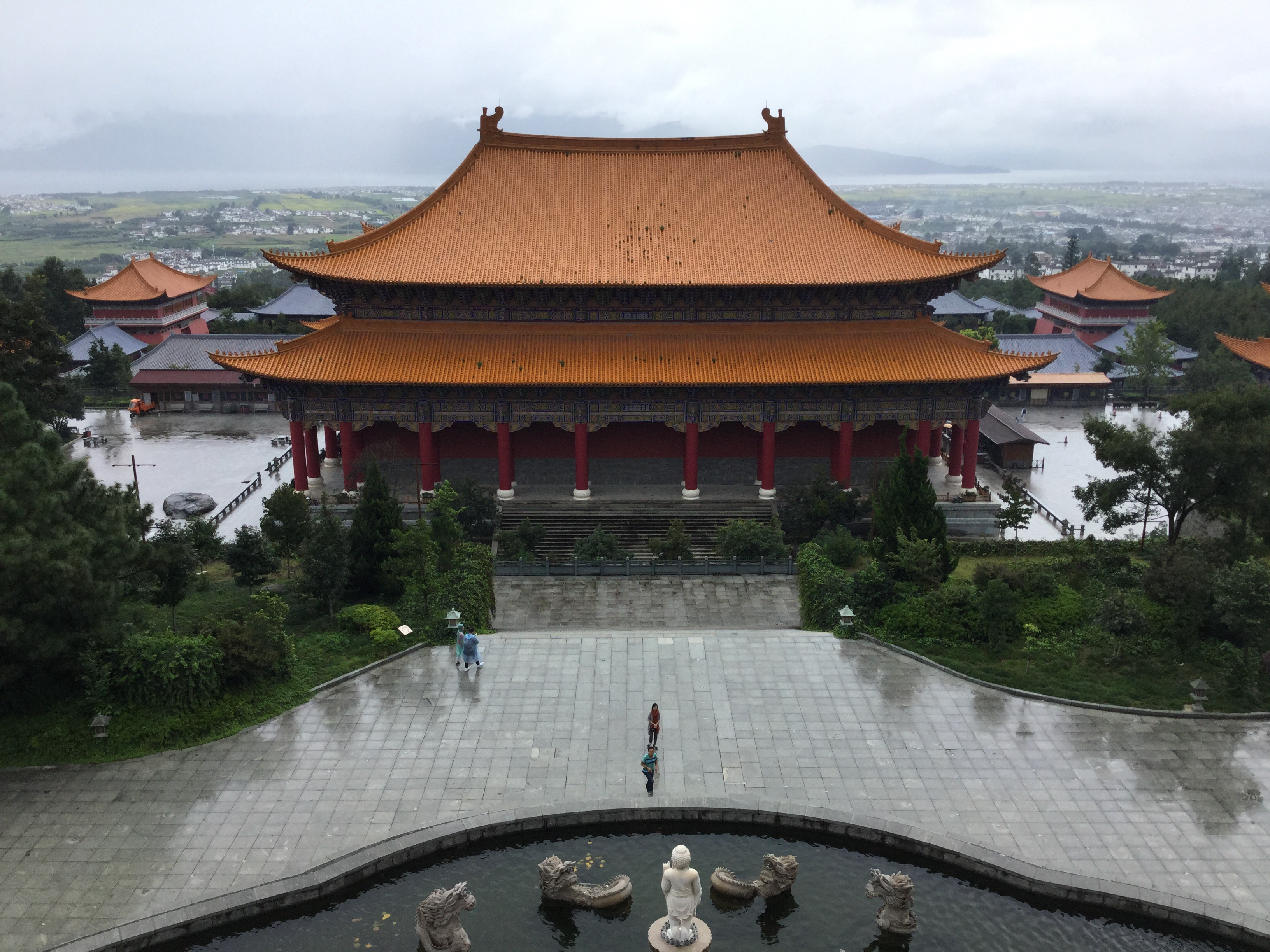
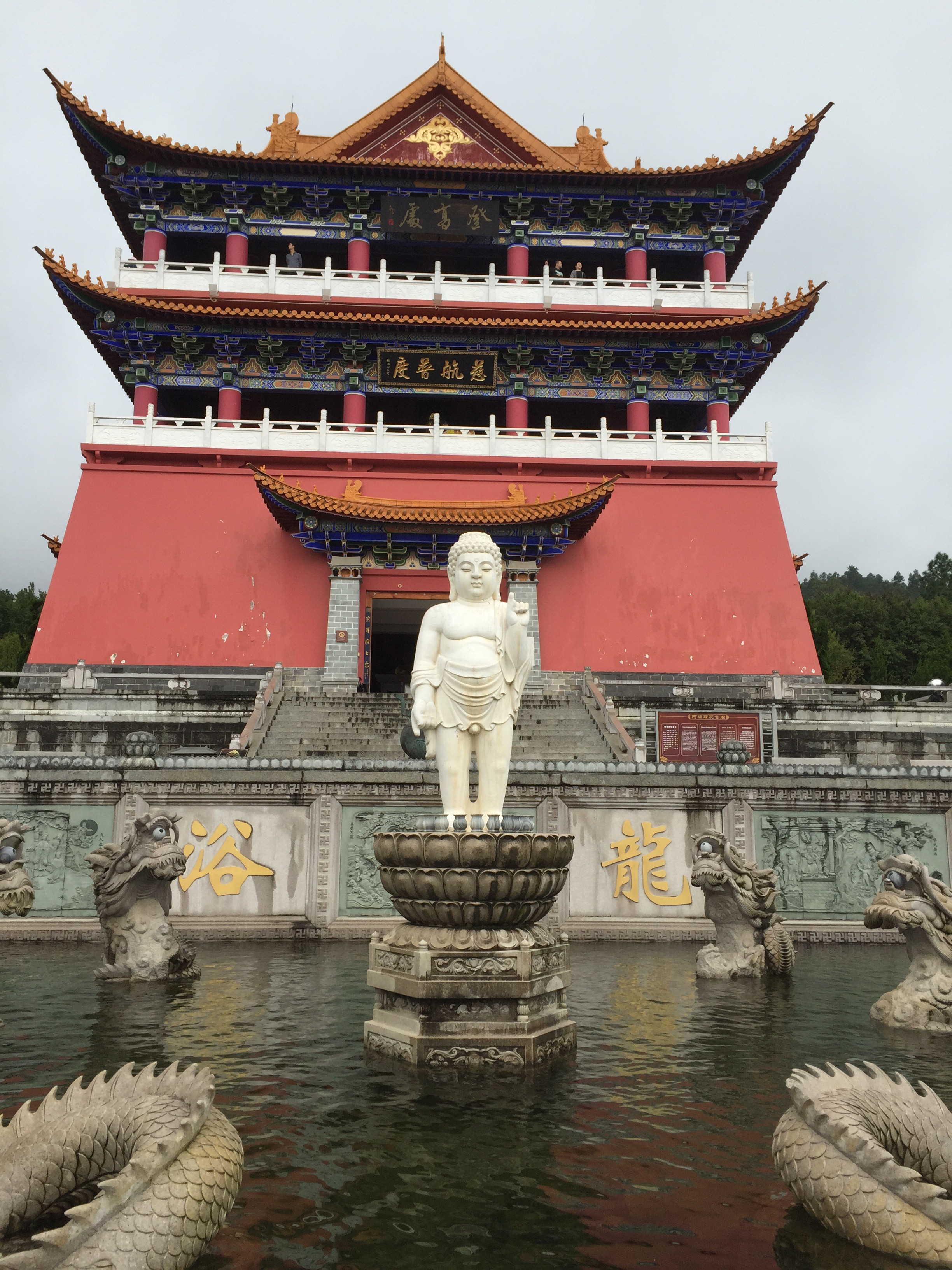
The Three Pagodas themselves were extremely interesting but behind these were awe inspiring and beautiful Temples. The location of the Three Pagodas is at the base of the Cangshan Mountains and covers an area of 5.68 square kilometres. Established during the Kaiyuan Reign of the Tang Dynasty (618AD – 907AD). In addition to the Three Pagodas there is also the Chongsheng Temple, Jianji Bell, The Heavenly King Hall, Yutong
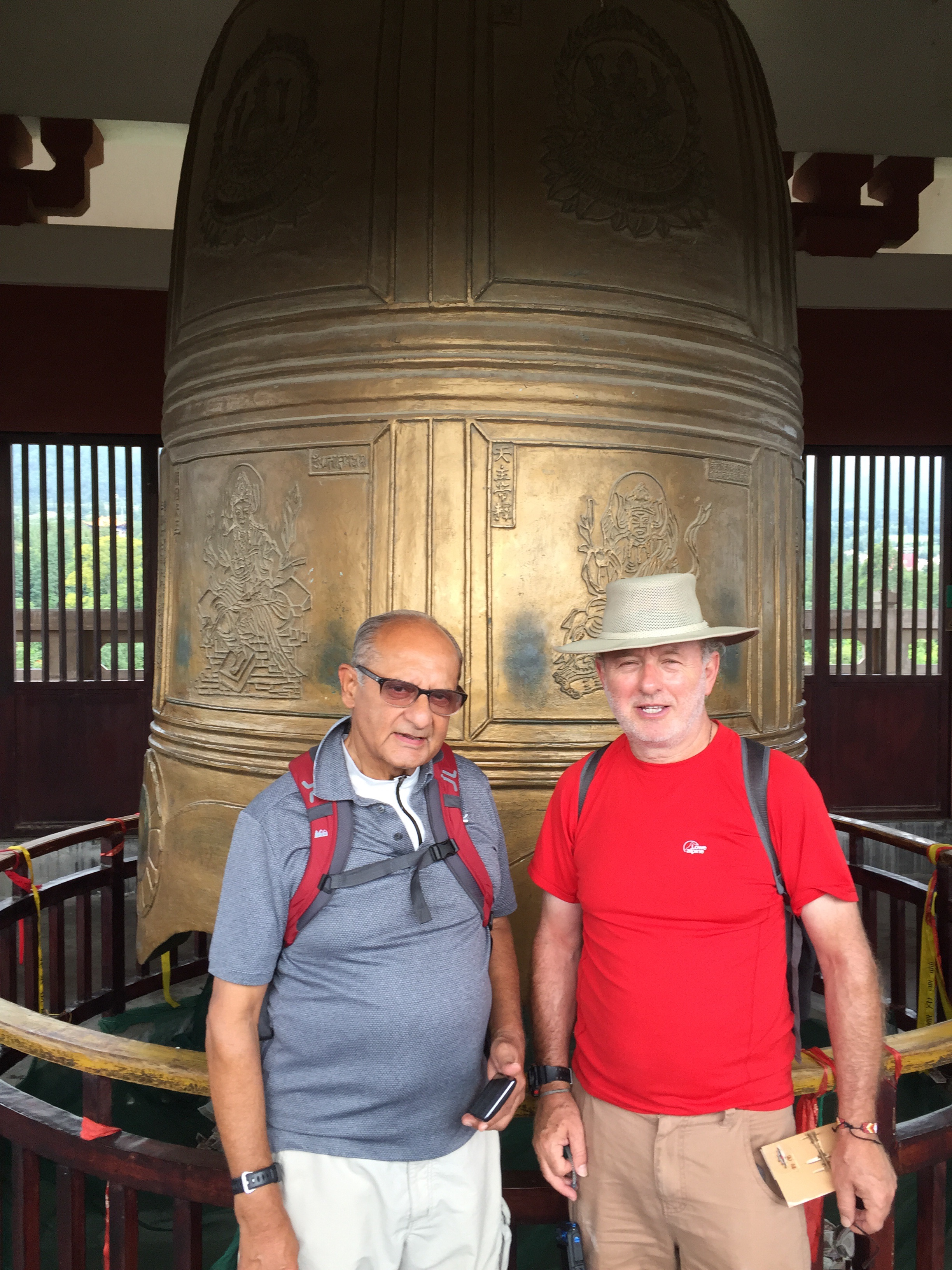
Avalokitesvara Statue, Buddhism Centre and the Gold Statues of the Three Saints.
The Temples extend up the side of the mountain and many have their own courtyards. When you eventually get to the top of the site you have a magnificent view over Dali and the lake below the town. There are a considerable number of guides in traditional costumes and many of these are guiding tour bus groups of Chinese tourists around the Temples.
As we make our way up through the Temples it started to rain and by
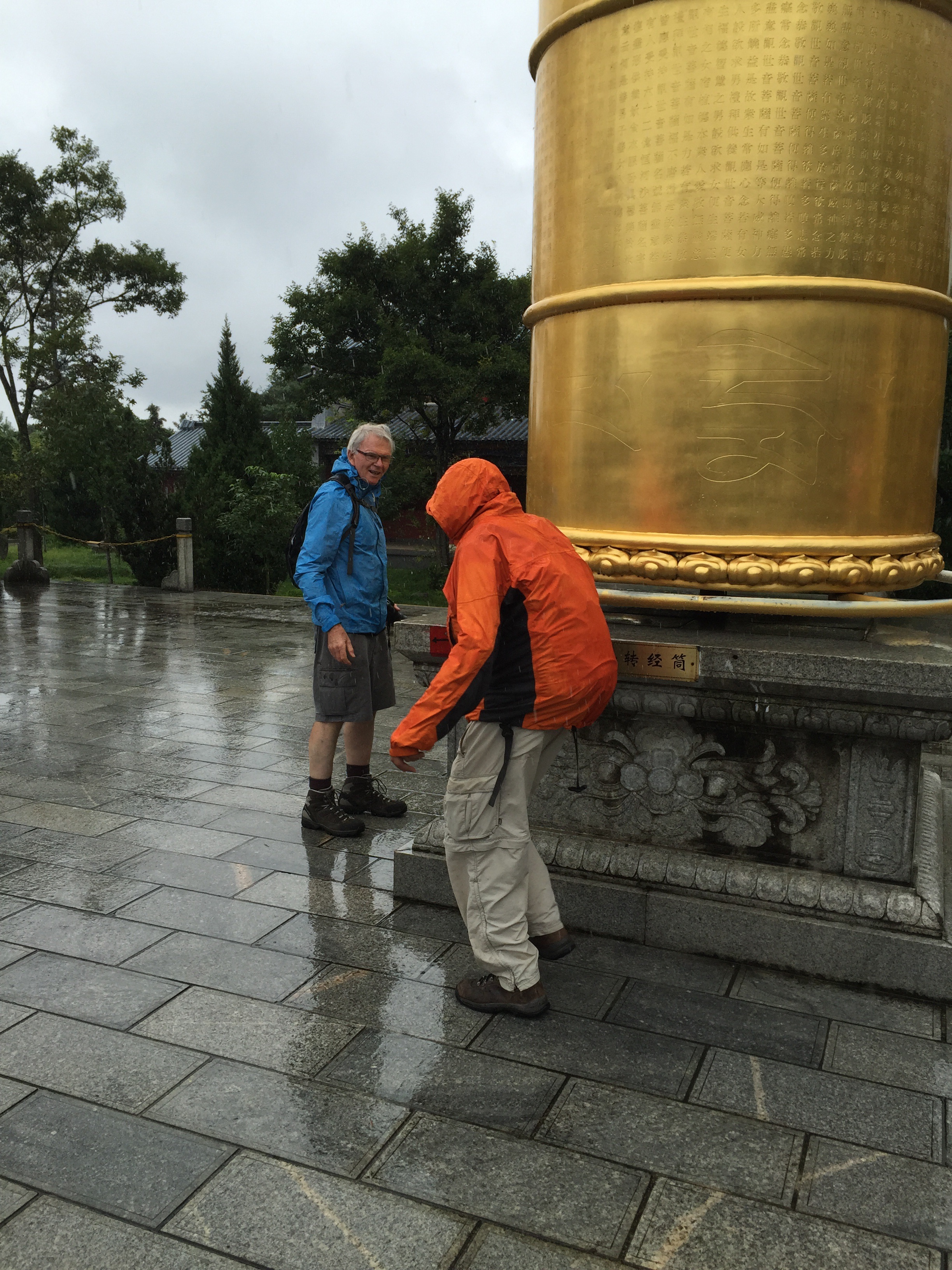
the time we reached the top the rain was torrential. We had our trekking boots on and had also brought along our waterproof jackets which we donned. We continue walking around in the rain and the Chinese tourists found us fascinating as most of them were without jackets and using umbrellas. People smile and say hello either in English or Chinese (Nihao) and some surreptitiously take our photo. It takes us about 3 hours to make our way through the complete site.
Some of the Temples and Halls are very
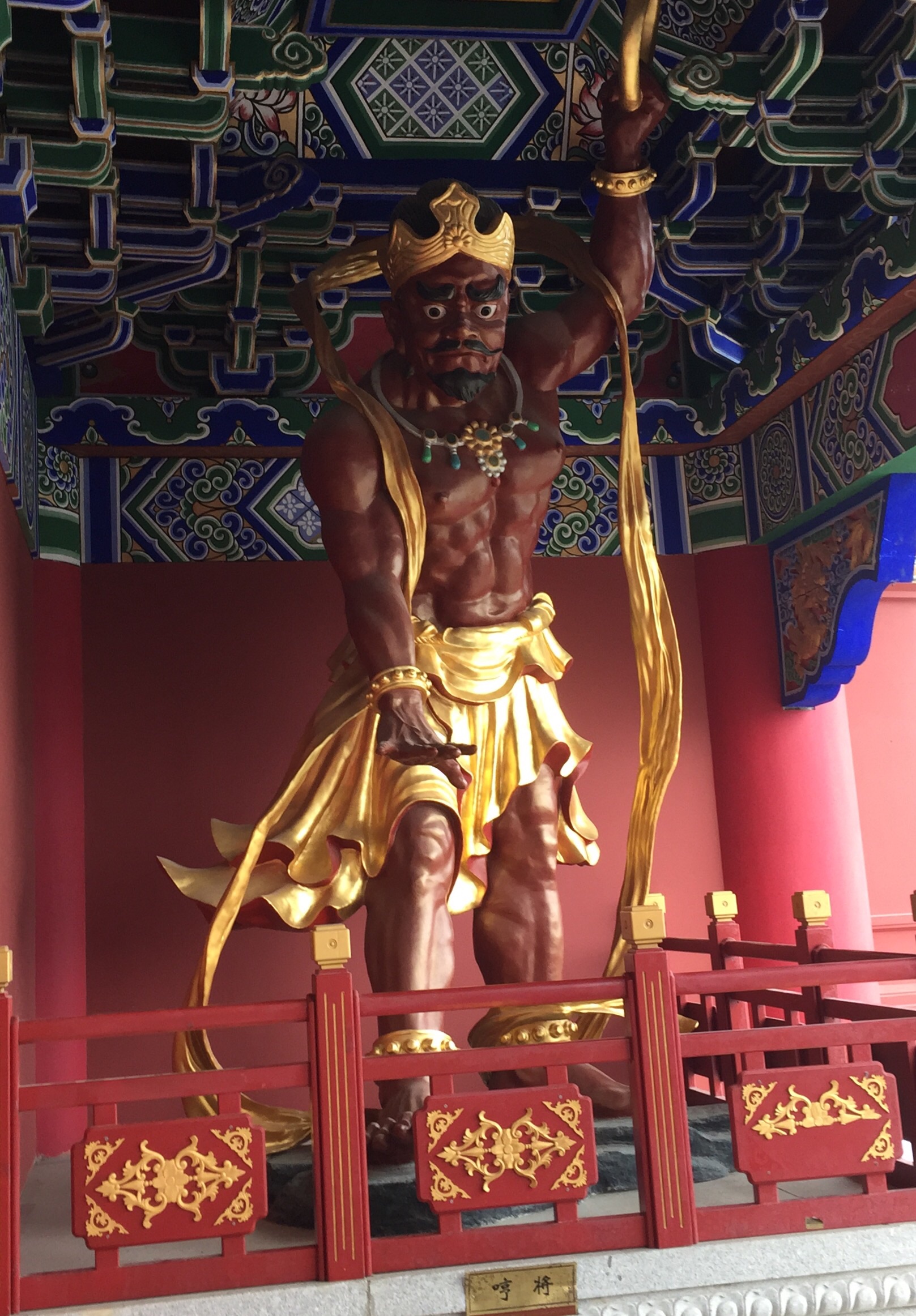
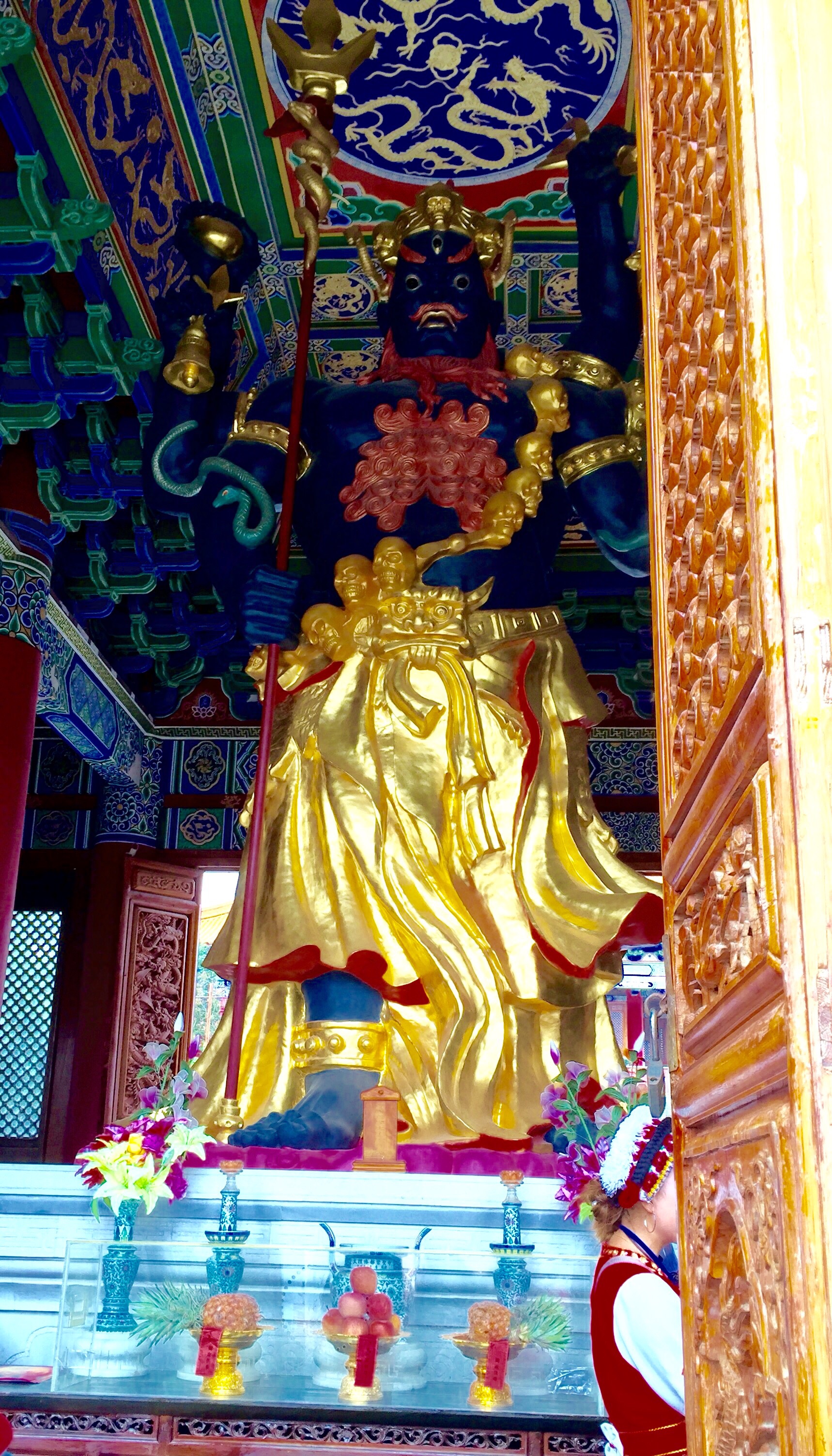
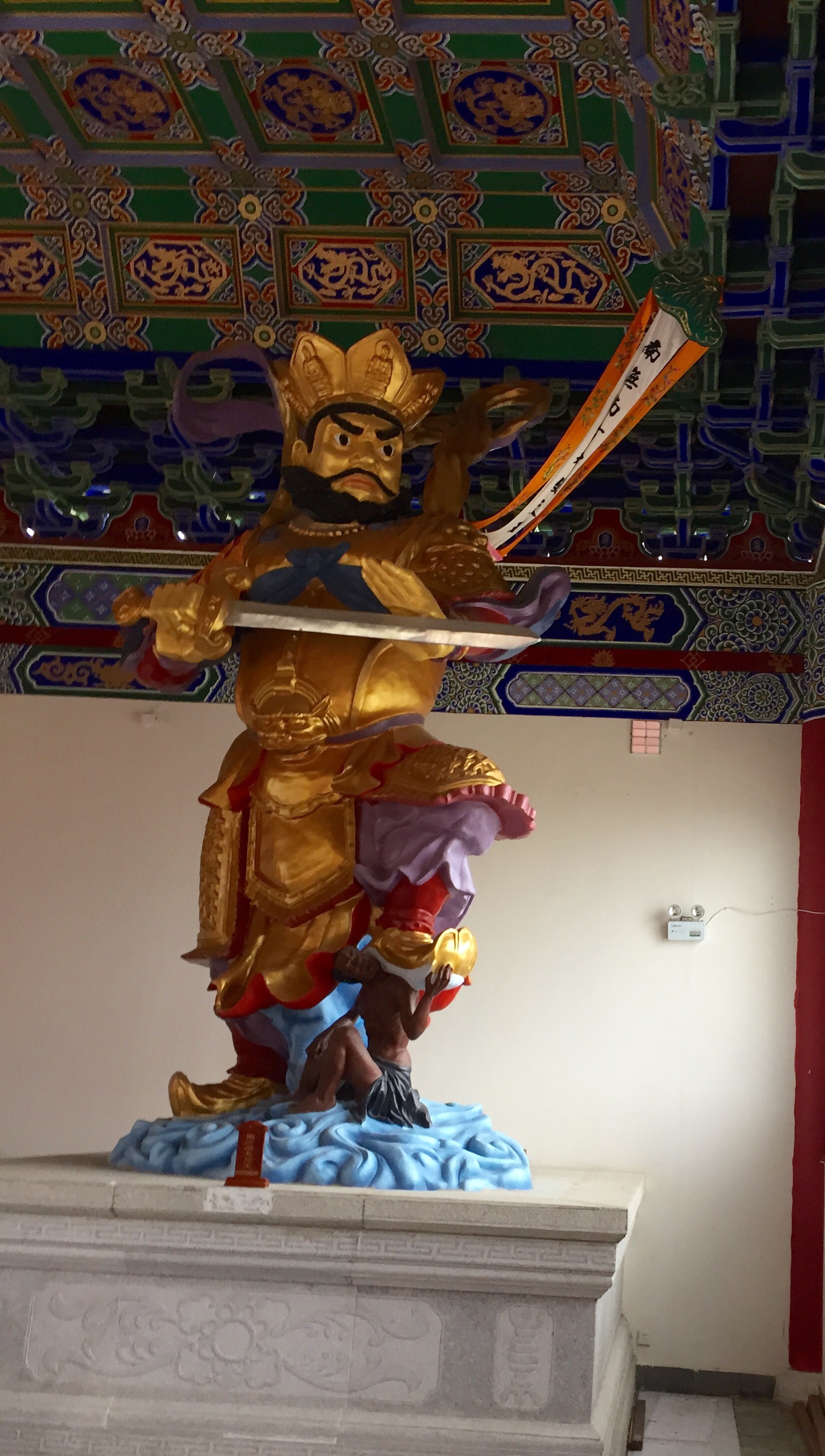
interesting and also very ornately decorated. The Heavenly King Hall has a 5.7 meters tall figure of the Dahei God together with the four heavenly kings in charge of Buddhist Doctrine.
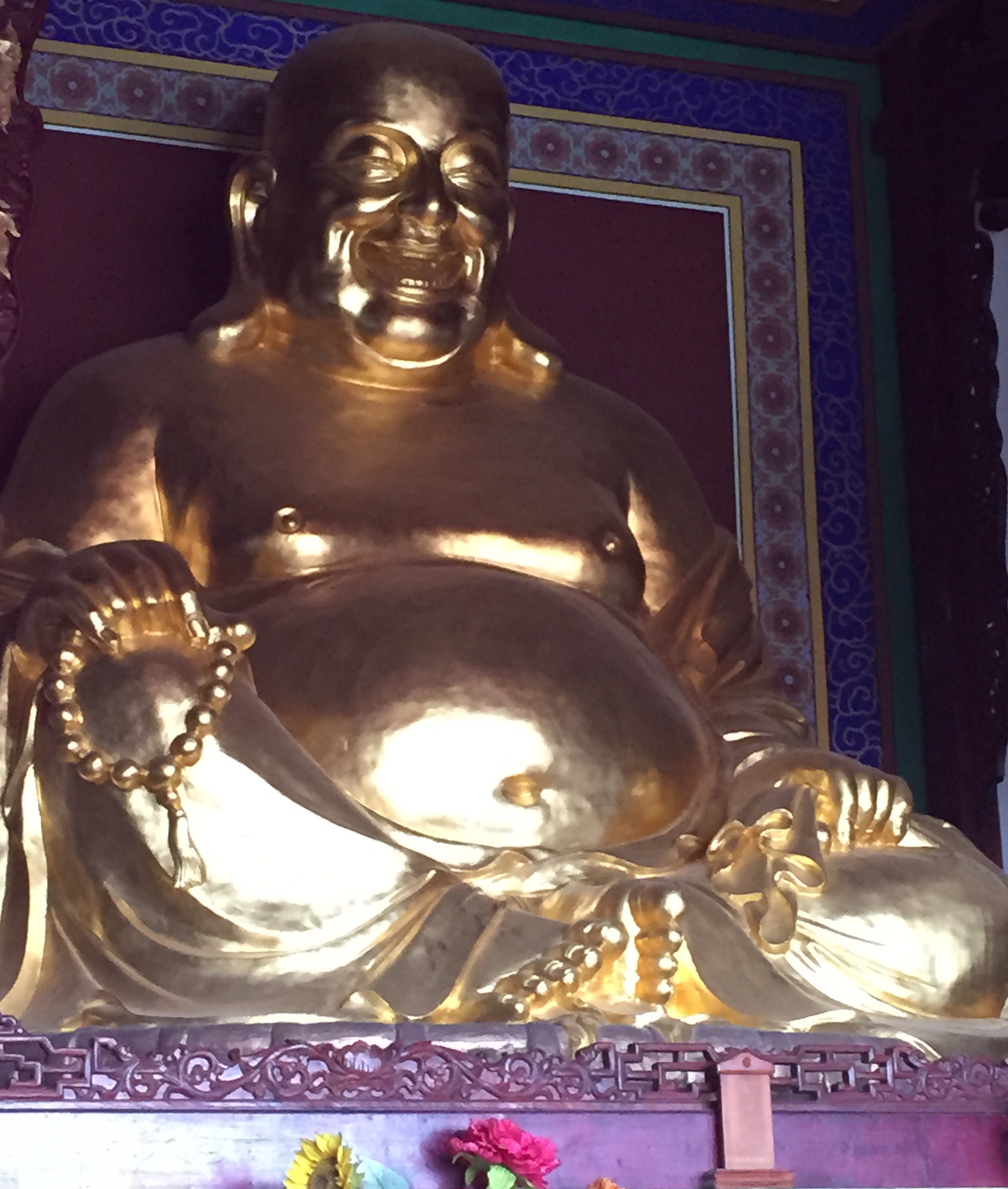
Another interesting hall is The Maitreya Hall and the smiling Buddha counting pearls. Walking through the Three Pagodas complex you are constantly being surprised by the astounding beauty of the various Temples, Halls, Statues and fountains. Once again the reverence and devotion to Buddha is very much in evidence. When we finished our visit we took a taxi back to the old town for lunch.
After lunch we went down into the centre of the old town to go to the Bank in order to exchange money. This turned out to be a fascinating experience. The staff of the bank were very polite, friendly and helpful throughout the transaction but the whole process was an exercise in extreme bureaucracy and in total took approximately 30 minutes.
That evening we went to a small restaurant in the centre of the old town. This was not the cleanest of restaurants but the food was good. Again our guide Anita ordered 7 different dishes with a variety of meat and vegetables. So far the Chinese beer we have been drinking has only been 2.5% alcohol. After dinner we walked back through the streets and the place was a hive of activity. African drums are popular here
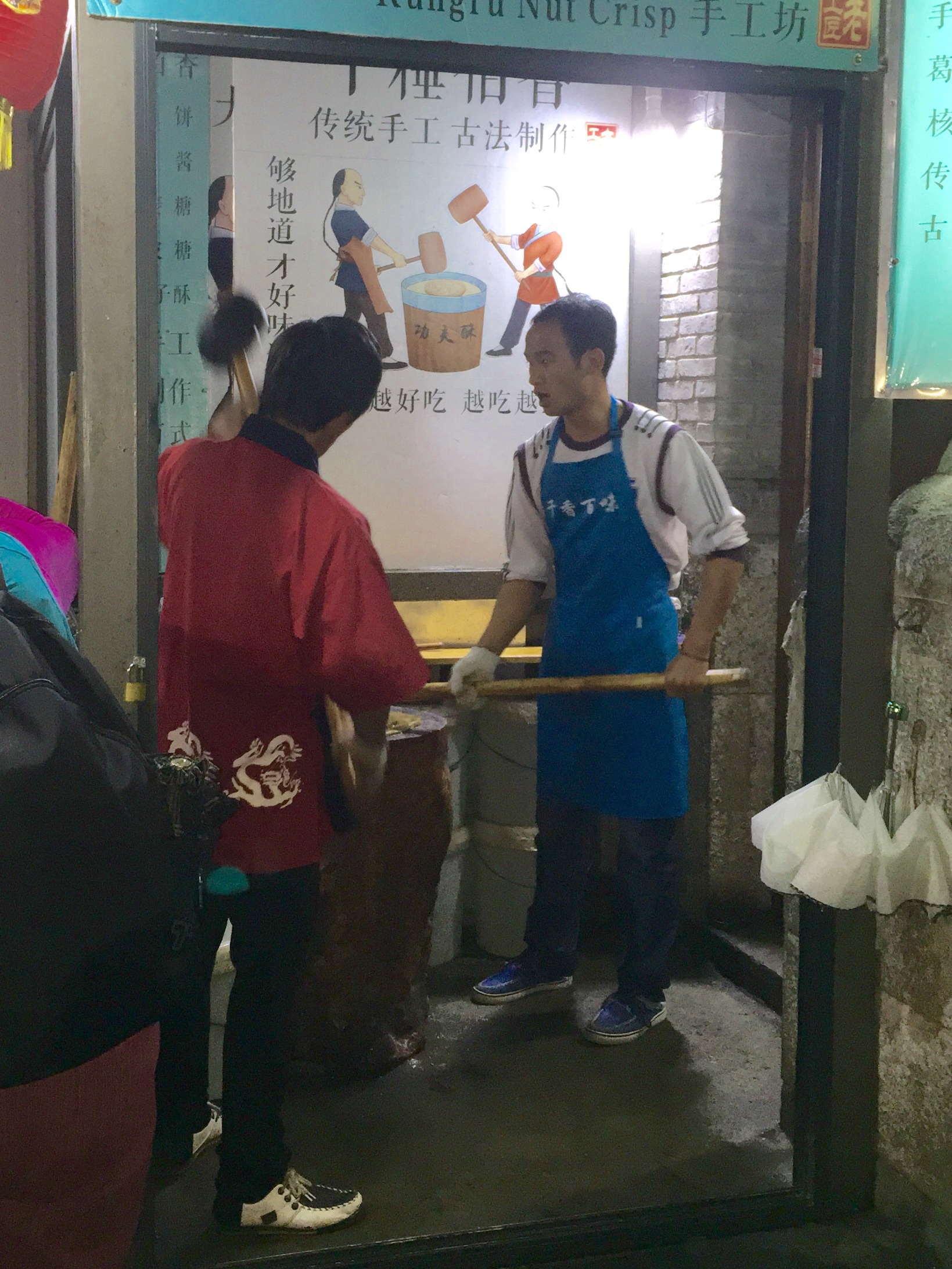
and numerous shops have drumming sessions. We stopped at another stall where a Kungfu Nut Crisp making session was happening and this is entertainment in itself. Two men are involved in the process and they have a chant ongoing while they use sledgehammers to pound the Nut Crisp.
Monday 7th September Dali to Lijiang
On the move again today as we travel to Lijiang which is another
ancient town with a long history. Along the way we stopped at a motorway service station and while we were there I had my photograph taken with a Chinese man from another bus who had asked via sign language if I would do so.
Our journey today is a short one and we arrived in Lijiang at 12.30pm.
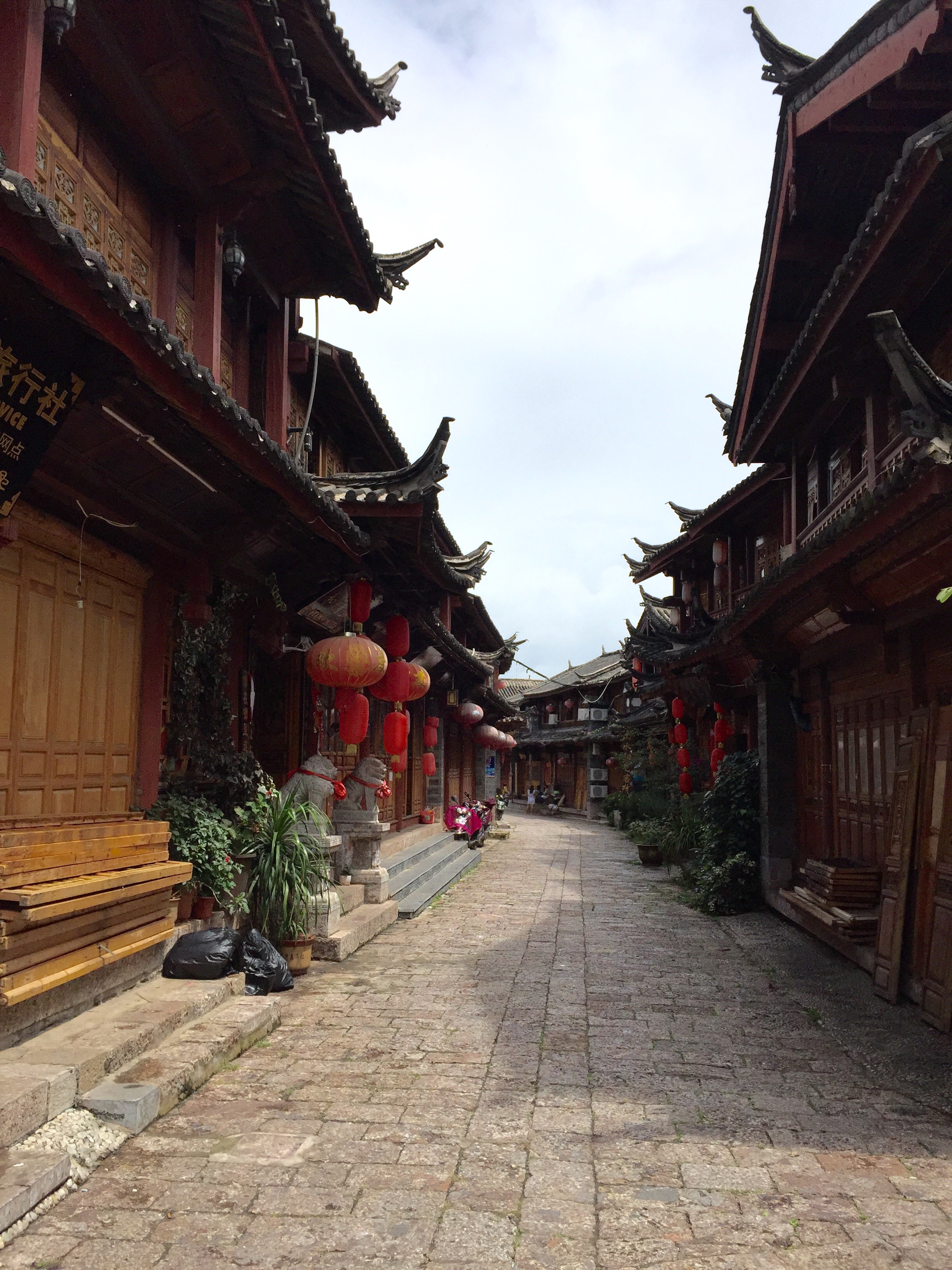
We had to park our truck in a local car park as our hotel is located in a pedestrian street in the old town and we carried our backpacks through the streets. The hotel is another interesting place with a lovely internal central courtyard with a water feature over which we cross a bridge to access our rooms and the rooms are situated on the first floor overlooking the courtyard. Our rooms are fronted by an internal balcony which also overlooks the courtyard.
After we have settled into the hotel myself, Ed, Anil and Kent headed further into the old town to have some lunch. We picked a small restaurant set back from the street and we ordered four dishes plus a rice dish. This was a case of a lucky dip as the menu was in Chinese and the waitress had no English. Consequently when the food arrives we could not distinguish one dish from the other and therefore we decided to share the dishes. This was a good decision as we thoroughly enjoyed the food. At the beginning of the meal the waitress brought us a pot of green tea which is normally provided with each meal and you drink the tea from small round cups without handles.
Following lunch Ed, Anil and I set off to locate the Black Dragon Lake
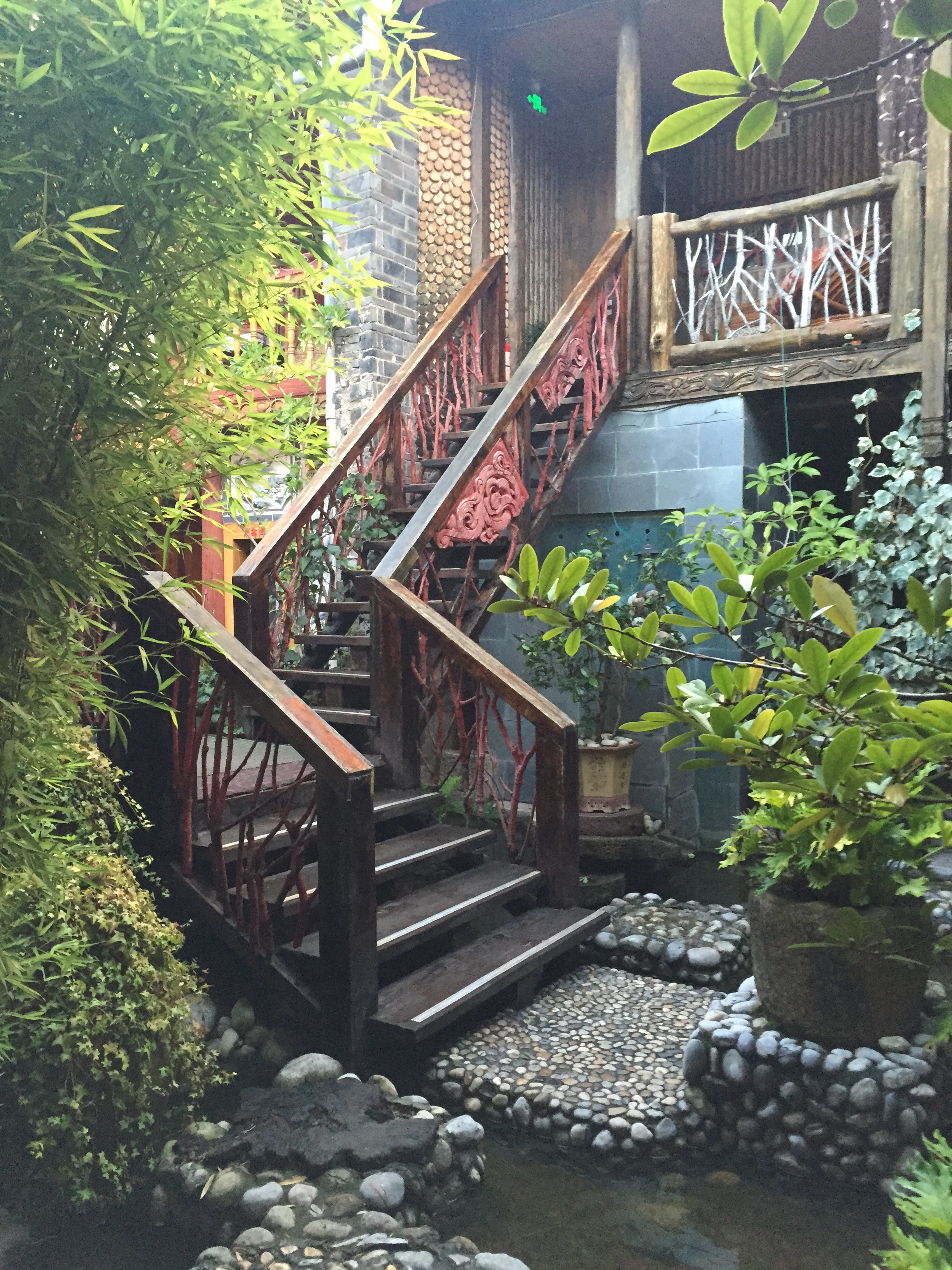
which is situated 2 kilometres outside the old town. We walked through the narrow streets and this was a joy as the character of the town has been retained. Even though much of the old town has been given over to shops and restaurants this has been achieved in a more sympathetic manner unlike the position that exists in Dali.
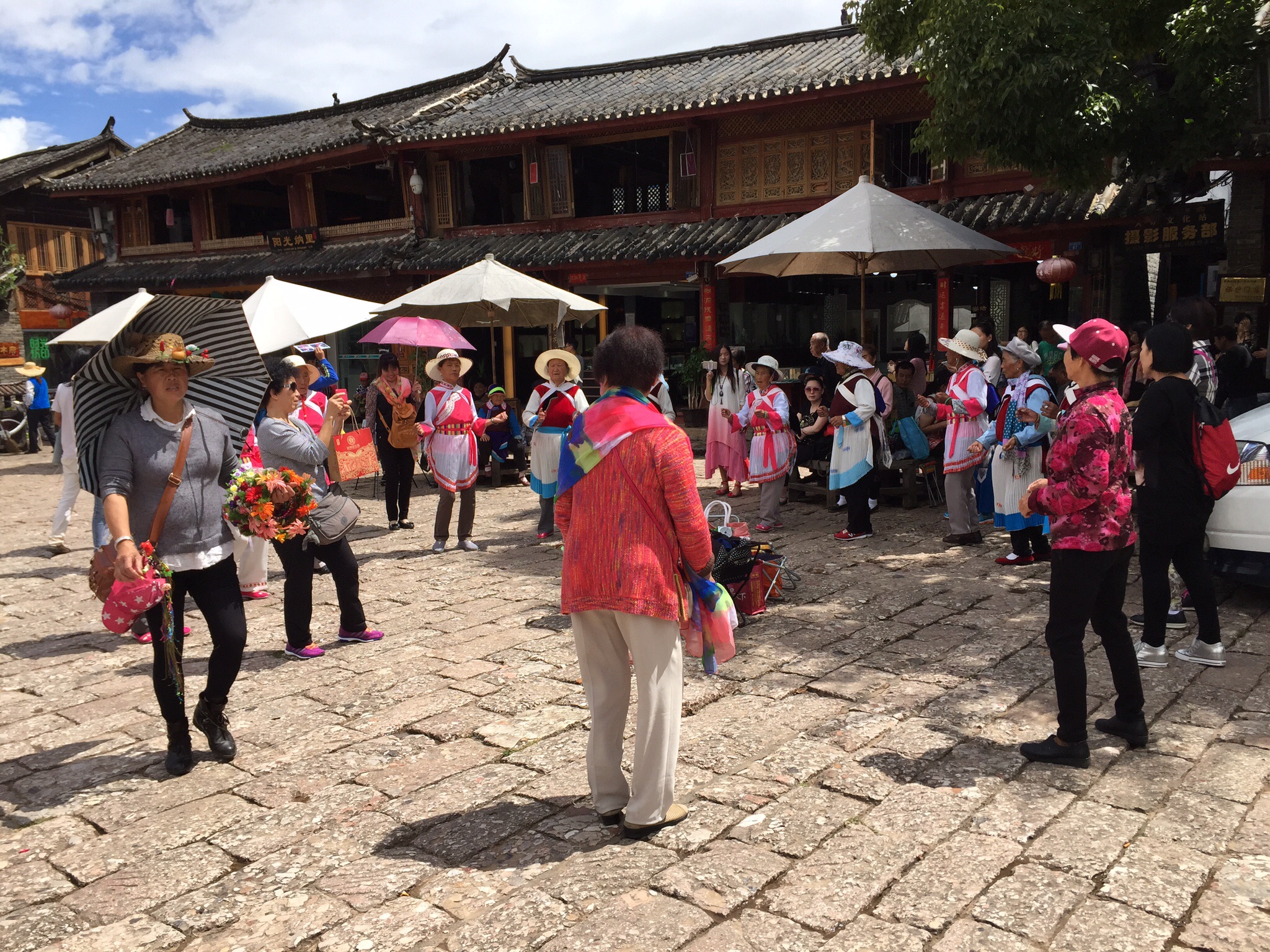
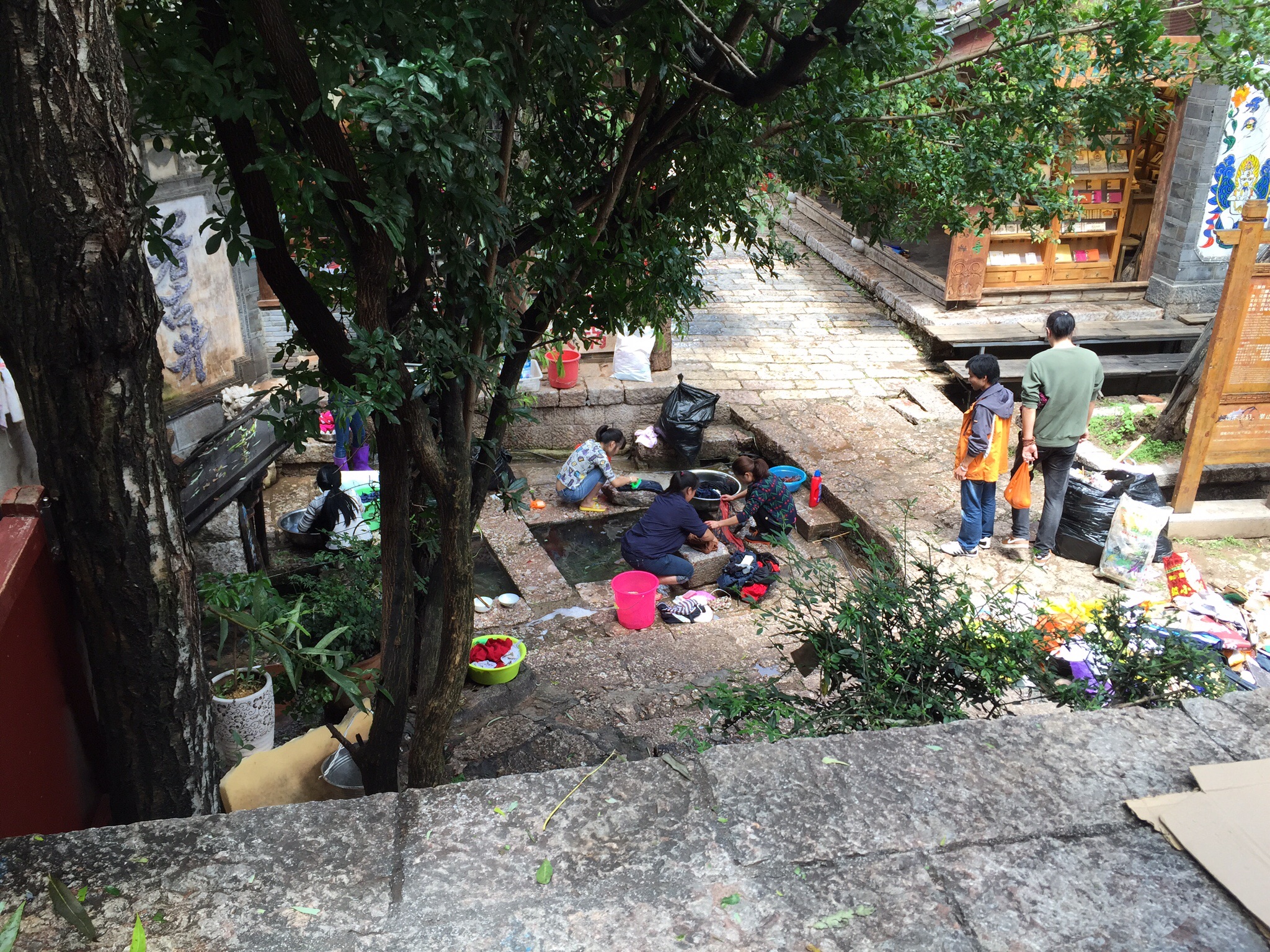
It was a pleasure to walk through the streets and along the way we came upon women washing clothes at a traditional washing place. Further on we entered a square where a group of older women in traditional costumes were dancing and people were welcome to join in with the dancers.
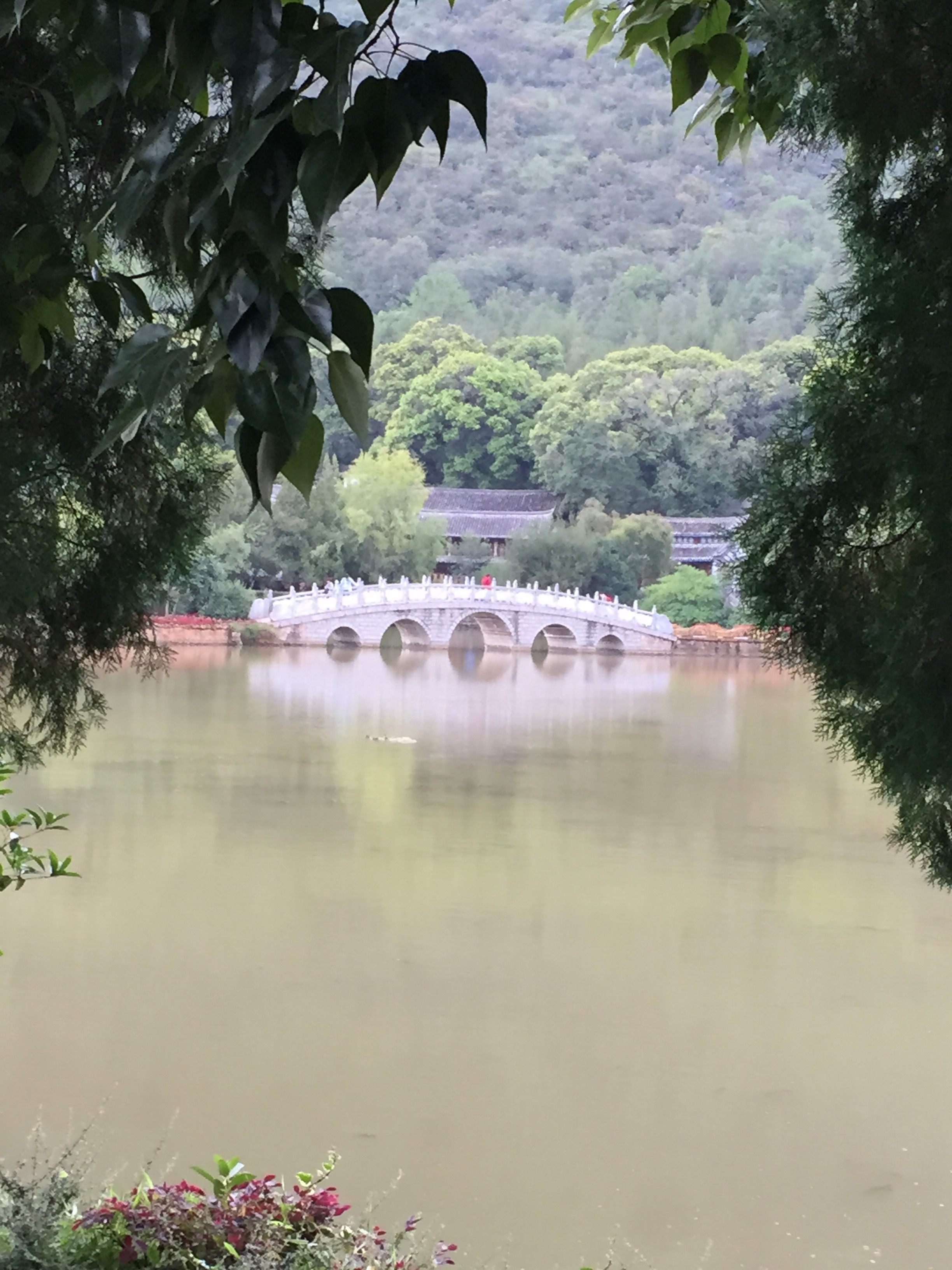
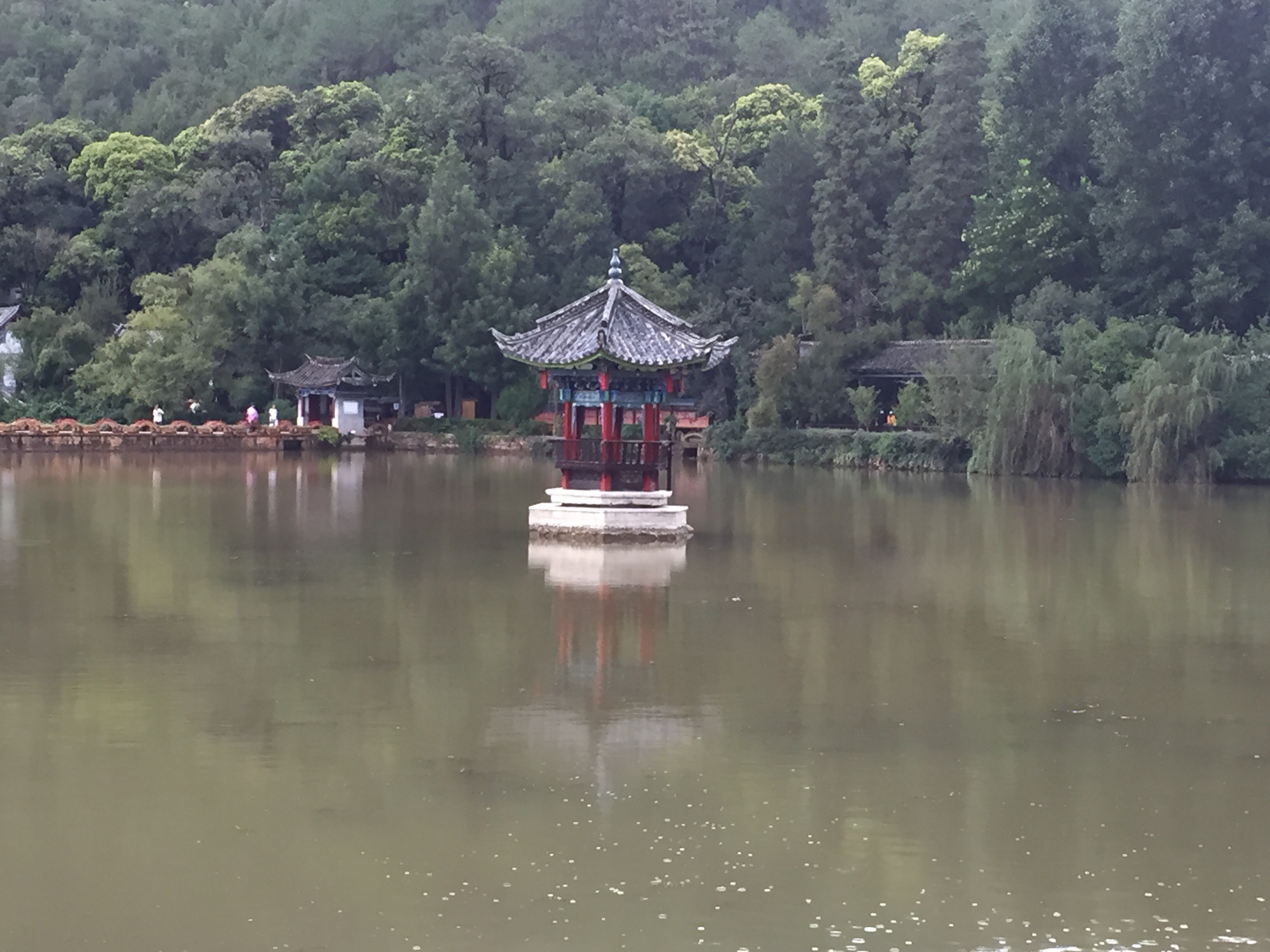
We walked on through the streets in the general direction of the Black Dragon Lake and eventually found it following a number of attempts to get directions but we were frustrated by our inability to communicate with people. We had to pay 80 Yuan entrance fee and this also covered the maintenance fee being demanded for entrance to the old town. We spent approximately 90 minutes walking around the paths circling the Lake and looking at the various bridges and ornate buildings dotted around the site.
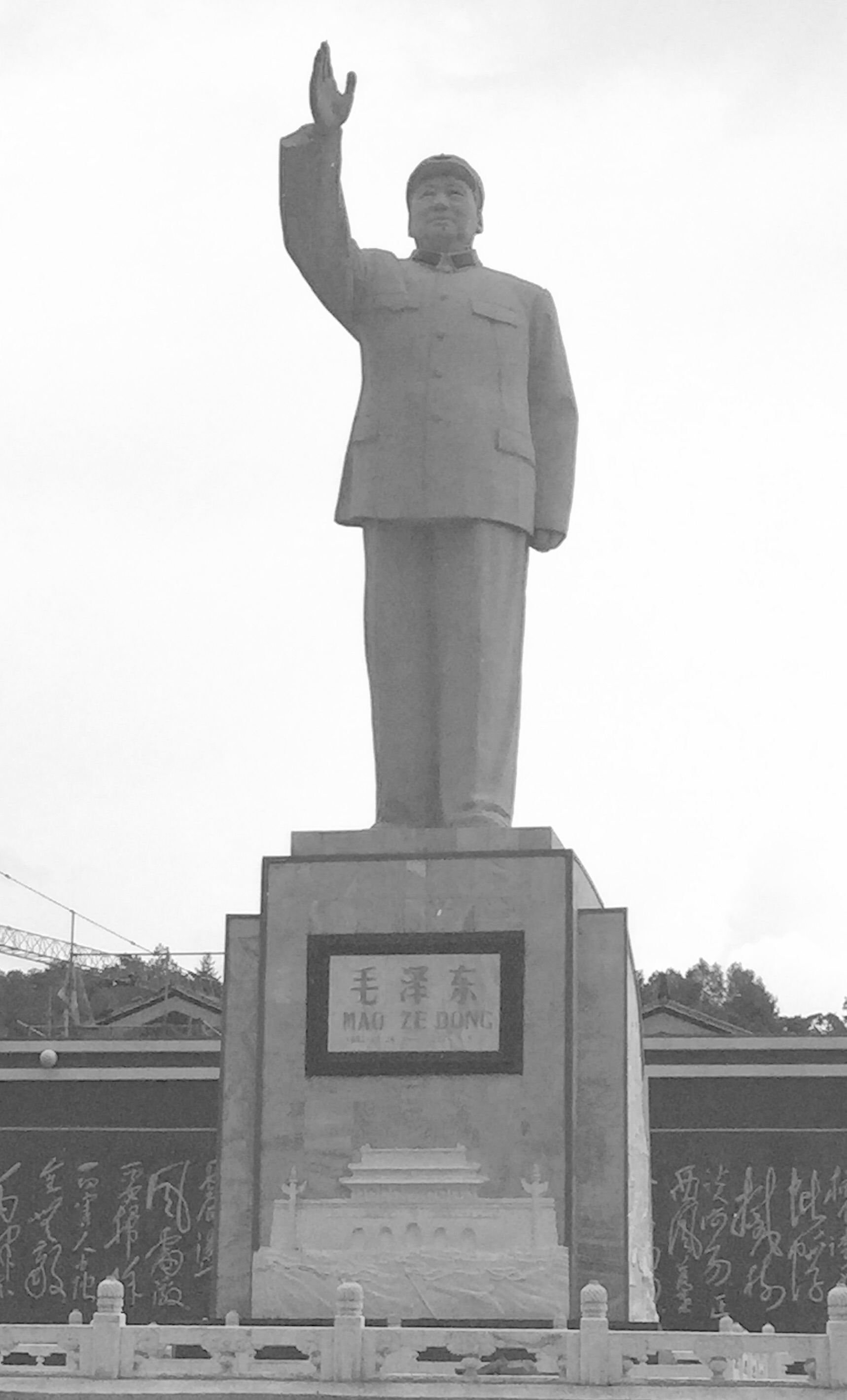
On the way to the Lake we had passed a very tall statue of Mao Ze Dong. Apparently Mao is still held in very high regard by many Chinese. There is obviously an element of control of the media and the messages which are released into the public domain. Apparently many Chinese have no knowledge of what happened in Tiananmen Square. There is no access to Facebook or many other internet websites and this is obviously an attempt to control the information which Chinese people can access.
On the way back from the Black Dragon Lake we stopped at
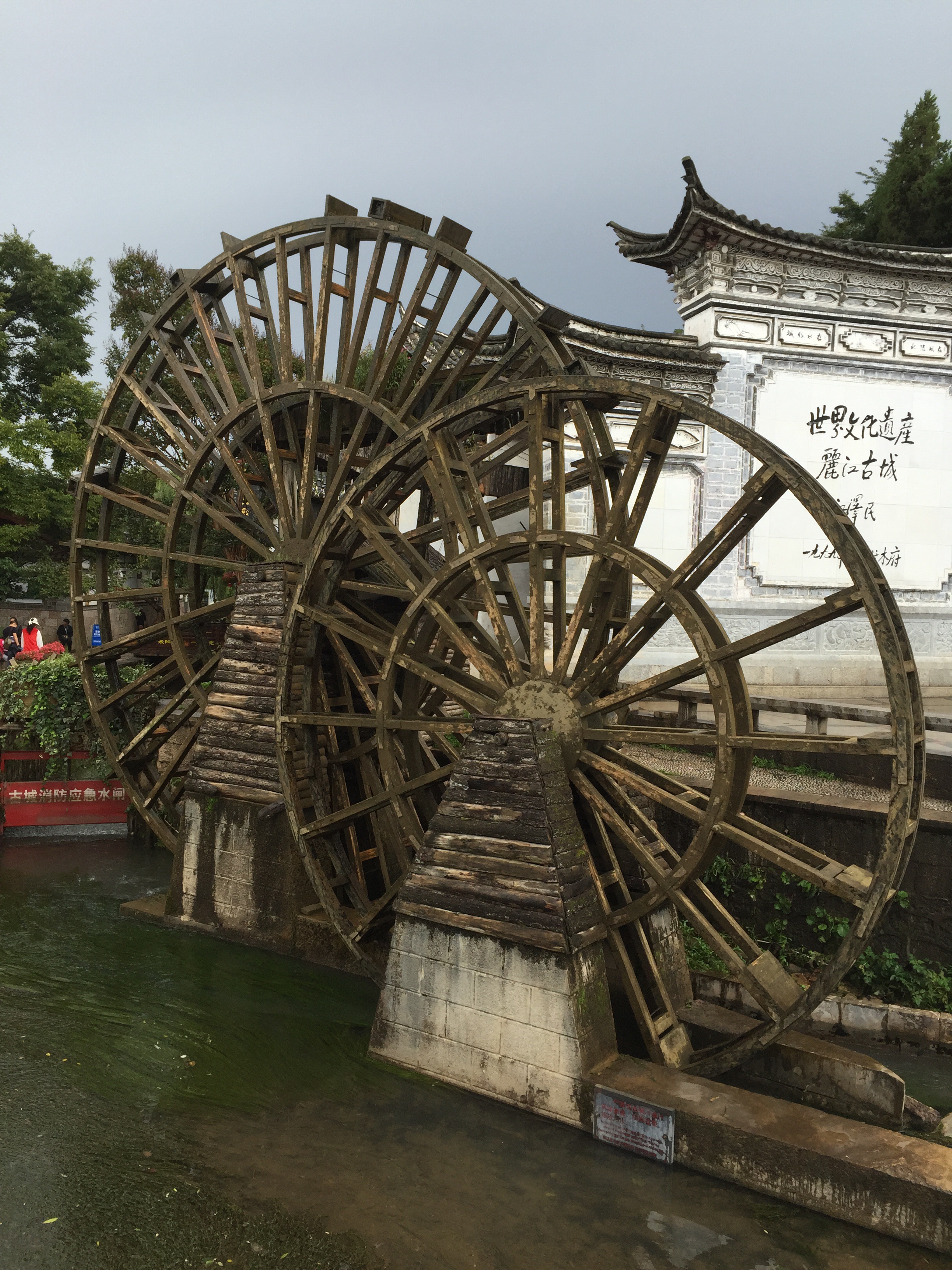
Waterwheels which are located just outside the old town and are a major tourist attraction with large numbers of tourists having their photographs taken in front of these Waterwheels.
That evening after dinner we were in bed by 10.00 as we have an early start tomorrow. As we have been crossing China we have been climbing to higher and higher altitude as all this region of the country is mountainous. As we traveled to Lijiang we reached heights of over 8,000 feet and Lijiang itself is at 6,700 feet. Another feature of our travels is the number of tunnels and one we pass through today was almost 4 kilometres long.
Tuesday 8th September Lijiang to Xichang
Up at 5.15am this morning as we were leaving our hotel at 6.30 to walk back through the streets with 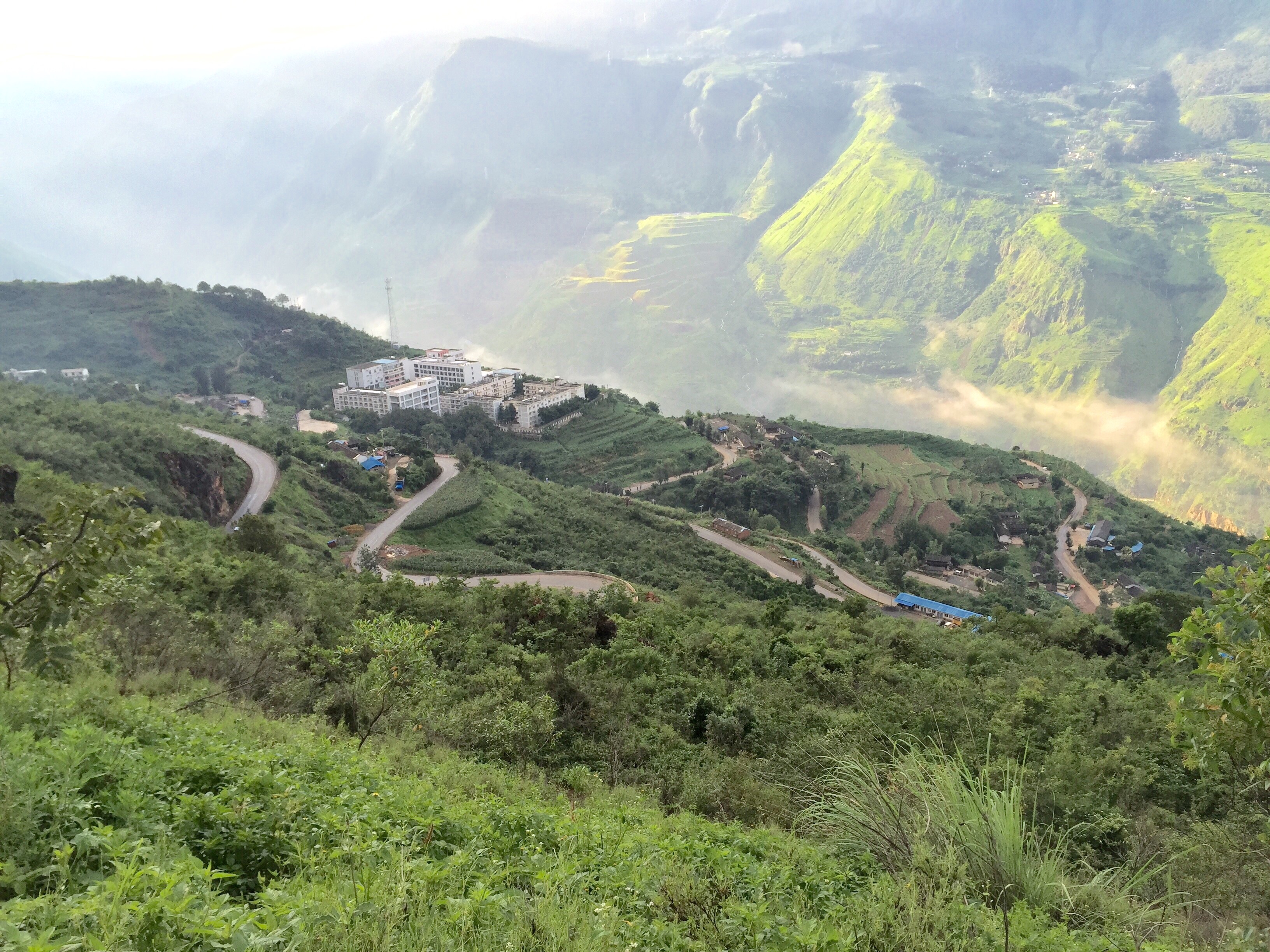
our backpacks to our truck Penelope. Nothing could prepare you for this extraordinary road journey. The road wends its way up mountains switching back on itself creating incredible coils as it snakes around, through and over the mountains.
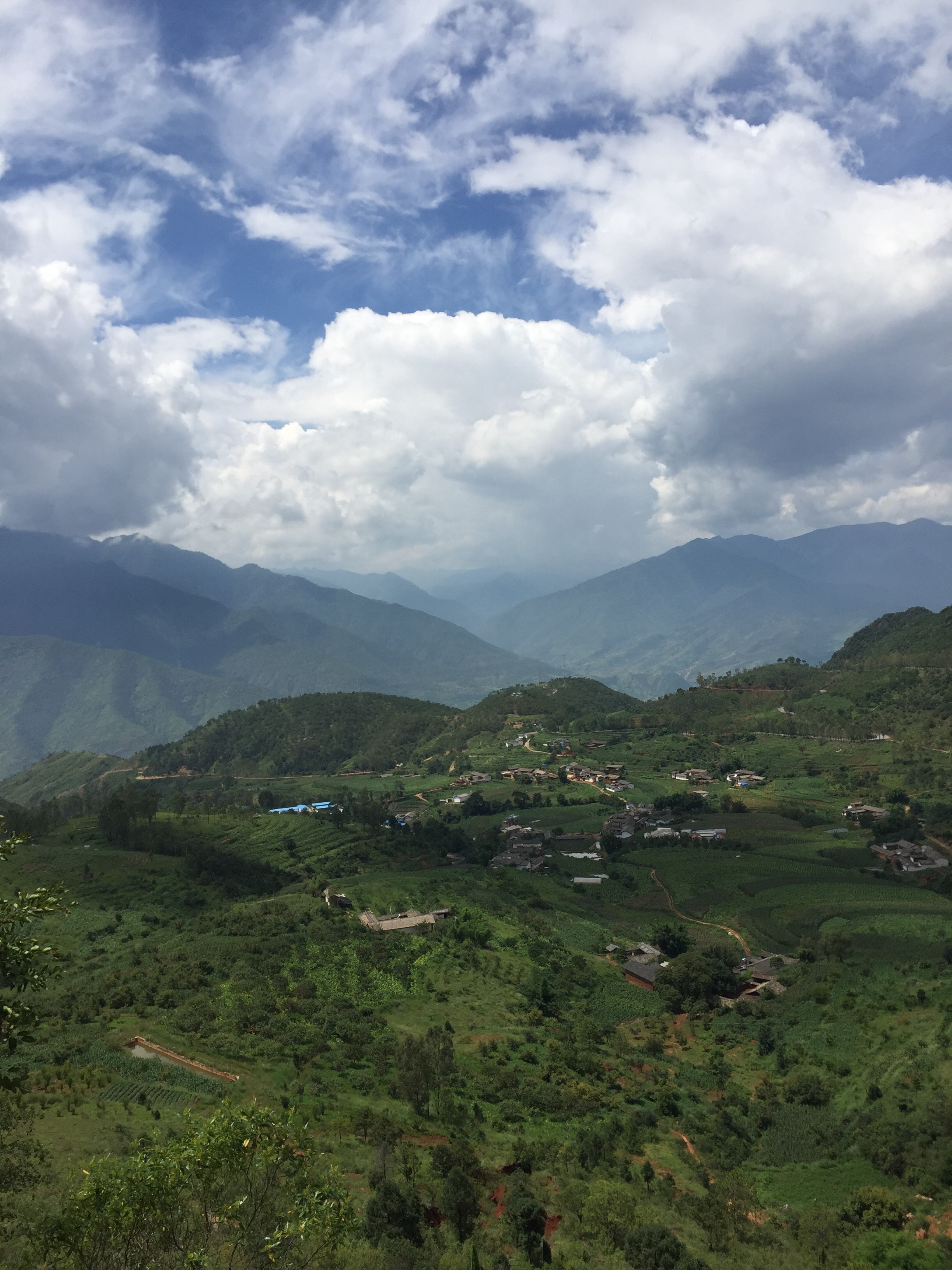
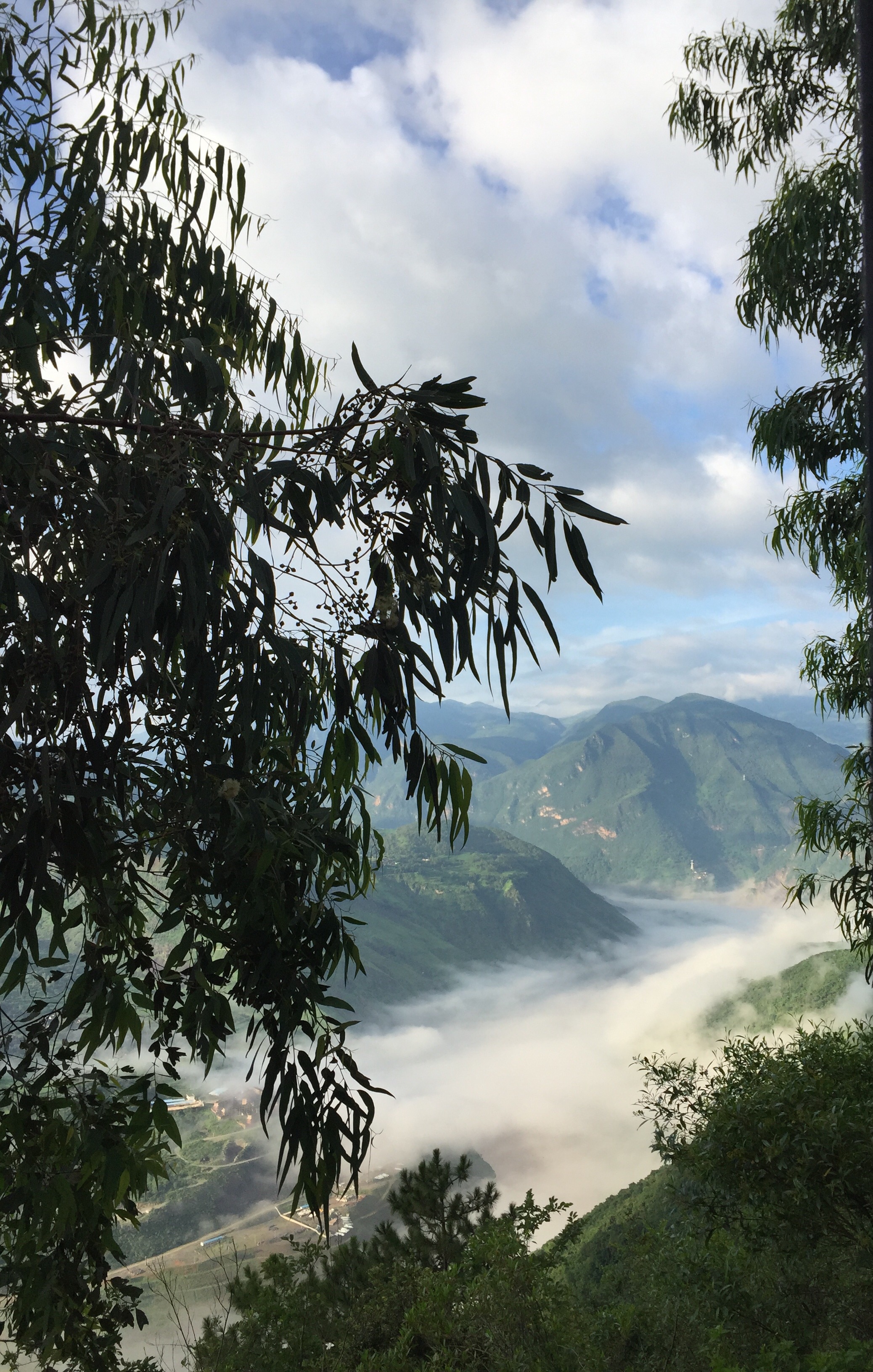 In the early morning light the clouds are sitting down in the valleys and as the morning sun warms the air the clouds start to slide up the mountainsides. The scenery is stunning, awe inspiring and absolutely beautiful. It is almost impossible to describe the beauty. The mountains,
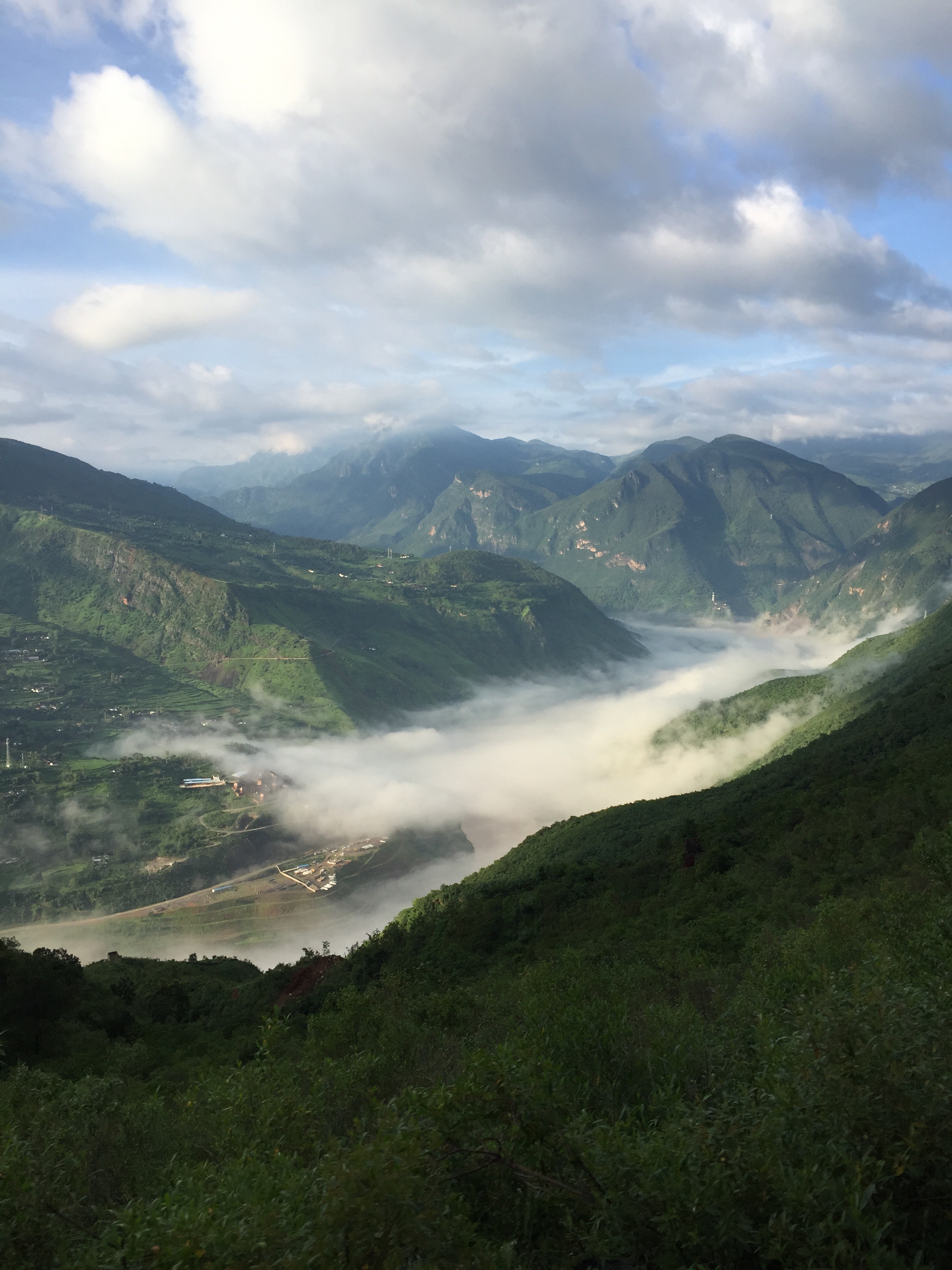 valleys, clouds and light look superb with different shades of light and colour making a spectacular display of nature.
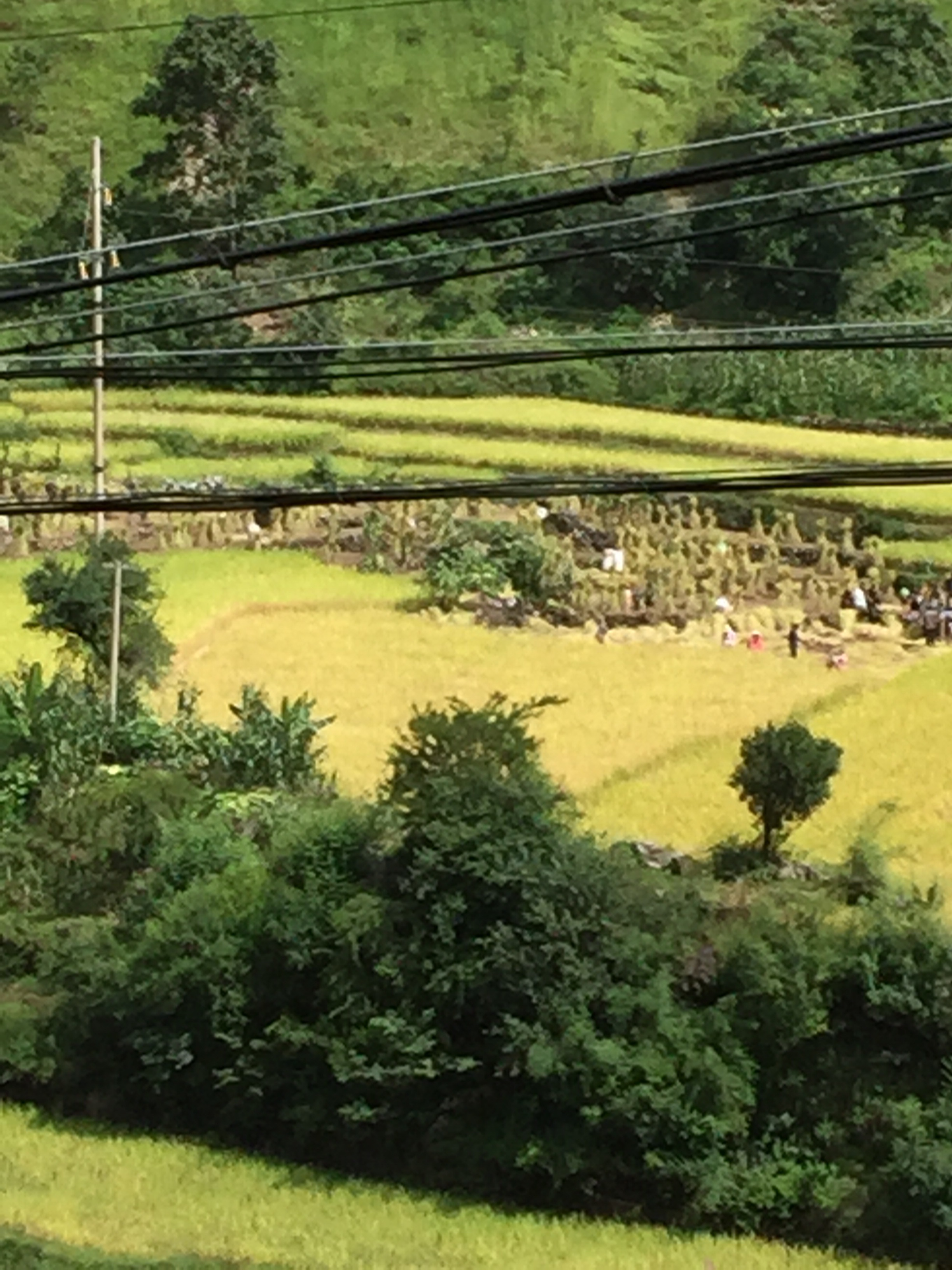
We travelled today through endless beautiful mountains and valleys. Also in some areas the crops planted are in different shades of green and create a beautiful scene with the 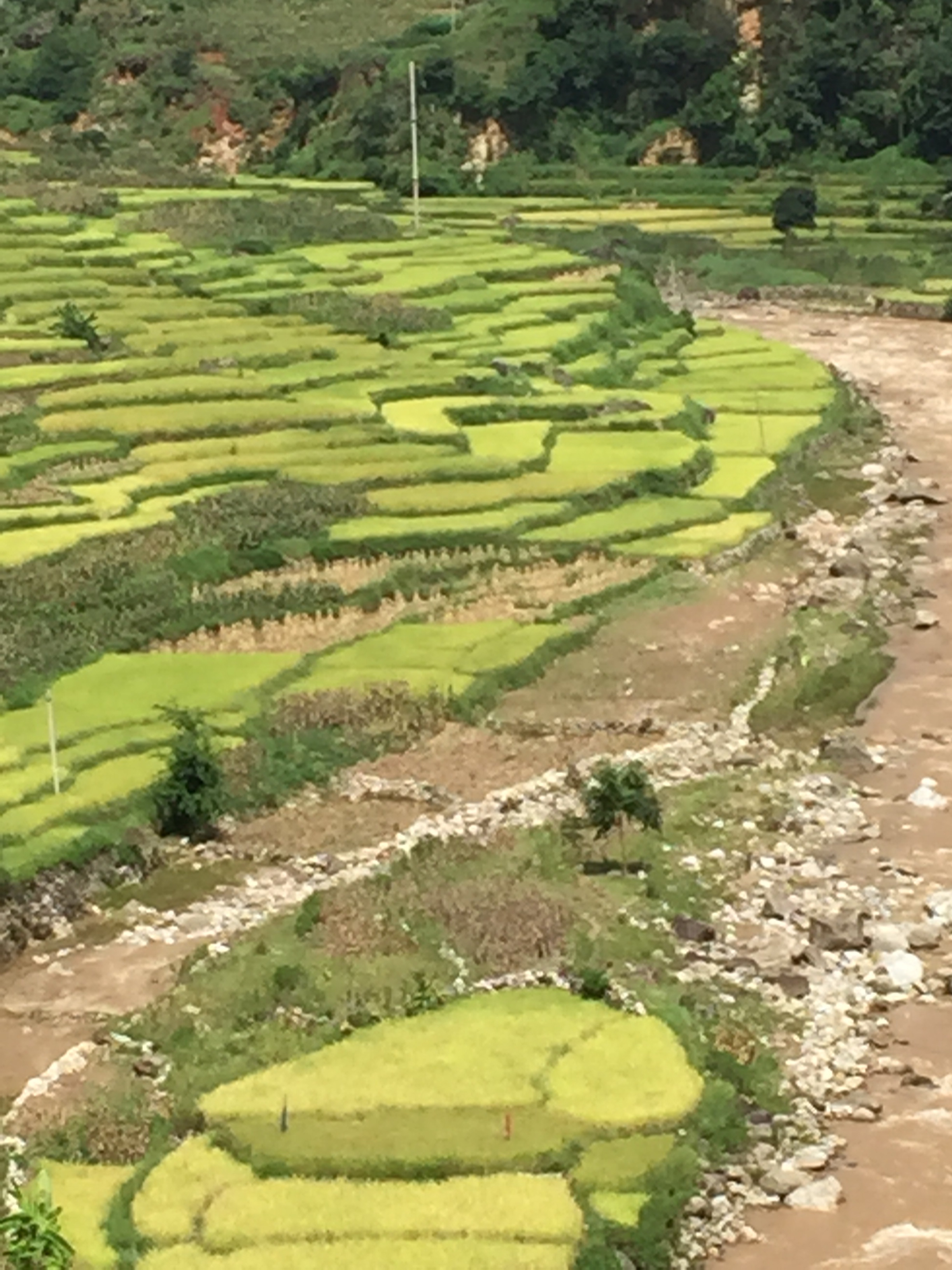 shapes of the planted crops producing an interesting mosaic.
The road on which we are travelling is slow driving and by the finish of
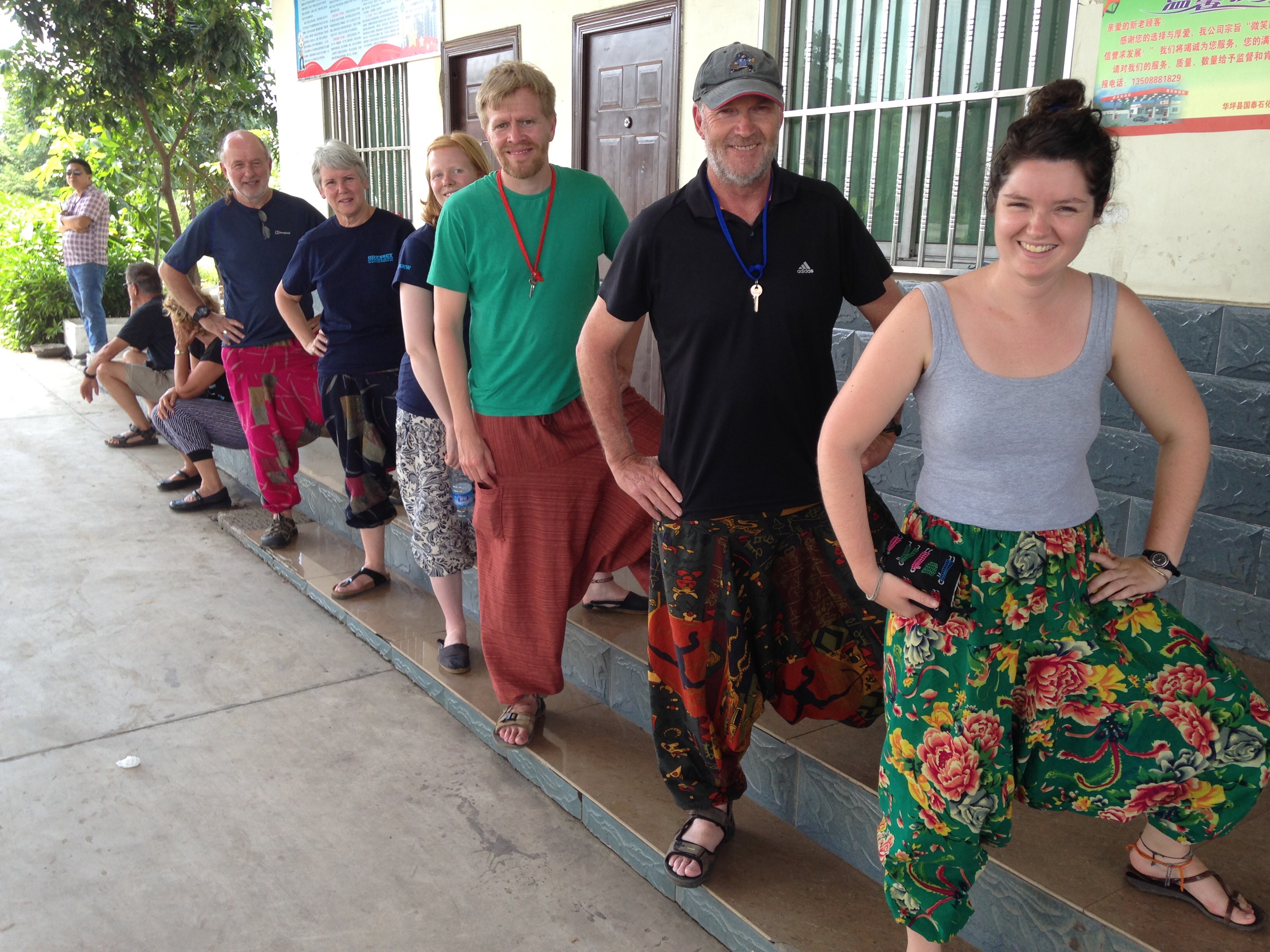
this trip we have travelled for 12 hours with short bathroom breaks. We snacked on the truck as we journeyed along. The distance we travel was only 352 kilometres but due to the nature of the road with its twists, turns and in some places many potholes the driving was extremely slow. We crossed into Sichuan Province in the late afternoon and we finished our journey at 6.45 pm at our hotel in Xichang.
Today was a good sunny day and many people were in the fields 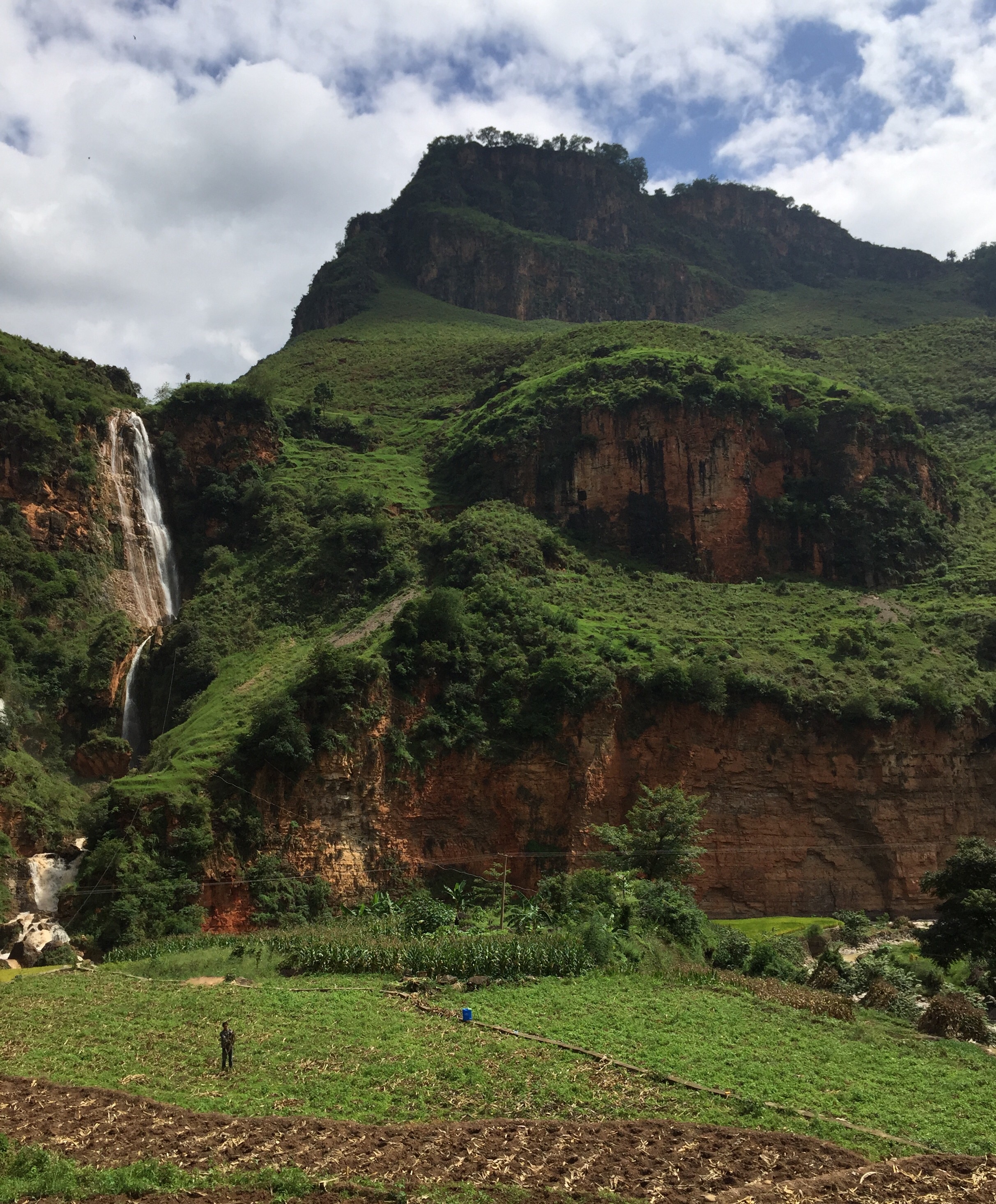 working on their crops harvesting by hand with a sickle. Others you
see carrying large woven baskets on their backs with the harvested 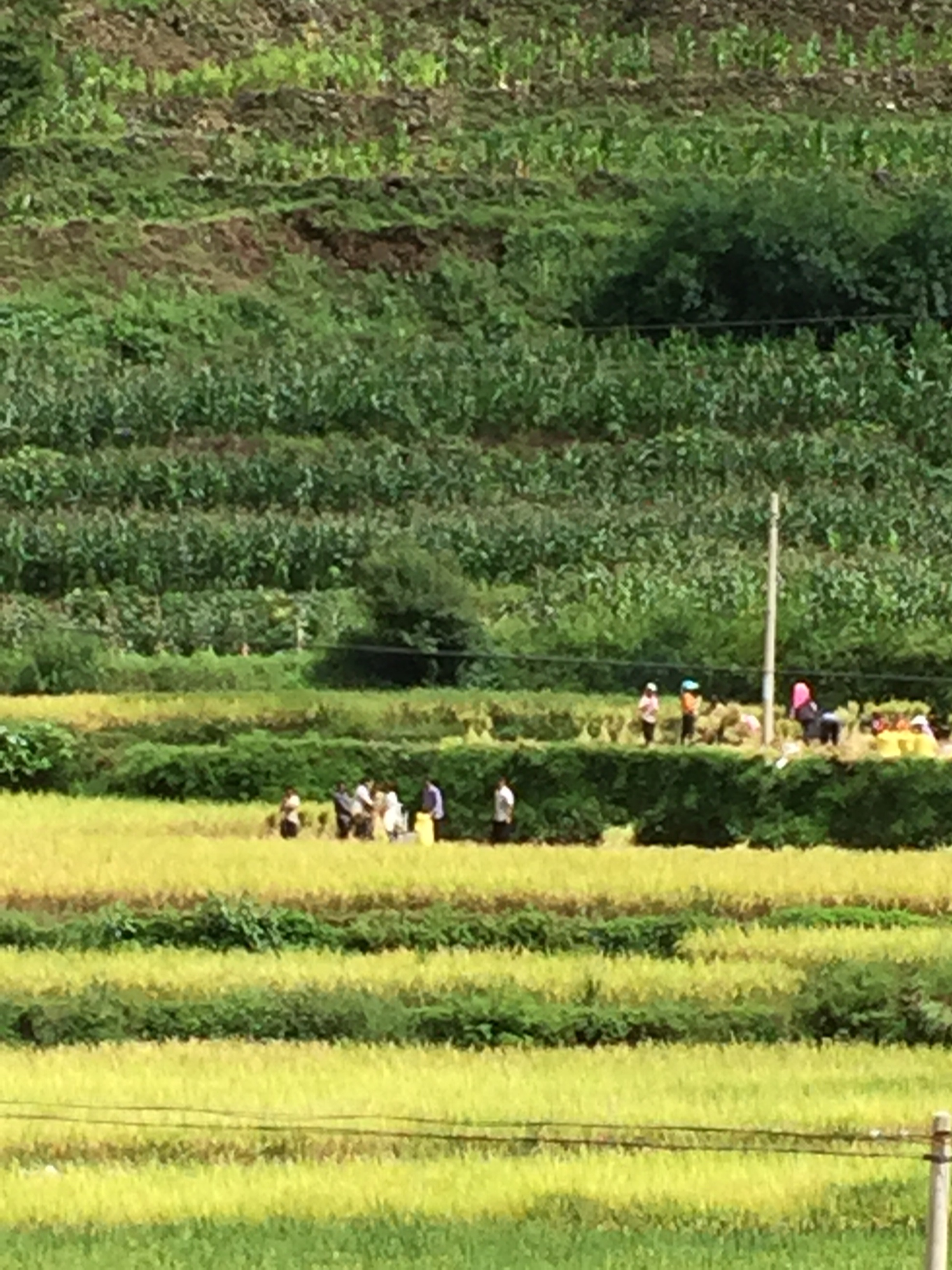 crops. Some people you see with their small herds of goats or cows shepherding them and staying continuously with the herds throughout the day. All available space in most areas, including the mountains is utilised for crops, therefore the herds of goats and cows have to graze on what is available outside the crop areas.
Wednesday 9th September Xichang to Chengdu
Up at 5.45am, breakfast at 7.00 and on the road by 7.30 as we journey to Chengdu covering a total of 615 kilometres (384 miles).
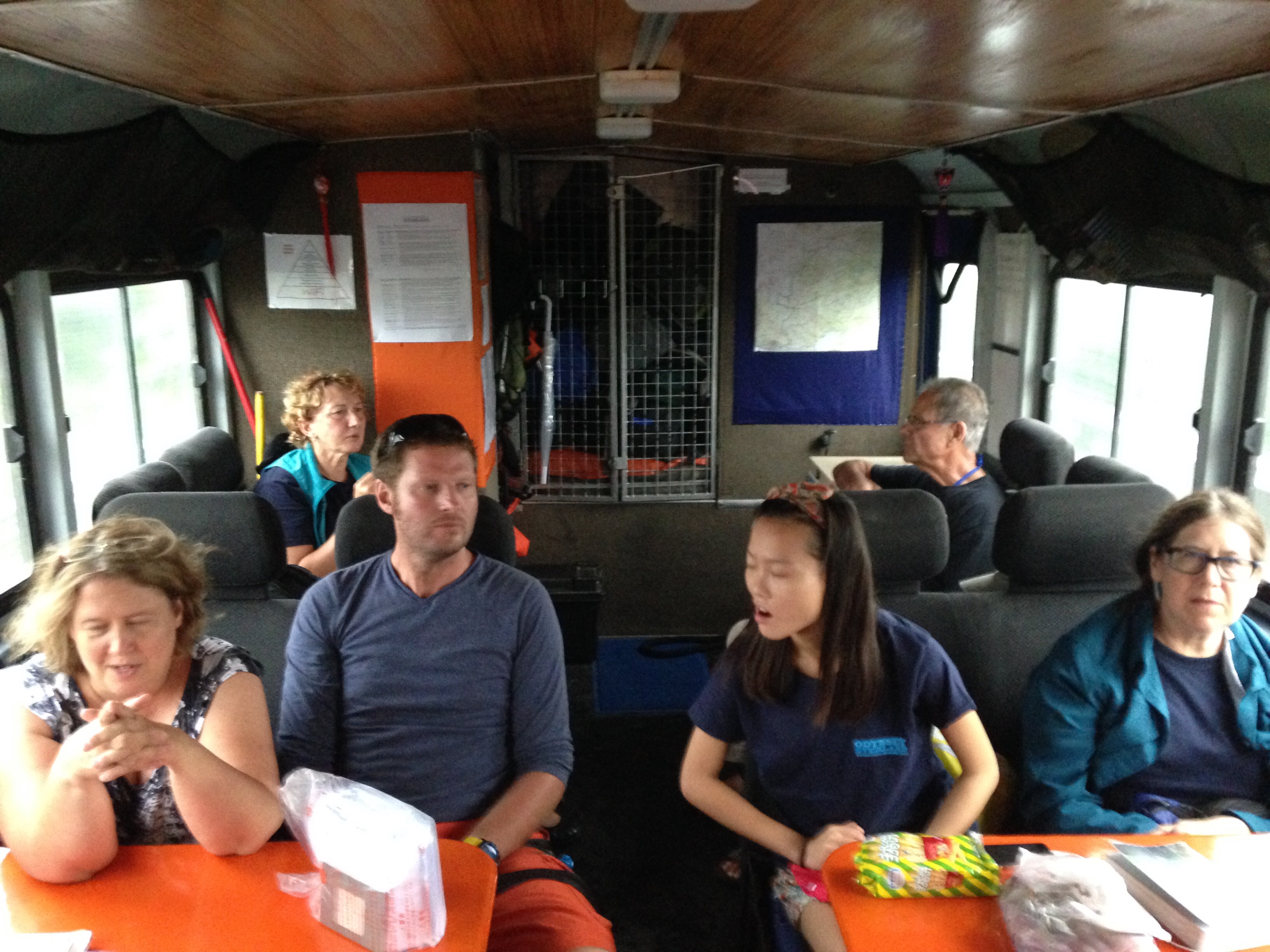
On the truck we have a two way radio system designed to allow communications between the truck cab and the passenger area. This
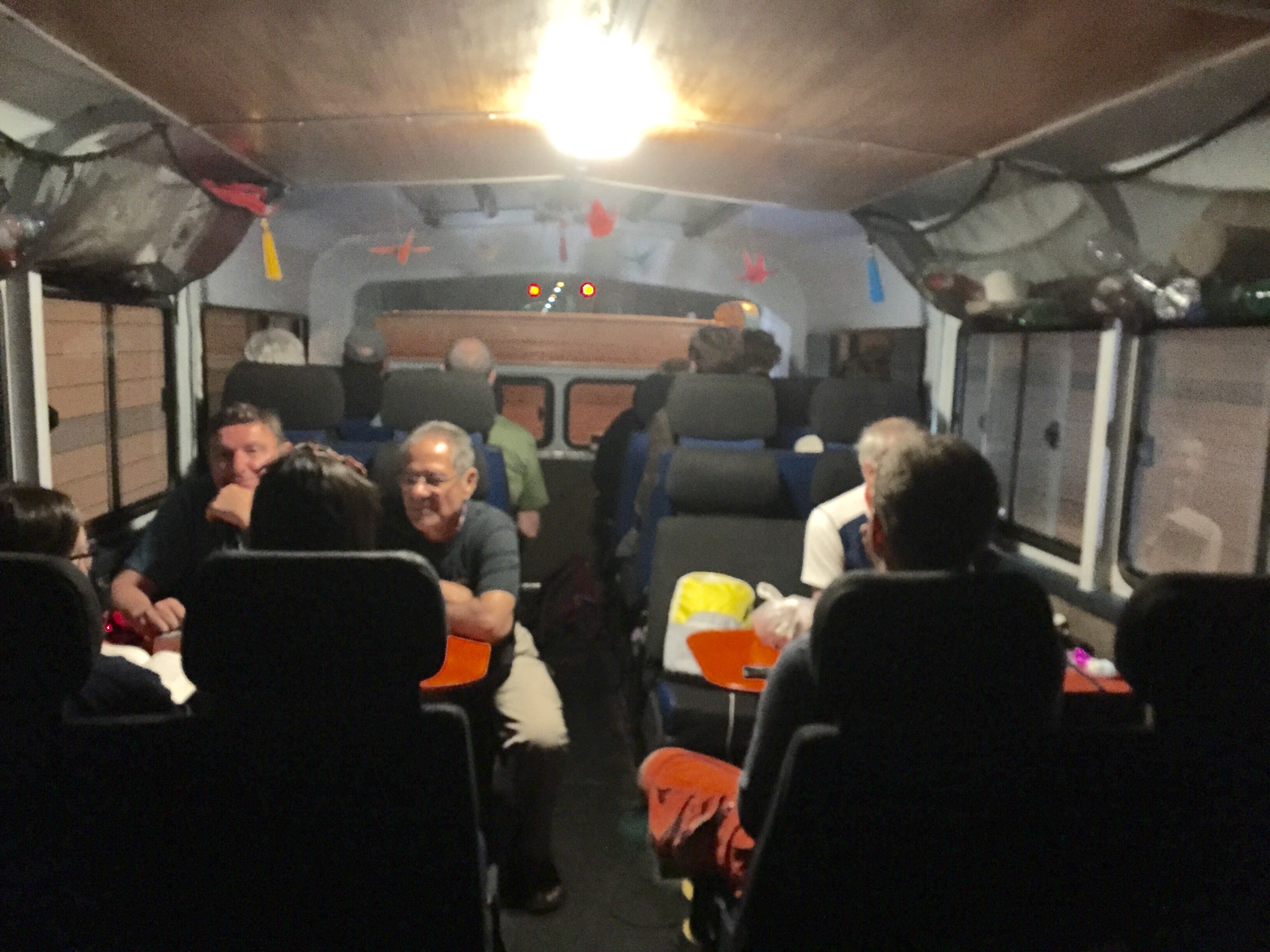
radio system is generally used to communicate the need for bathroom breaks but also allows our Chinese guide Anita to relay instructions on directions to our drivers especially as we make our way into the cities and locate our hotels which are usually towards the centre of the cities.
I have previously mentioned the number of tunnels through which we pass and also the length of the tunnels. One particular tunnel on today’s journey was 10 kilometres (6.25 miles) in length. Another one of the interesting features as make our way through the countryside is the burial chambers erected in the fields or on the side of the hills. Where people own the land they can erect the mausoleums on their land and the structures generally conform to the same style. Today the Mausoleums are dotted throughout the fields along our route and in some place there could be up to 10 Mausoleums in a group.
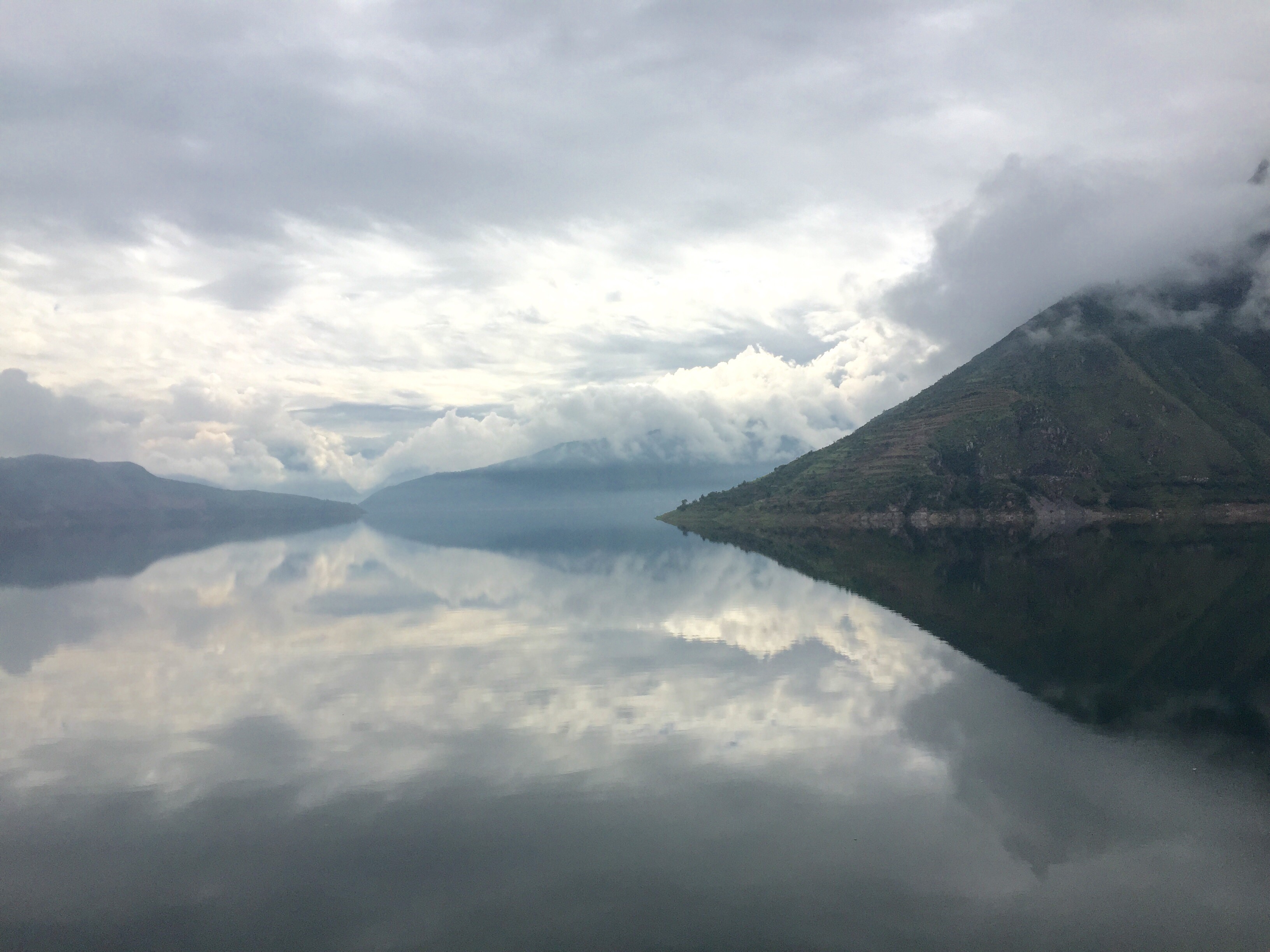 This morning we witnessed one beautiful scene where a wide expanse Of water was backdropped by mountains and clouds reflected majestically in the water. The beauty of the scenery at times is enthralling.
We stopped for lunch in Leshan and having consumed a lovely
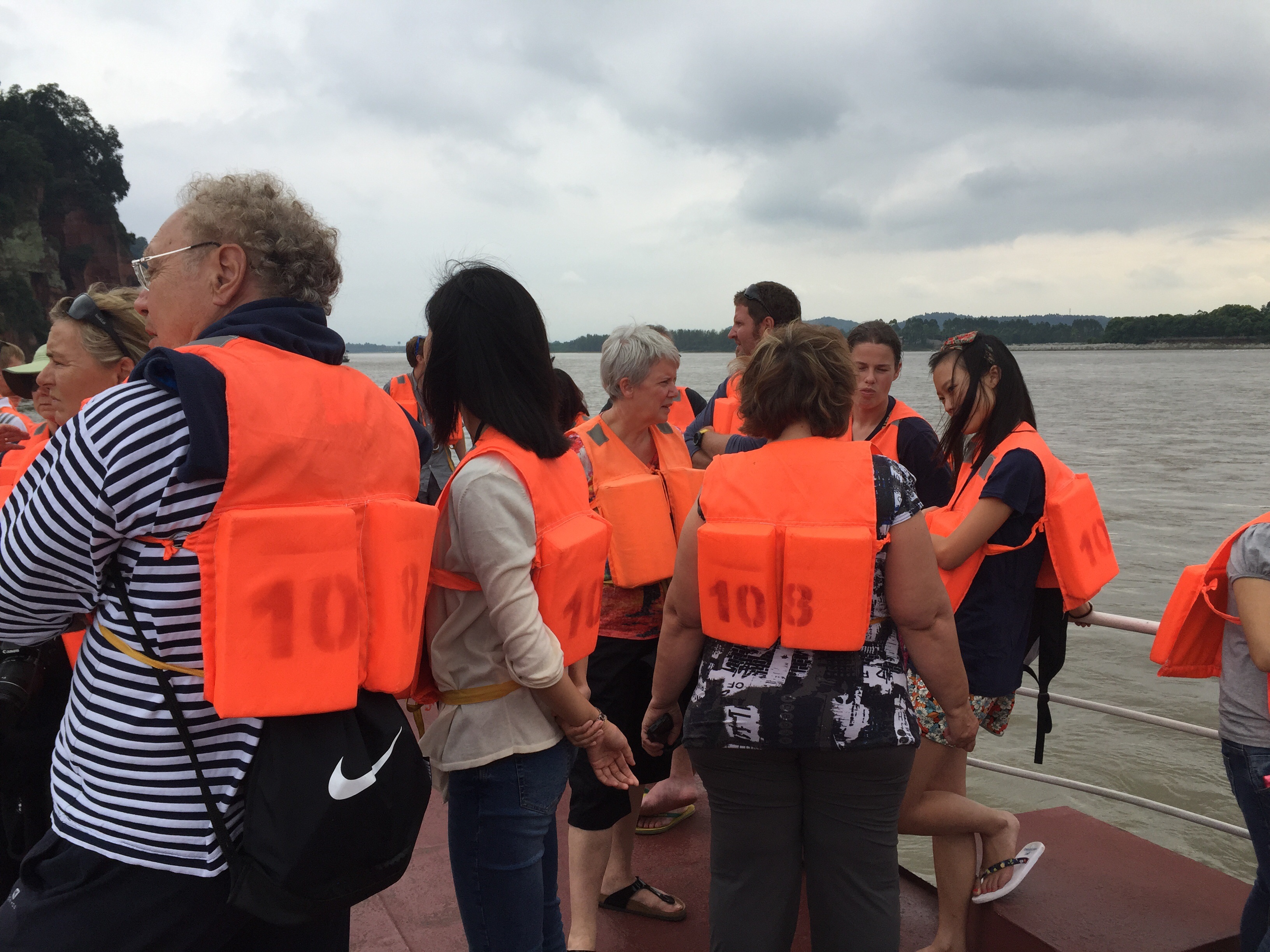
selection of dishes we made our way to the Pier in order to visit The Grand Buddha. We travelled by boat across the river to view The Grand Buddha which was carved into the rock face of Mount Lingyun above the opposite river bank.
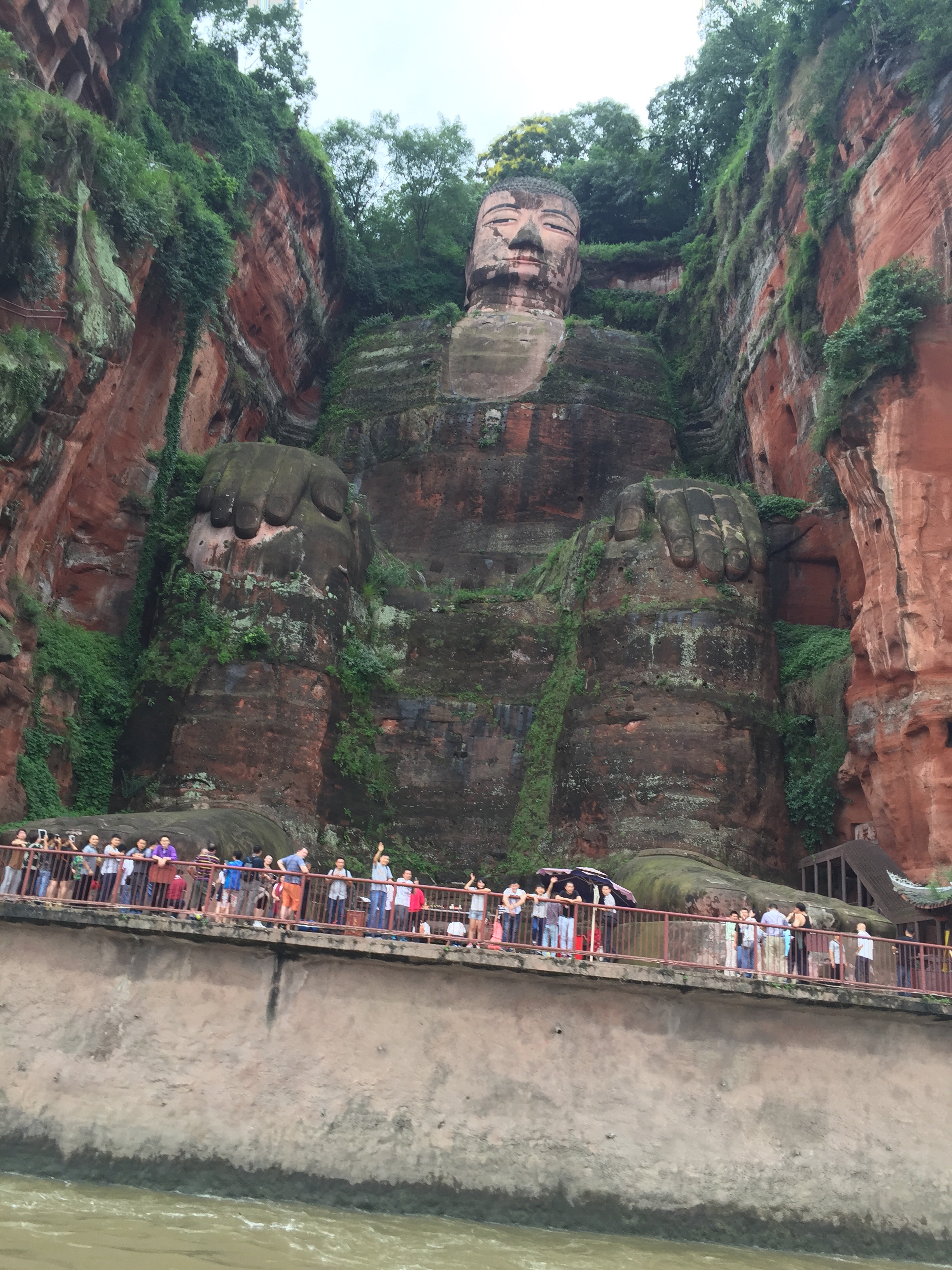
The Buddha is situated at the confluence of three rivers, the Minjiang, Qingyi and Dadu Rivers. This is a World Heritage site dedicated as such by UNESCO in 1996. The sculpting of the Buddha commenced in 713 AD and was completed in 803 AD. The Buddha is an impressive sight and the seated figure is 71 Meters tall which makes it the largest stone carved Buddha in the world. The Buddha was carved in this location in the hope that it would appease the river gods and calm the turbulent waters which 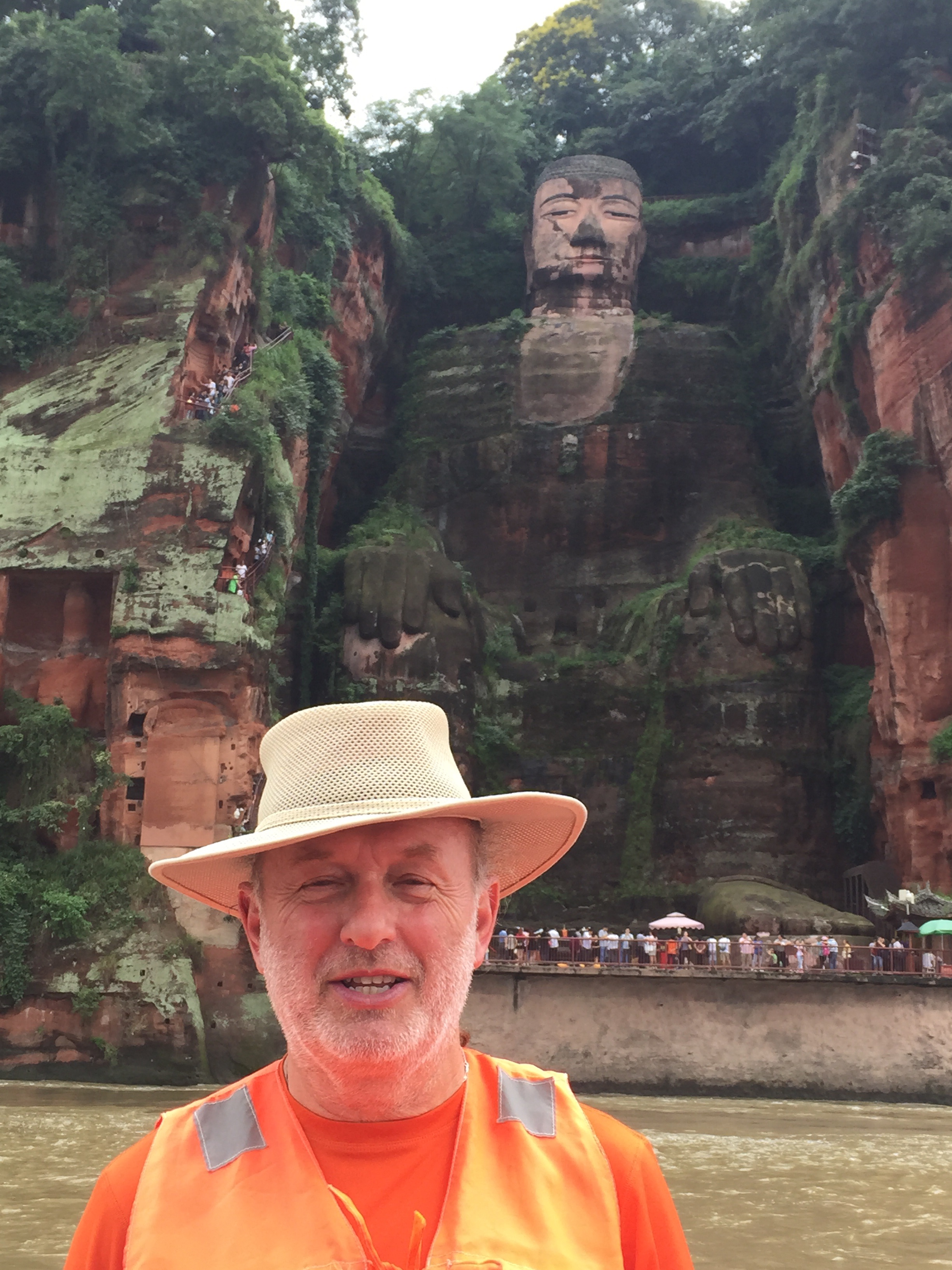 sank boats each year killing many people. Inadvertently this was the end result of carving the Buddha as so much stone was deposited in the river during the work that the river currents changed making passage safe for river traffic.
The cost of the boat ride was 70 Yuan or just under 12 U.S. Dollars and was well worth it.
Before we boarded Penelope our truck Eamonn examined some flutes which were on sale at a stall beside the car park and proceeded to play a few tunes. Eamonn though living in the U.S. grew up with Irish music and dance and is an accomplished musician. Eamonn purchased a flute and there was a lovely moment when Penelope exited the car park as the stall holder serenaded us with a tune on another flute he had for sale. Once again people here were wonderfully friendly.
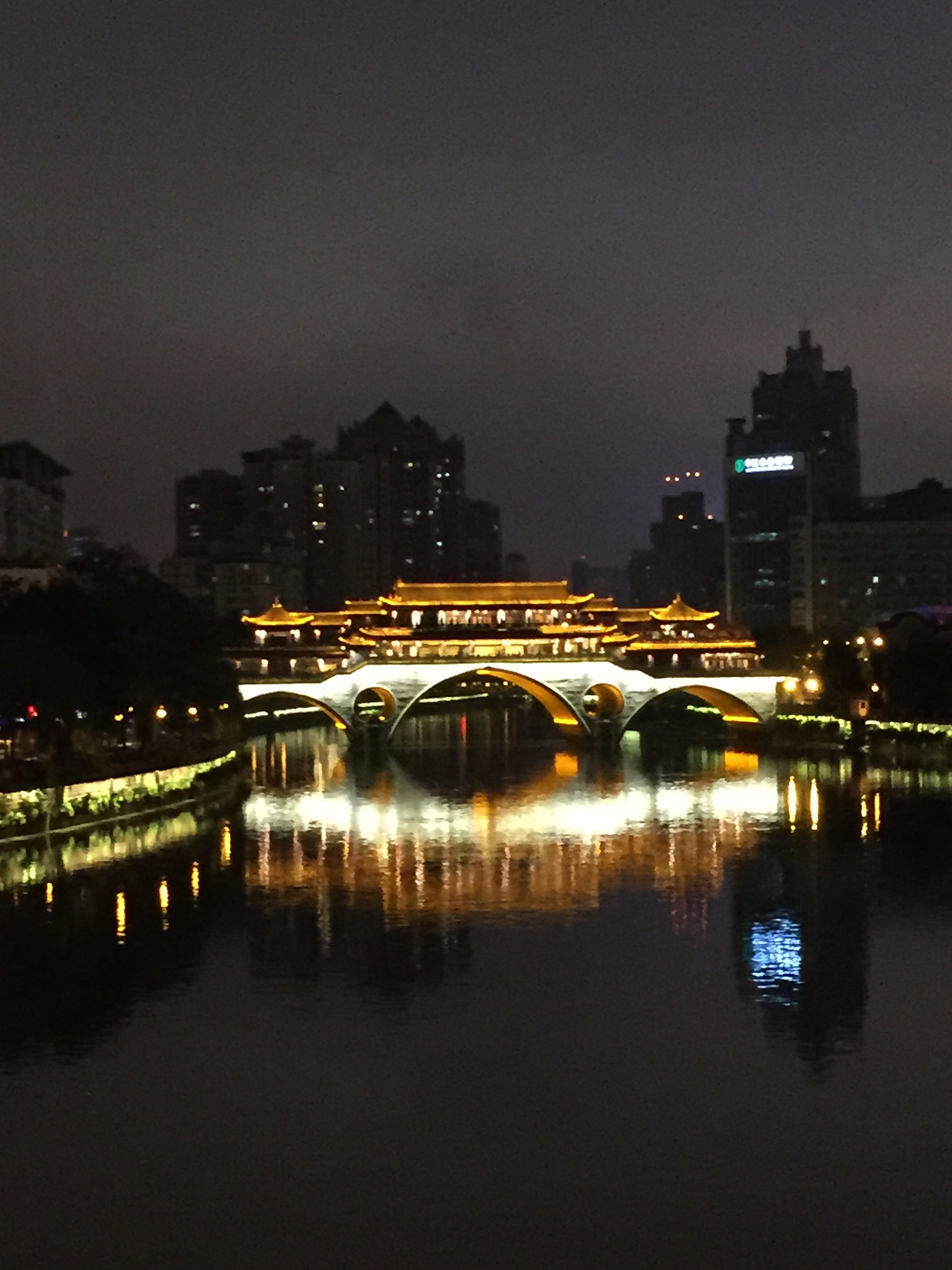
We headed on our way to Chengdu and it was 7.20 pm when we got to our hotel, the Shan Shui Hotel which will be our base for the next two days. On the route I joined Izzie our driver in the cab of the truck and accompanied her as we made our way to the hotel. Each day one of the passengers is given the opportunity to sit in the cab for a period. Sitting in the cab gives you a completely different perspective of the
journey. As we drove into the city I relayed the instructions on road directions from Anita to Izzie and looked for clarification where required. Chengdu is a city of 14 million people and we arrived at rush hour, consequently it took some time battling with traffic before we reached the hotel.
 theoldmanontheroad
Fascinating! There’s a book in you Eugene 😄
LikeLiked by 1 person
What an incredible journey….best wishes from all the McCoy’s in Clonlara
LikeLike