Tuesday 15th September 2015 – Lanzhou to Lhasa
The next part of our adventure takes us to Tibet, another eagerly awaited destination
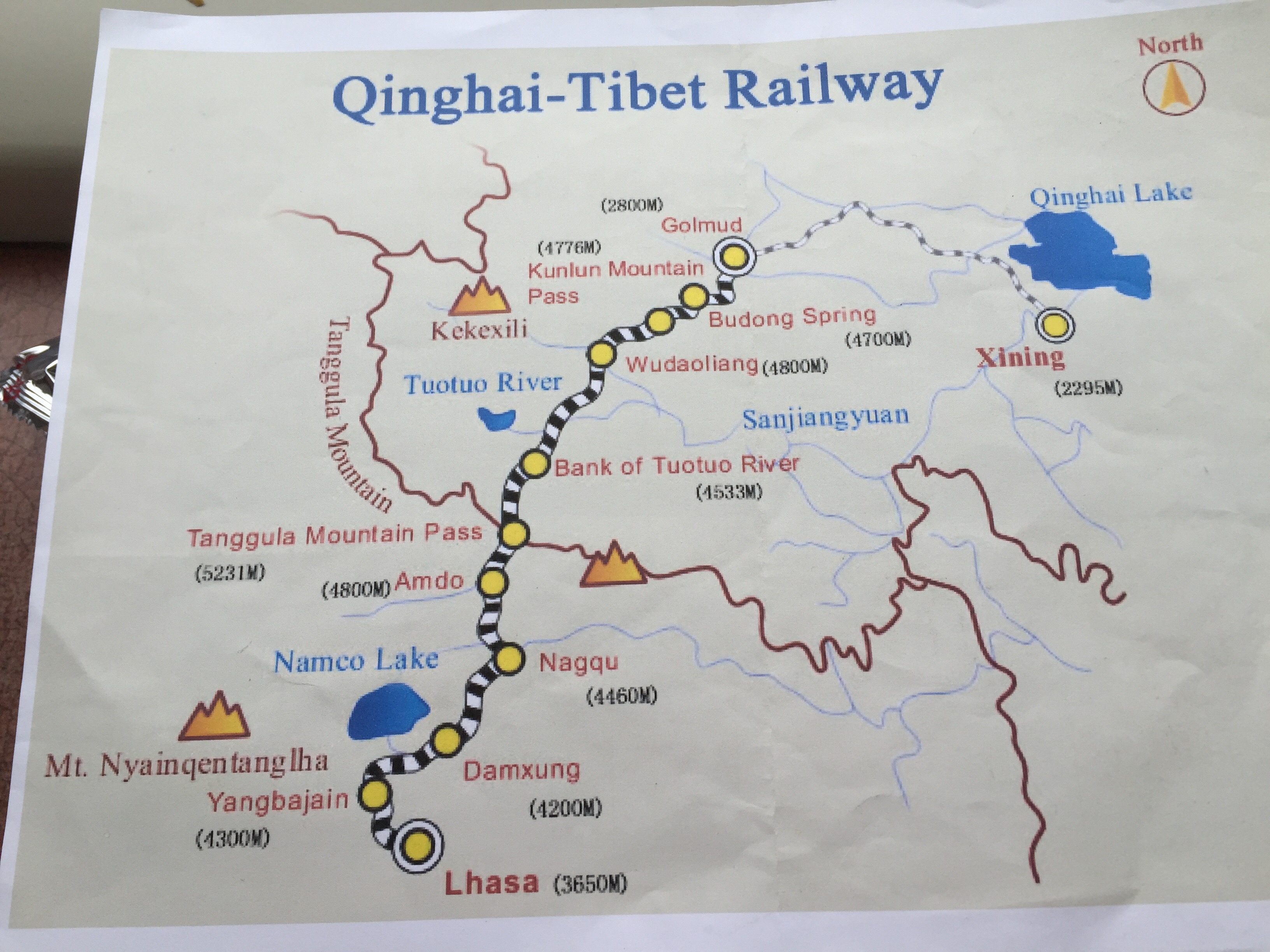
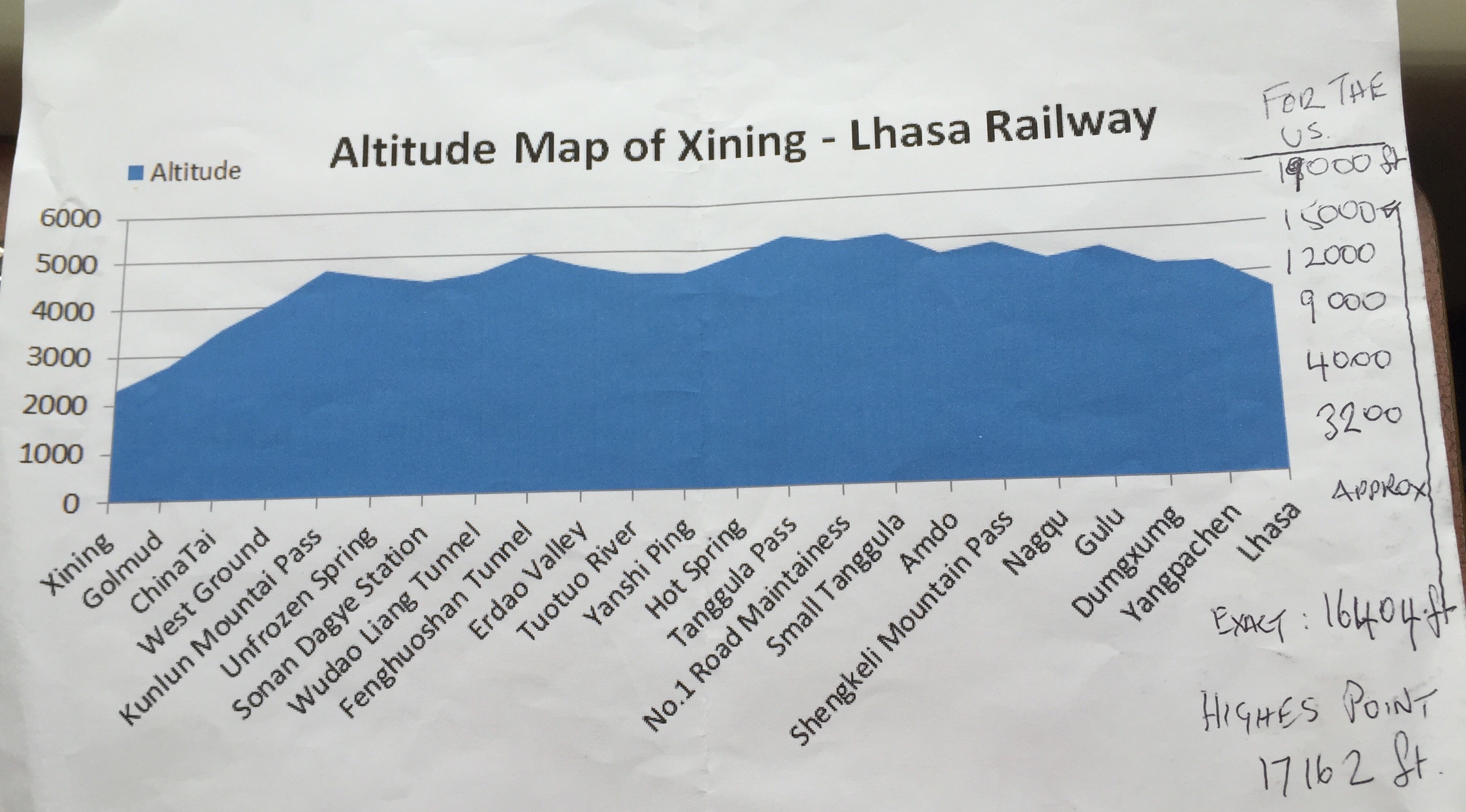
conjuring up images of the Dali Lama, Tibetan Monks, Temples and of course high altitude mountains. There was also a certain amount of trepidation as we were climbing to a height of around 12,300 feet in Lhasa but on our journey there we would be passing over 17,000 feet. I had started taking Diamox to counter the possible effects of altitude sickness but some of our group could not take this medication and one or two were not going to take anything
having spent time at this level of altitude previously. Kelly was suffering from an ear infection and had been attending various Chinese hospitals for intravenous antibiotics. Kelly was concerned that the altitude might have a negative impact on her ear and the infection.
This morning we are temporarily parting company with our truck Penelope as we embark on a 24 hour train journey up to Lhasa in Tibet. Penelope is being driven by Izzie to the city of Golmud in Qinghai Province where we will rejoin her when we travel back down from Tibet.
Firstly we had to get breakfast so myself and Anil decided to try the Banqueting Hall in our hotel before 8.00 a.m. It was 15 Yuan (less than $2.50) for a complete breakfast from a whole range of dishes. When we entered the Hall we discovered that we were breakfasting among 250 Chinese business people, the men in suits and the ladies in blouses and slacks. We found two vacant places at one of the tables and proceeded to eat breakfast. One gentleman tried to engage with us but once again our lack of language prevented serious communication. The business people began to leave for work but I noticed that one girl was trying to take a photograph of the girl beside me and include me also so leaned in and smiled for the camera. Another young girl wanted a selfie with me and I duly obliged.
After breakfast I needed to go to exchange money and following two false starts we were directed to the Bank of China which is the only Bank where you can physically exchange cash. When John and I arrived at the Bank of China the Security guard welcomed us in good English asking what business we wanted to do. When I explained our business he went and found the appropriate forms for us to fill, sitting us down at a desk so that we could complete them. When we had the forms completed we were taken to a young teller who again had good English and performed the exchange in a very pleasant manner. This exchange was performed with minimum of fuss and bureaucracy which was in contrast to our previous experience in Xian.
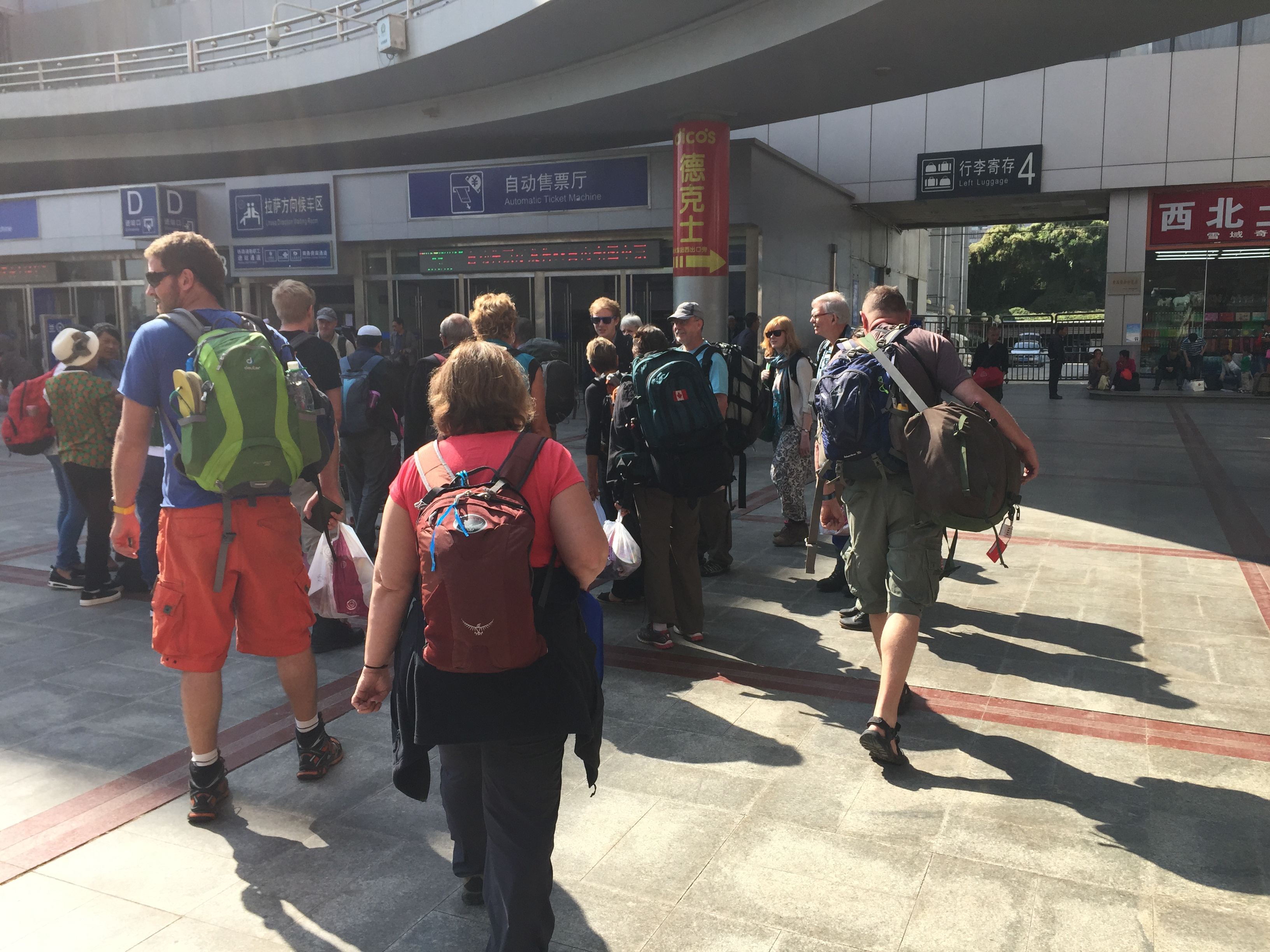
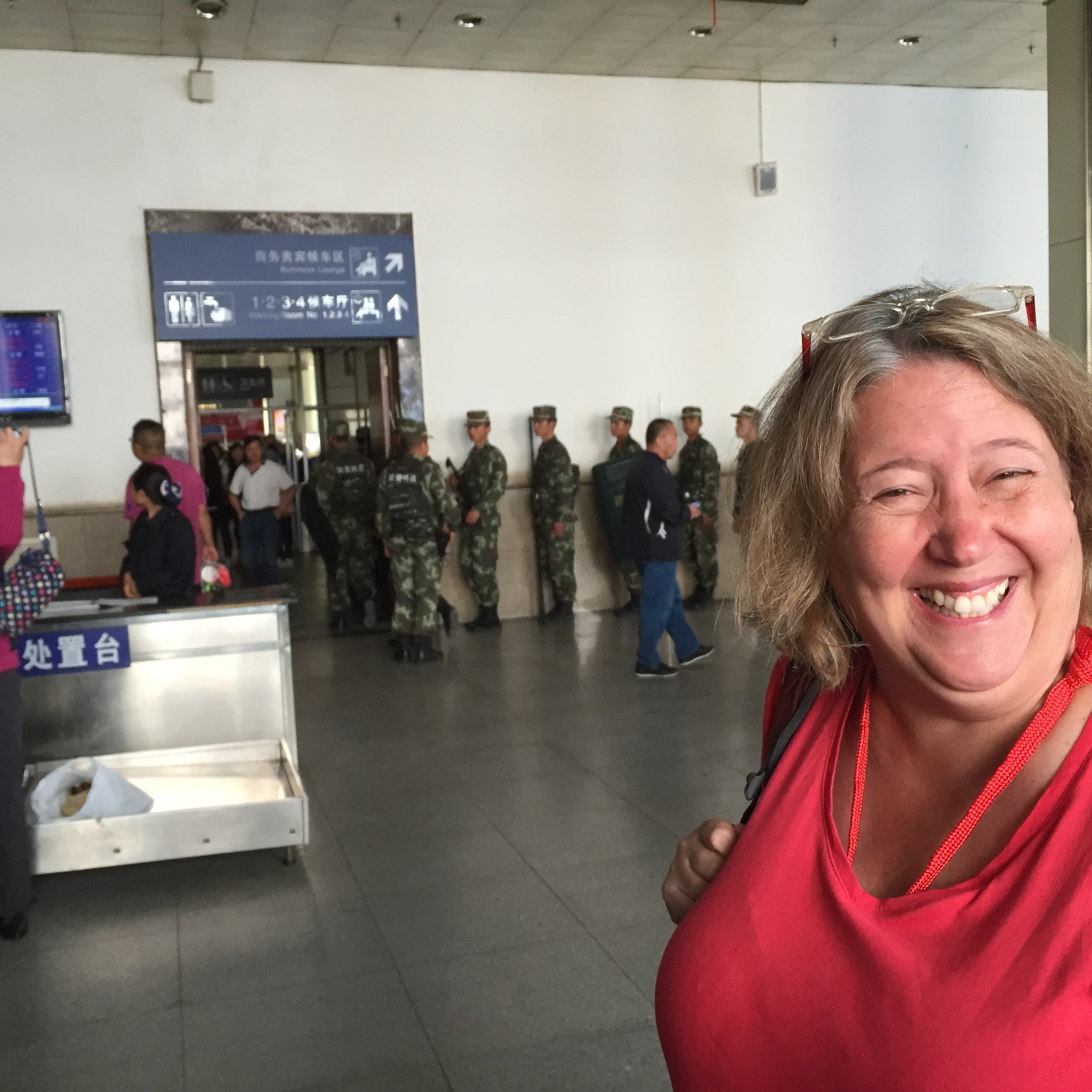
At 10.00 a.m. we travelled to the railway station in order to catch the 12.17 p.m. train up to Lhasa on a trip which takes approximately 24 hours. At the station we had to show our passports to the Chinese soldiers on security duty and our bags were also security scanned. There were a lot of interesting passengers in the waiting room for the Lhasa train with 6 Chinese soldiers quietly standing and watching proceedings.
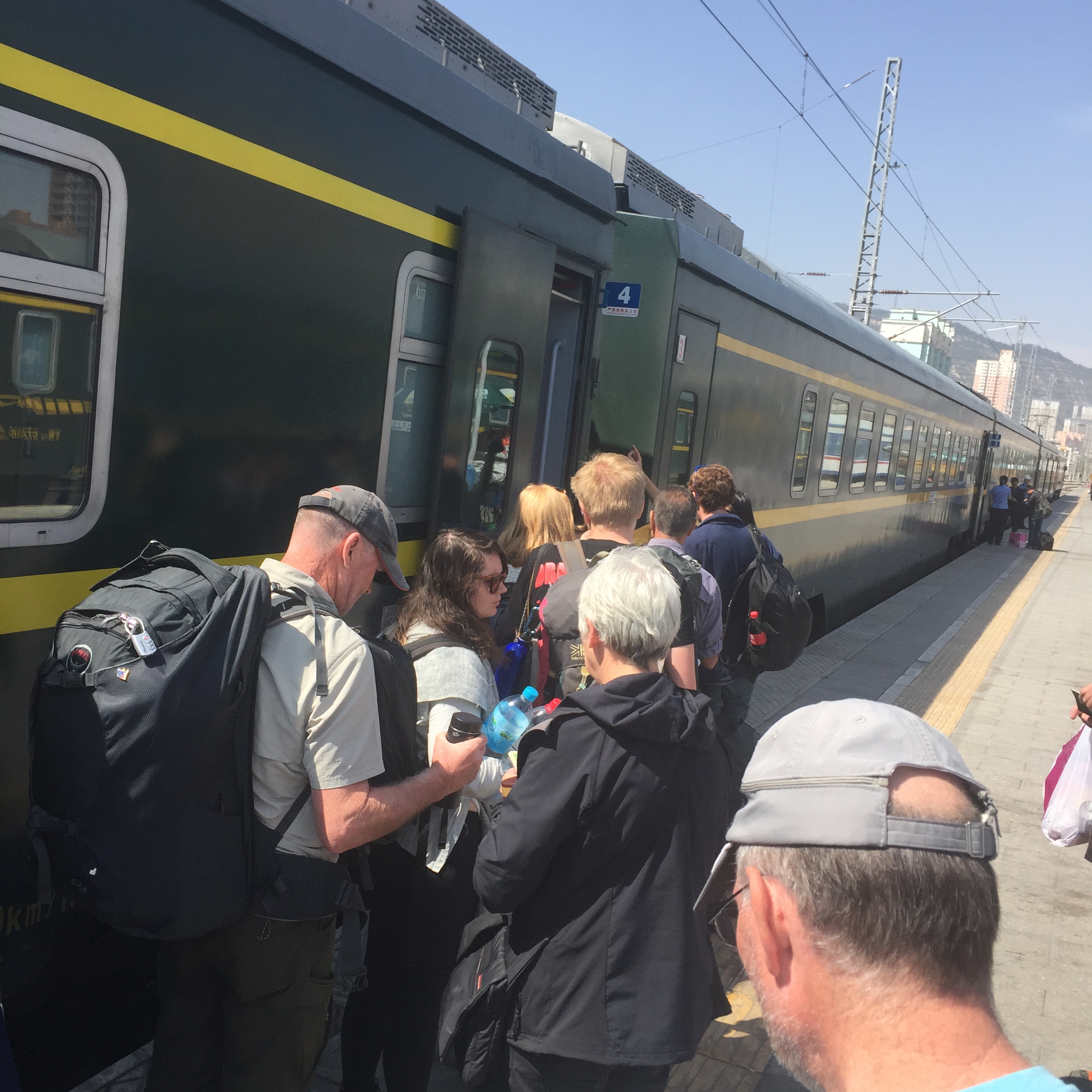
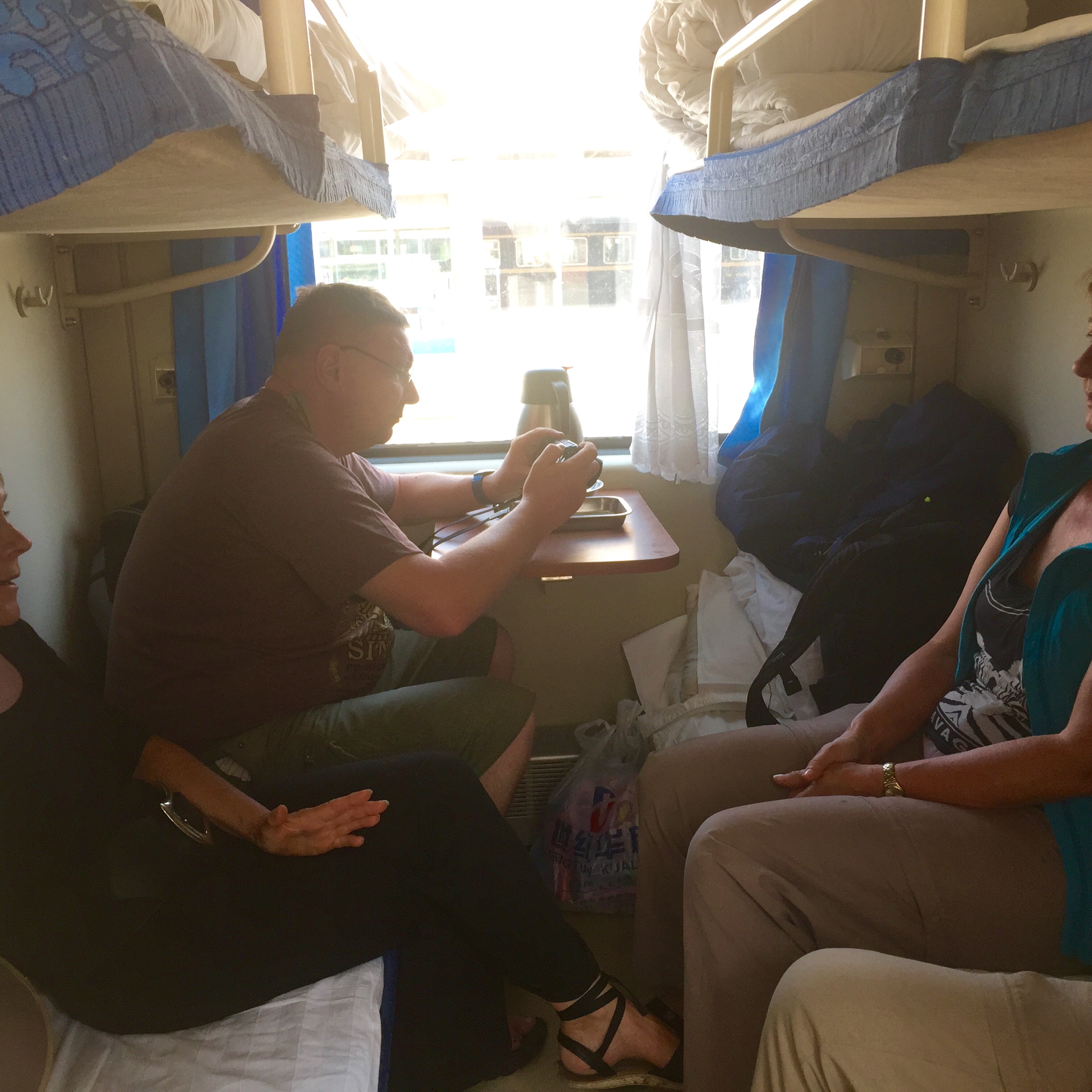
When we boarded the train we had to work out which compartments we were occupying. As we would be travelling overnight we were booked into sleeper compartments and these compartments are arranged in groups of 6 bunks, 3 on either side. The only problem with this setup is that the bottom bunk becomes the seats for the people in the compartment. In the corridor outside your compartment there are only 2 small pull down seats beside the windows but the corridor is narrow. My companions in the compartment were Will, Peter, Julia, John and Joanna.
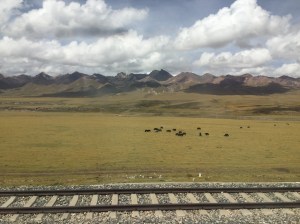
This was a fascinating journey not only from a scenic viewpoint but also from the perspective of the different peoples travelling on the train. These people include ourselves, Chinese, Chinese soldiers and of course Tibetan people going home. This train had already been travelling for four days before we boarded and had travelled all the way from Beijing. As we had started to ascend the Tibetan Plateau the scenery had once again been changing dramatically to flat open prairies with herds of cows, yaks, sheep, goats and Dzo and Dzomo, a cross between yaks and
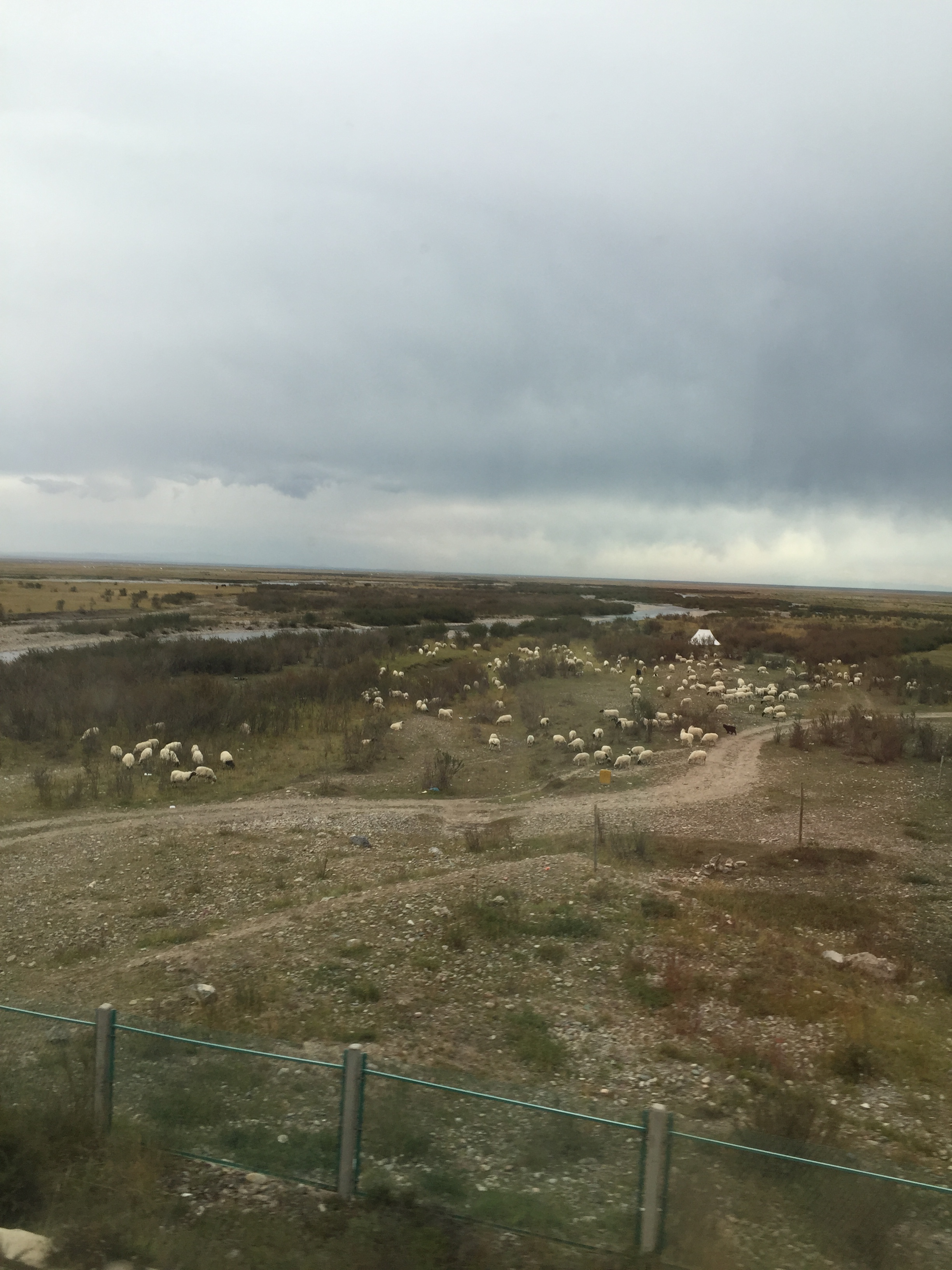
cows. In terms of people’s homes initially we were seeing yurts but as we were progressing further up the plateau the structures became more permanent and made of brick.
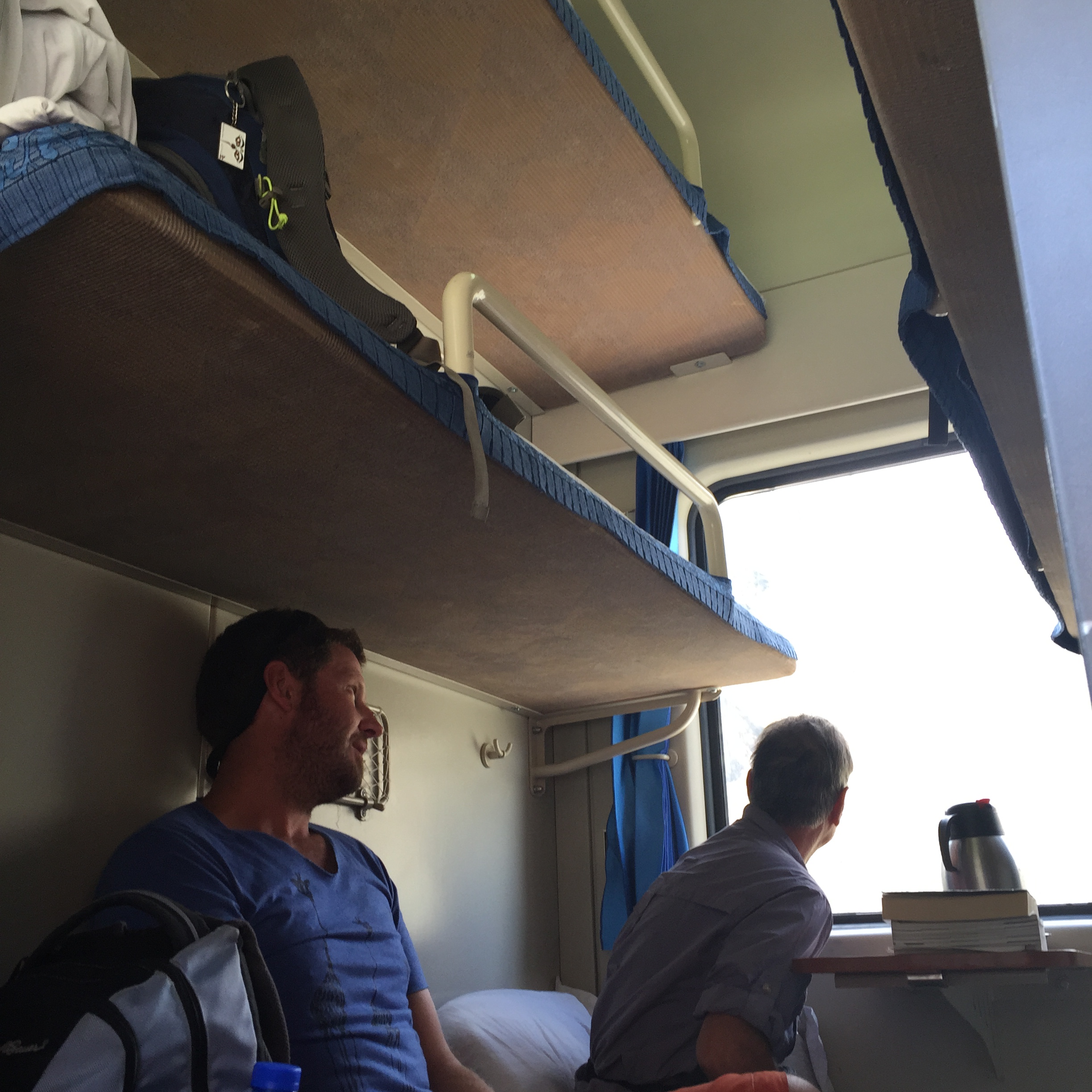
Many people bring their own food for eating on the train as did some of our group but myself and Anil went to the restaurant car which we found was packed. We had to return to the restaurant car later to have dinner and we brought along our guide Anita to decipher the menu for us. The food was good and cost 60 Yuan but unfortunately the Chinese staff in the dining car could do with some customer service training. As we were finishing dinner the sun went down on the Tibetan Plateau.
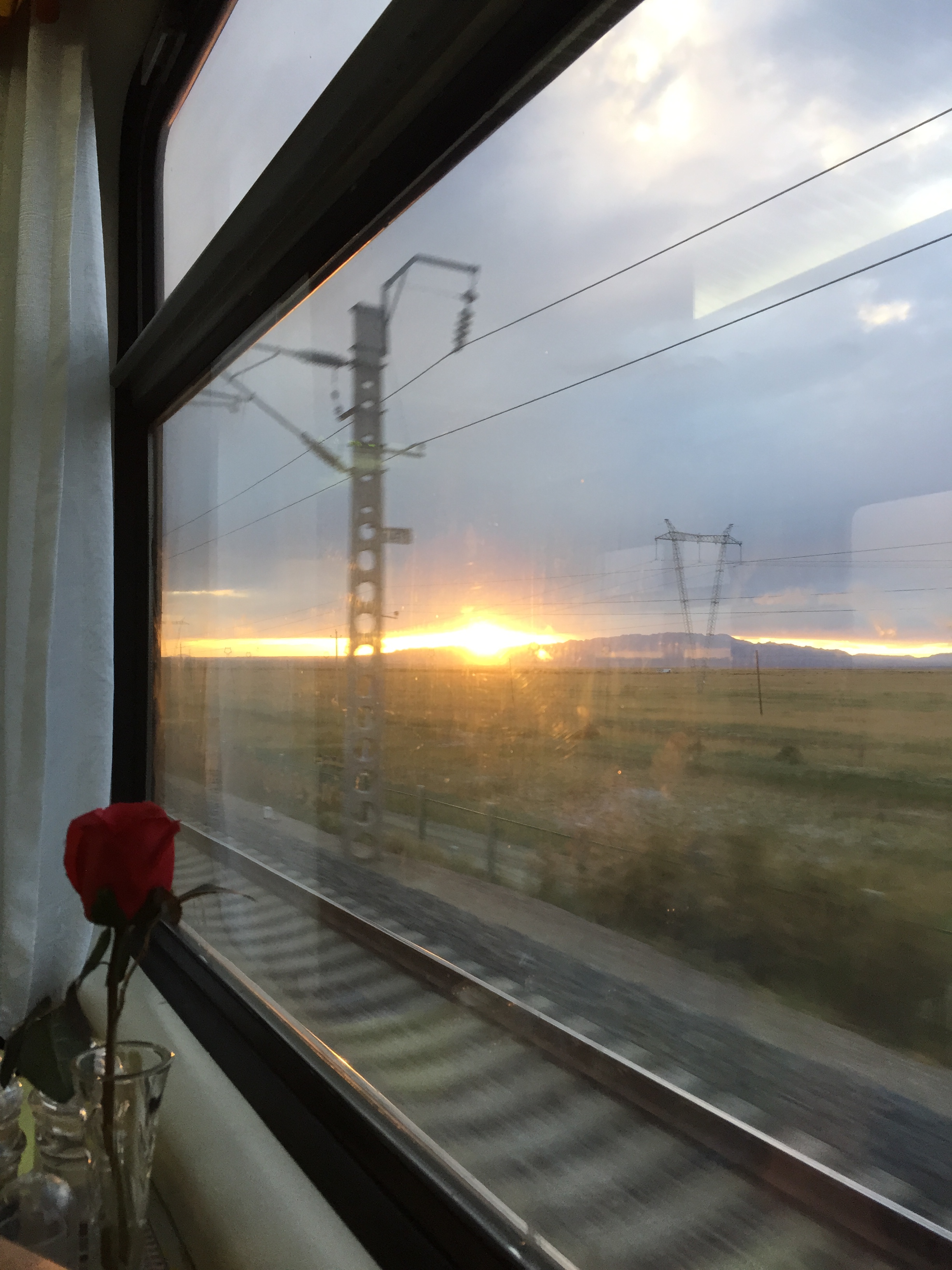
People started to settle down from 9 o’clock onwards but some of us continued to chat until closer to 11.00. Lights out was at 10.40. This was a more comfortable nights sleep compared with our train journey in Thailand up to Chiang Mai.
Wednesday 16th September 2015 – Train and Lhasa
Was up by 7.00 a.m. and the sun started to rise at around 7.30 as we were passing one of
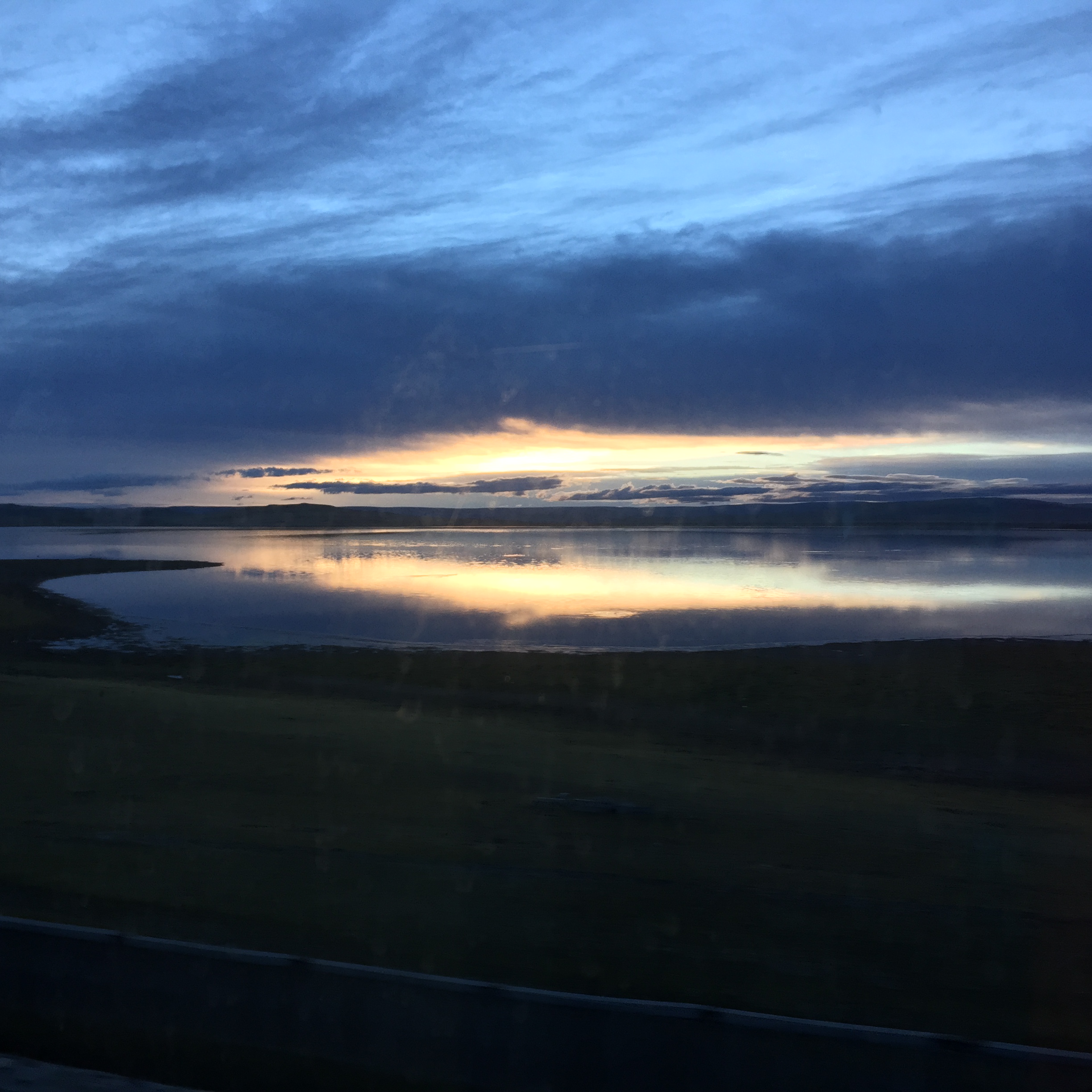
Overnight the altitude had increased and we had gone over 17,000 ft. and some of our group had suffered from altitude sickness and were either taking oxygen or tablets although some cannot take the medication due to low blood pressure or complications with other medicines. The only affect that I could feel was a small bit of pressure in my head but that passed.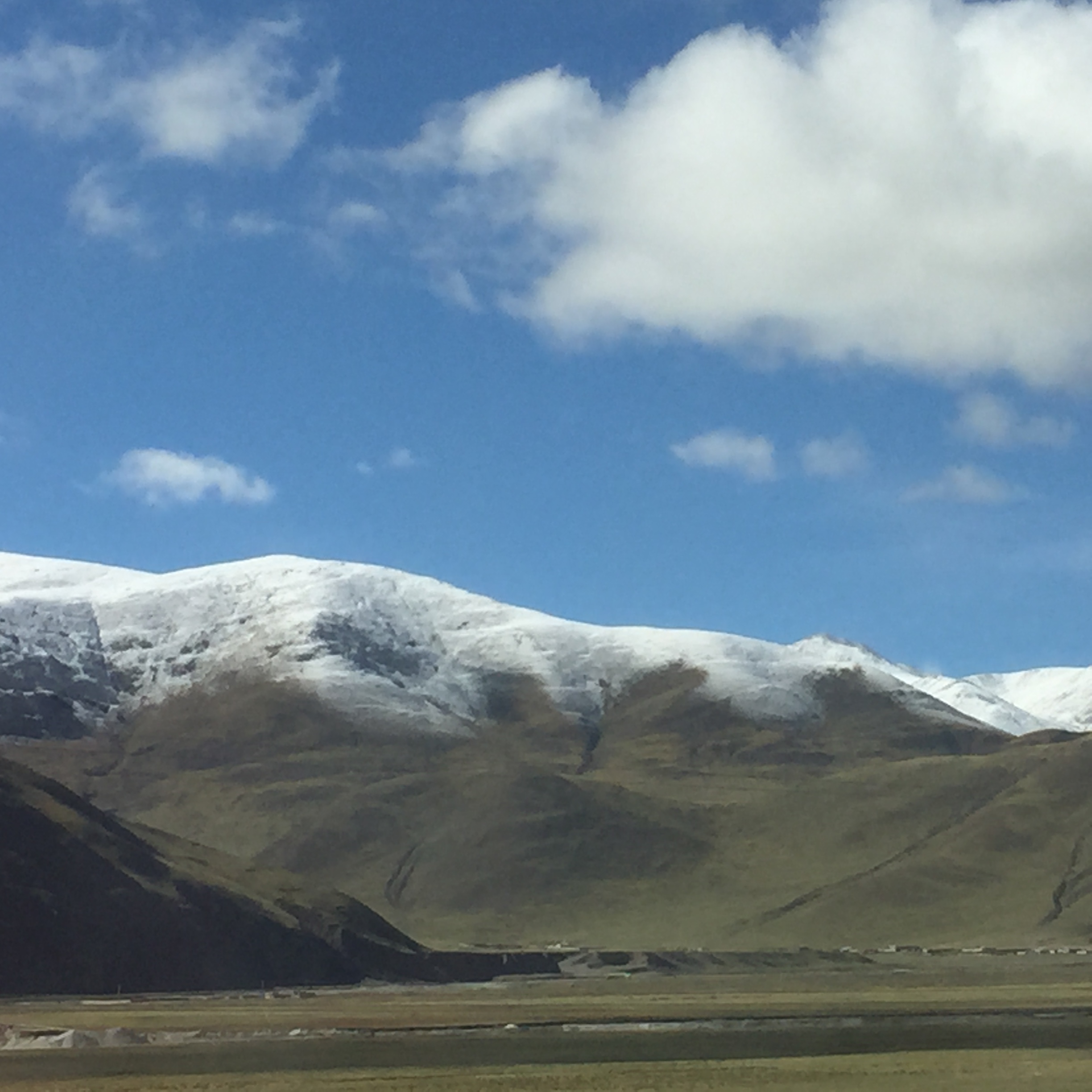
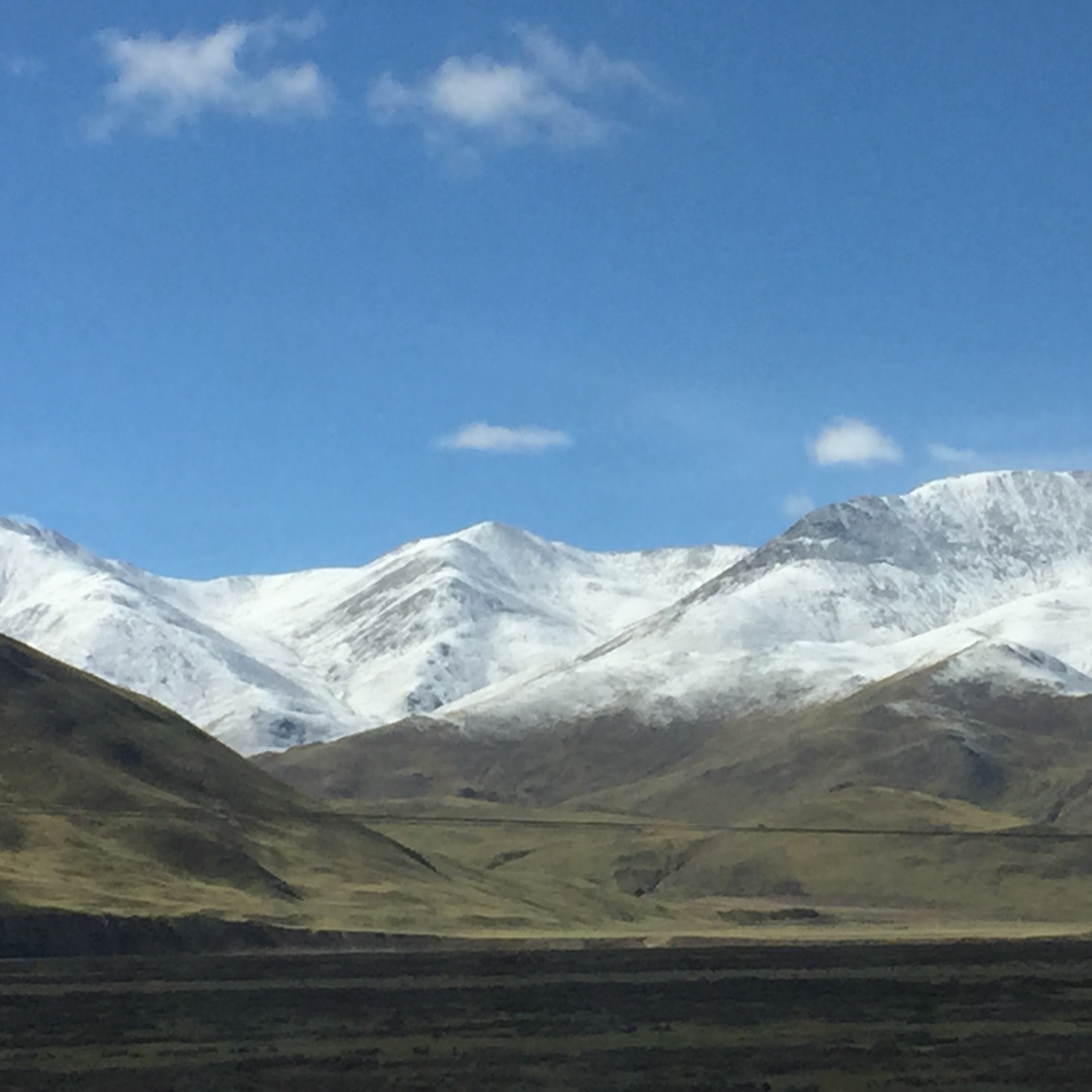
The scenery continued to change as we progressed closer to Lhasa and we began to see snow capped mountains. Also we began to see crops in the fields and as this is harvest time there were many people both men and women harvesting by hand with sickles.
During the night many more people had joined the train at the different station where we stopped and the bulk of these were traditional Tibetans. Some had obviously purchased standing tickets and they set themselves up in the spaces between the carriages. Indeed one woman was asleep on the floor with her two children.
 We arrived at the station in Lhasa around noon and we had to go through a passport check before we could exit the station. We piled into 5 taxis and these drivers speedily proceeded to weave through the traffic on the way to our hotel. One was particularly speedy and arrived at the hotel at least 3 minutes before the others.
After we had booked into the hotel, the Gang Cyan Hotel, a group of us went to the Snow Mountain Nima Tibetan Restaurant which was just down the street from our hotel. This is recommended as an authentic 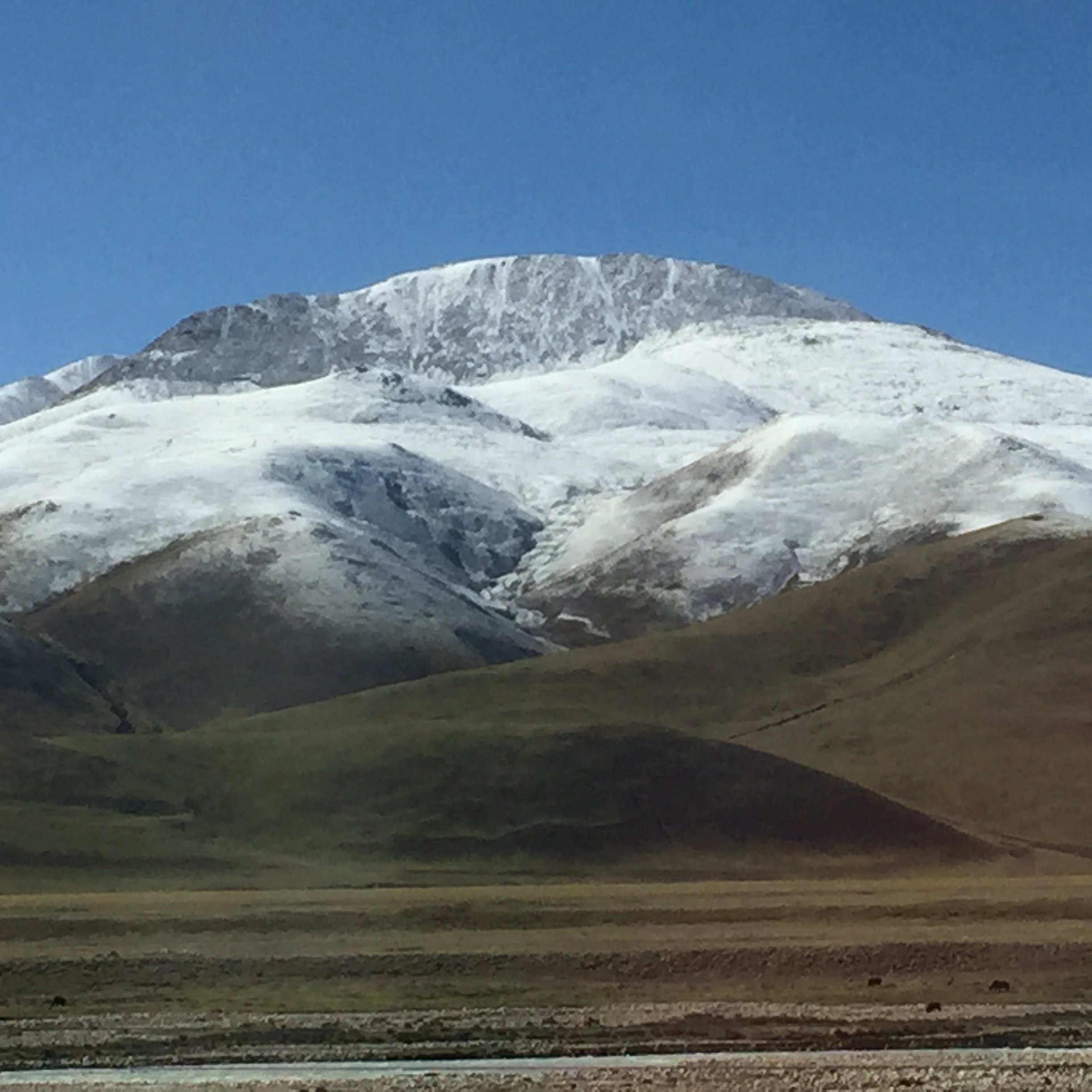 Tibetan Restaurant and is frequented by local Tibetans. This was a fabulous lunch which included a number of Yak dishes and a number of vegetable dishes including potato and broccoli. Due to the altitude I decided not to drink beer as the advice is to avoid alcohol because you dehydrate much quicker at altitude.
That evening we went for dinner as a group to the Dunya Restaurant which is run by a Dutch guy who knew of the company we were travelling with as he had met some groups previously. Back to the hotel and ended up sitting outside the room as the wifi signal was much stronger there than in the room.
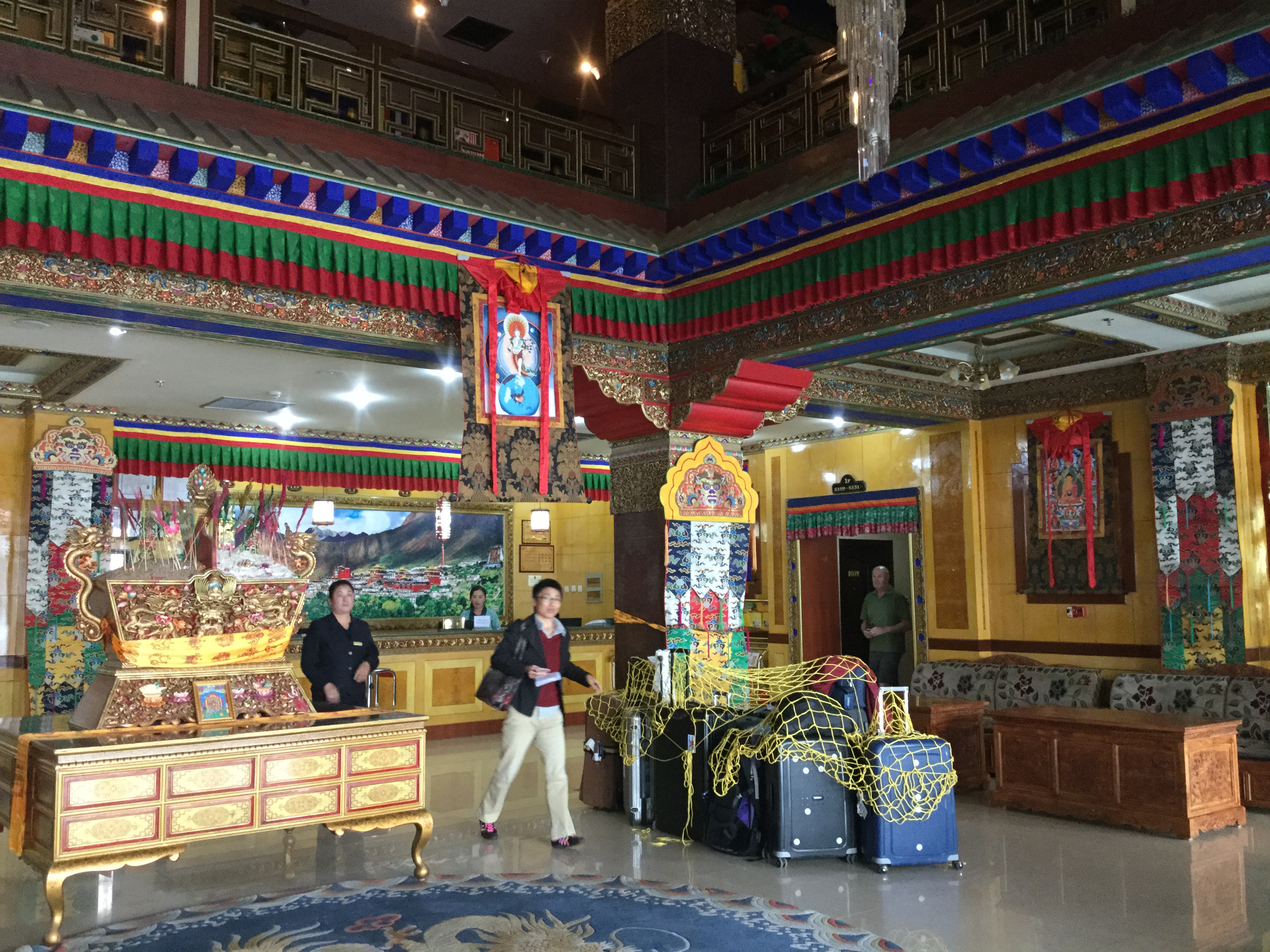
The Gang Cyan Hotel is centrally located and close to many of the attractions which we hope to visit.
Thursday 17th September 2015 – Lhasa
Today we go to visit The Potala Palace and we are walking there as it is only
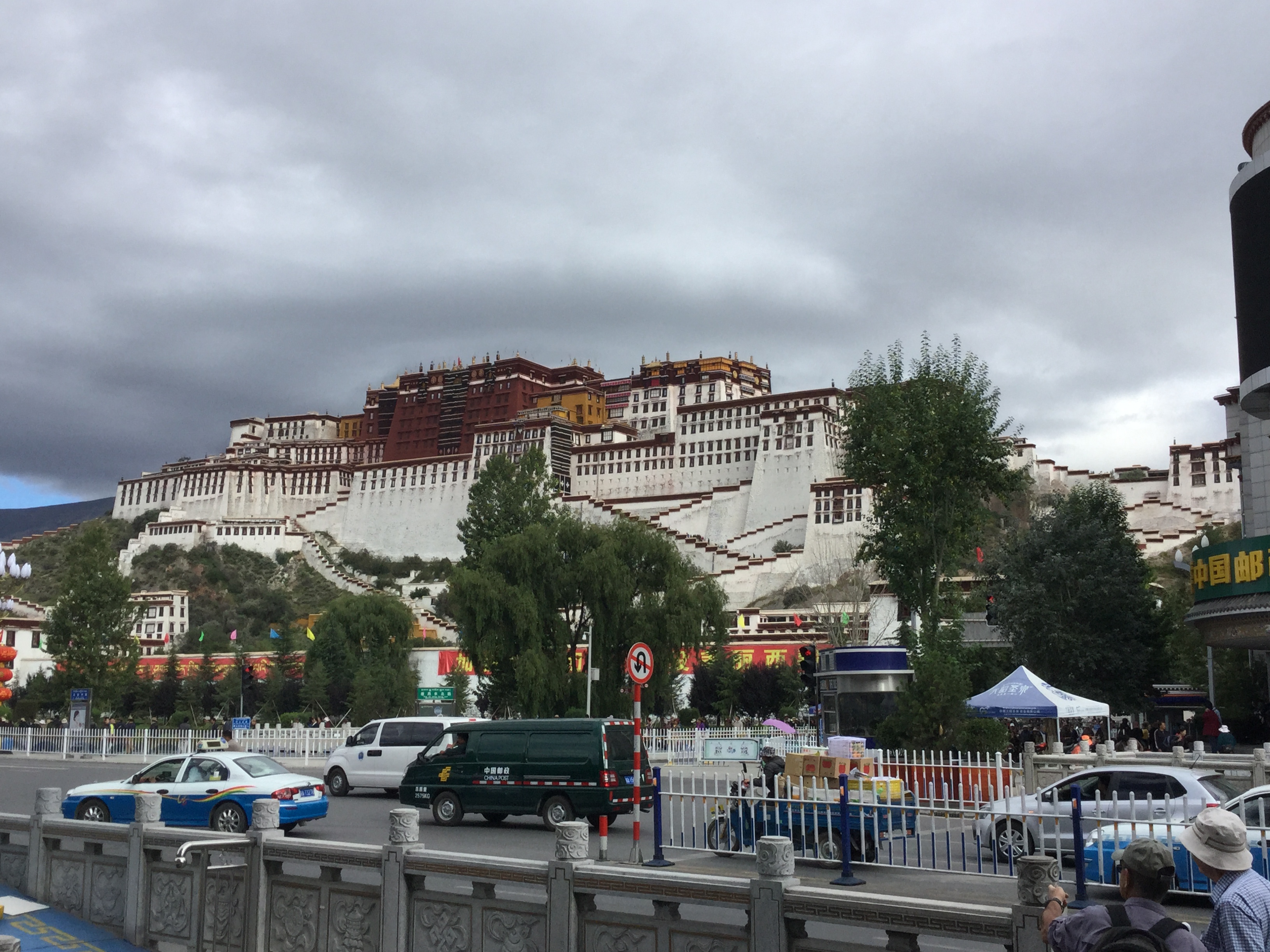
approximately 30 minutes walk away. In addition to our Chinese guide we have a local Tibetan guide.
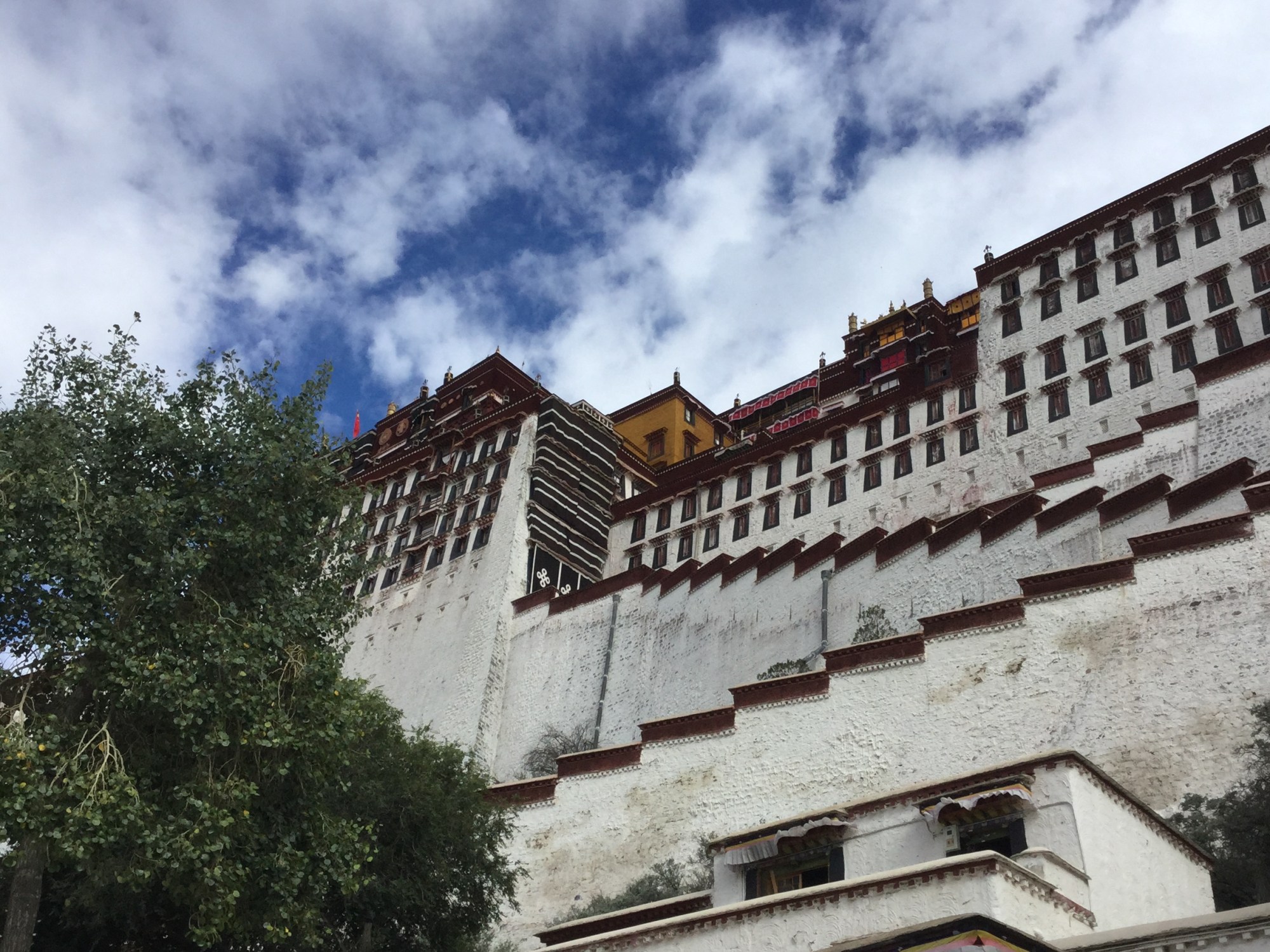
The Potala Palace is typical Tibetan Architecture. The main building consists of the White Palace and the Red Palace. The buildings are interconnected and are built in accordance with the declination of the sun. The upper part of The White Palace was the residence of the Dalai Lama up until 1959, while the lower part was the offices of local government. The Potala Palace is painted with whitewash and this whitewash is a sign of peace.
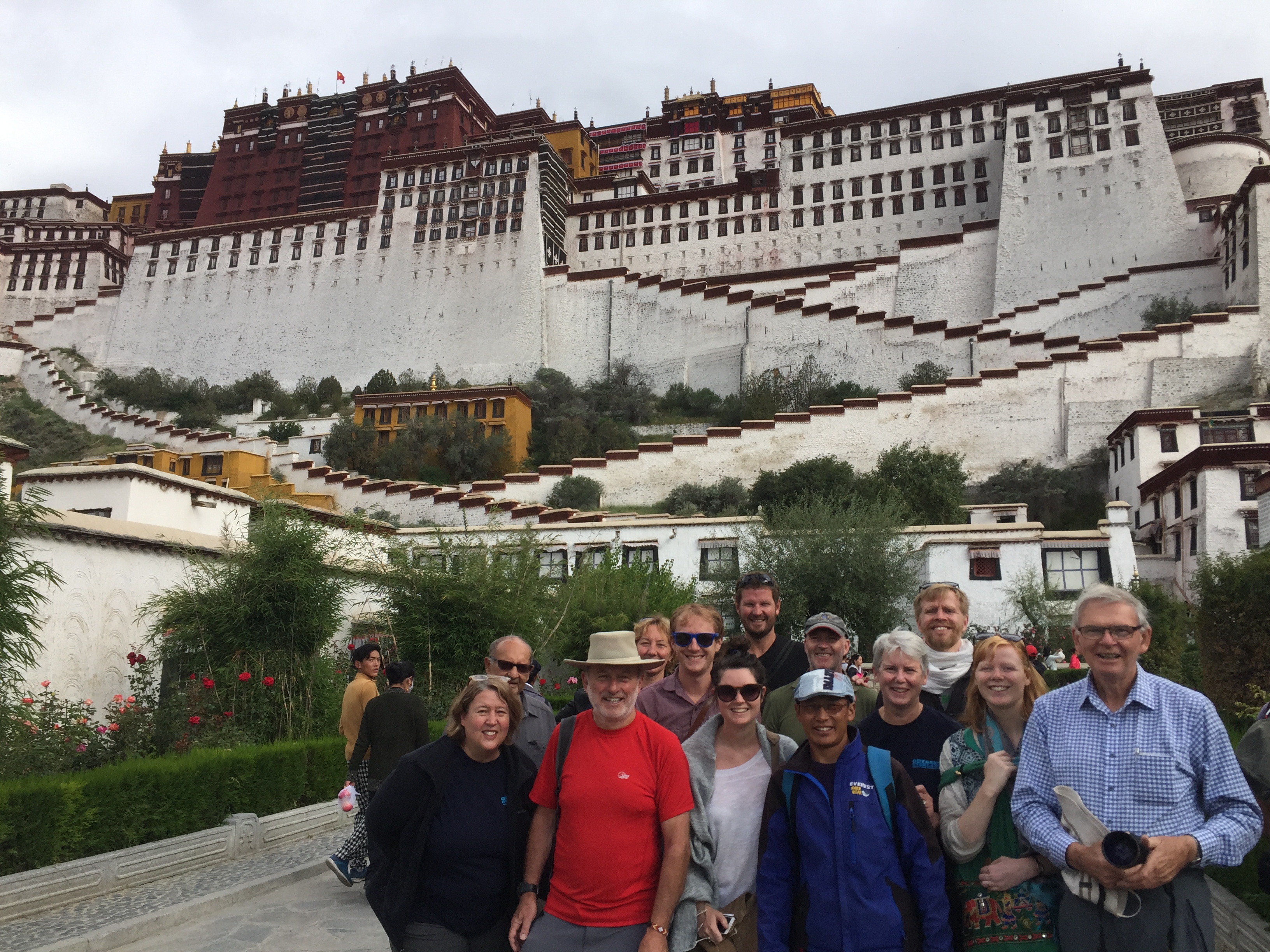
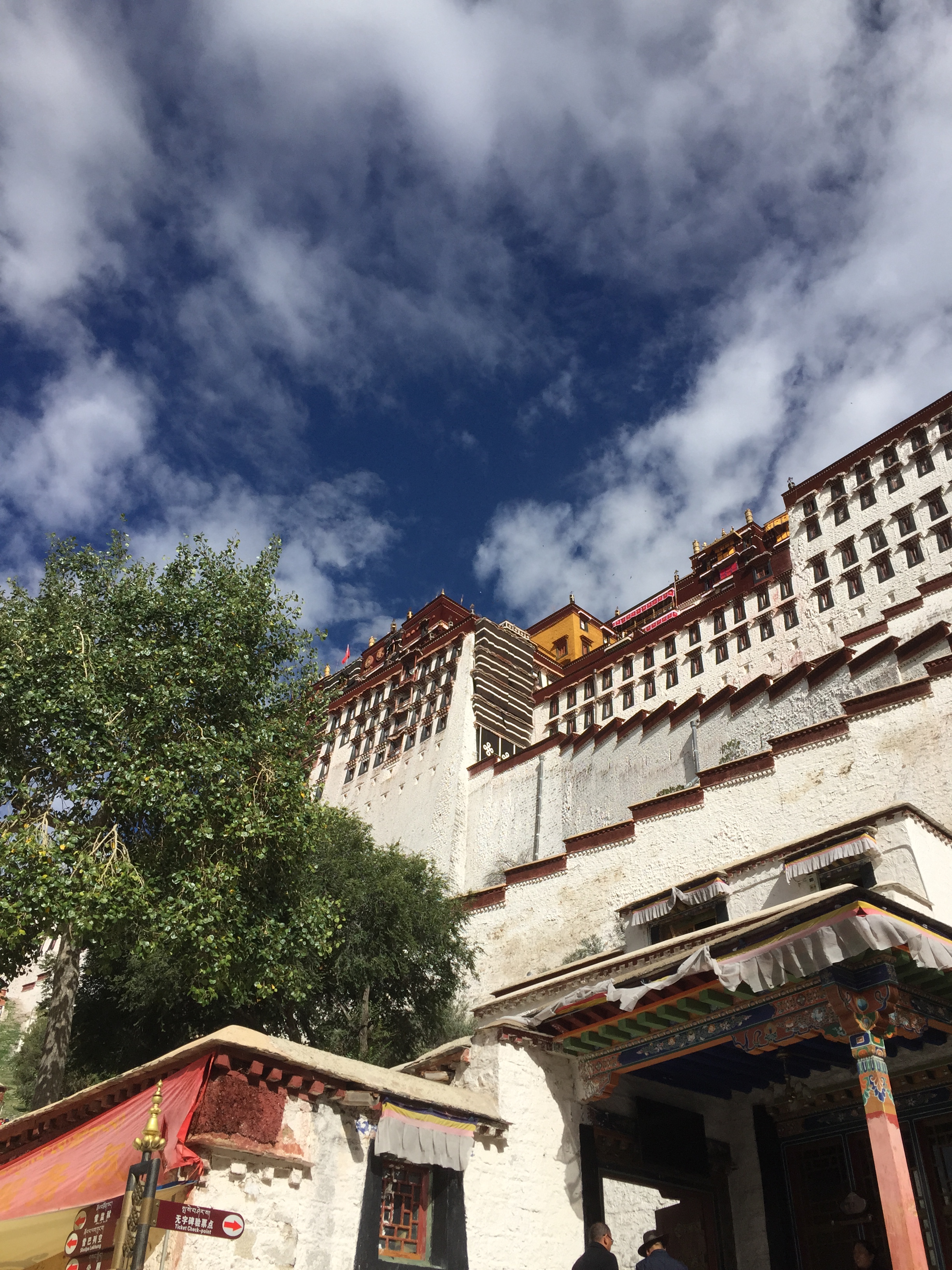
To enter the Palace you have to present your passport, ticket and go through a security screening. Large numbers of people converge on the Palace and therefore you are limited in terms of the time that you 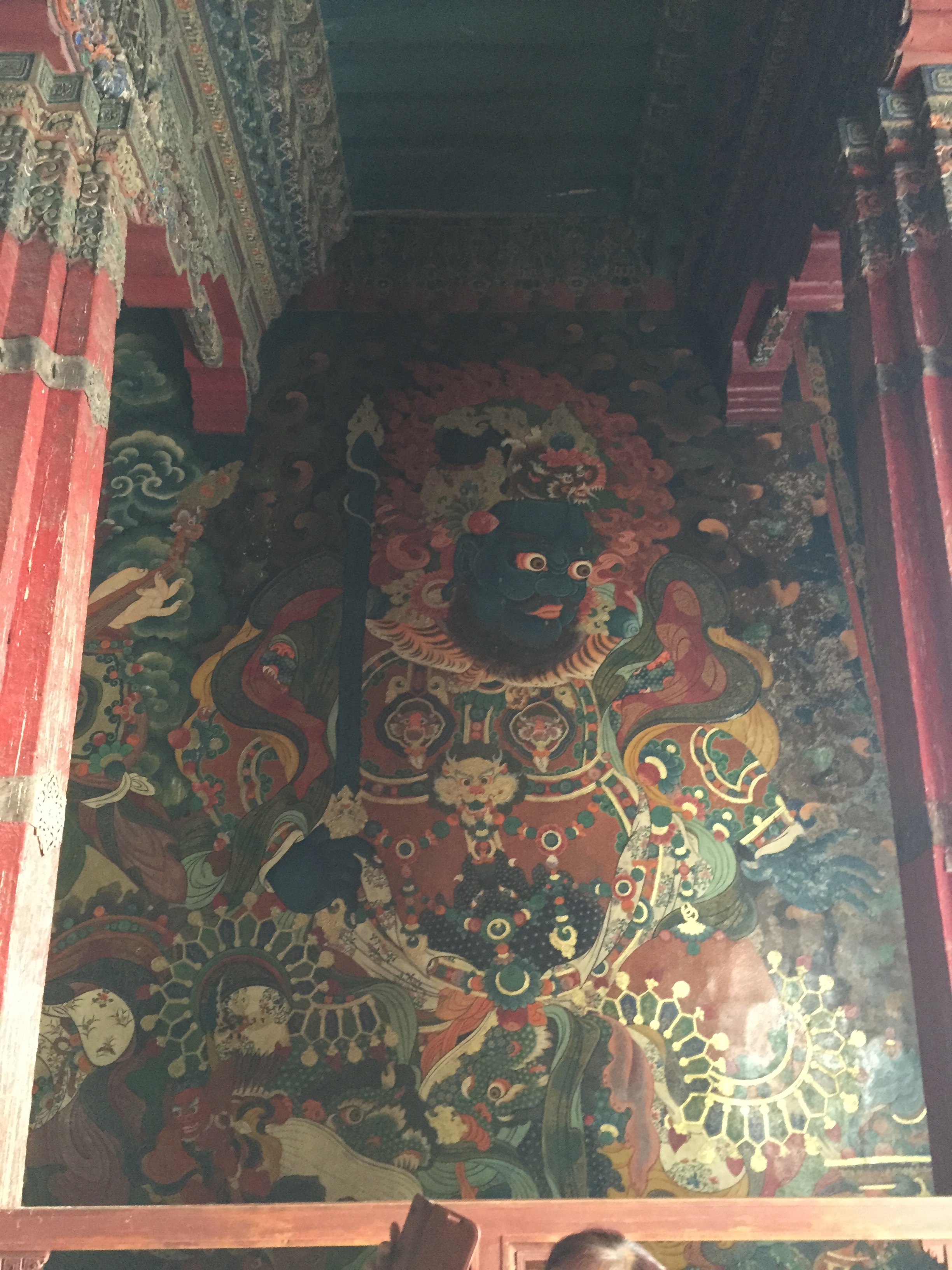 can spend within sections of the buildings. Also in the Temple and some other parts of the complex it is not permissible to take photographs. It is difficult to retain in your mind all the incredible sights that you see as you pass through the Palace.
The Red Palace is a 13 storied building and was built to house the Golden Stupa Tomb of the fifth Dalai Lama and also houses successive Dalai Lama Stupa Tombs. There is also a Senior Seminary for training monk officials.
The White Palace has balconies on the top storey which have beautiful views of the golden domes on the roof of the Potala. The White Palace also contains
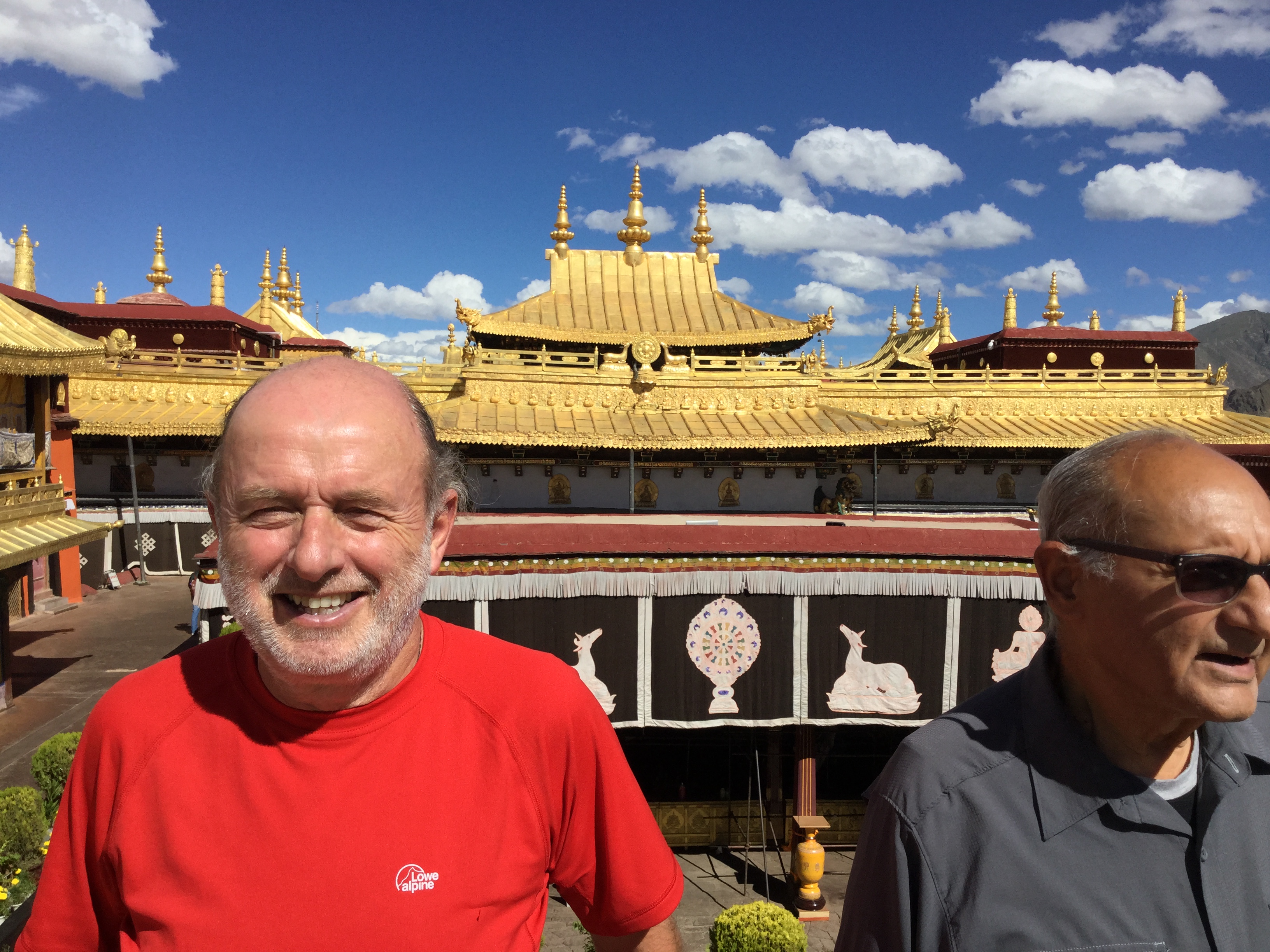
the Chamber of Eternal Life which was the Dalai Lama’s study and bed chamber. The Potala Palace is at an altitude of 3,700 metres and it stands at 151 metres tall covering an area of 138,025 square metres. Many of the pilgrims bring offerings and very often they leave monetary offerings.
After lunch we went to the Jokhang Temple which is only a short distance from our 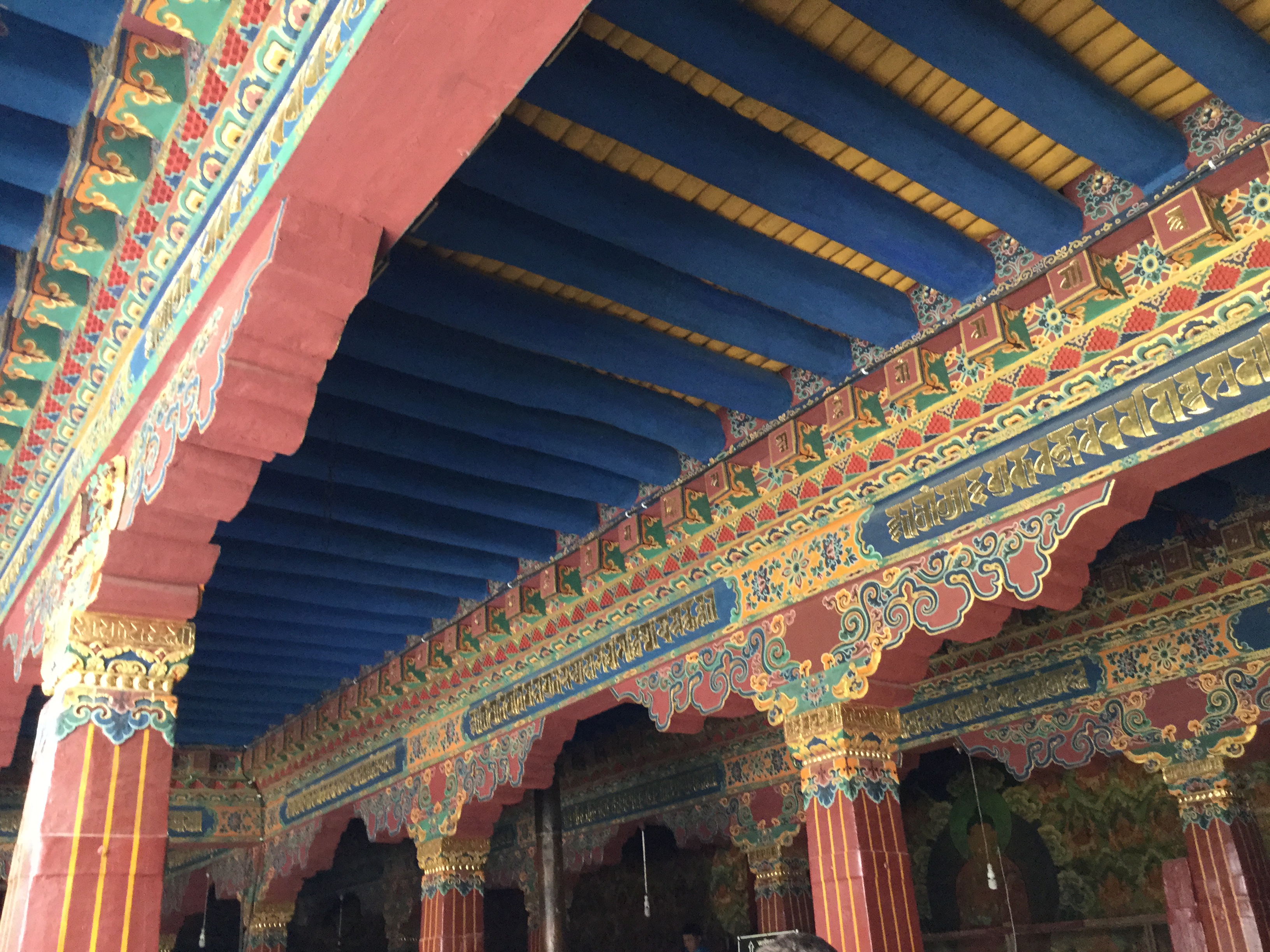 hotel. As with all these sites there is security at the entrance where our bags were scanned and we had to produce our passports.
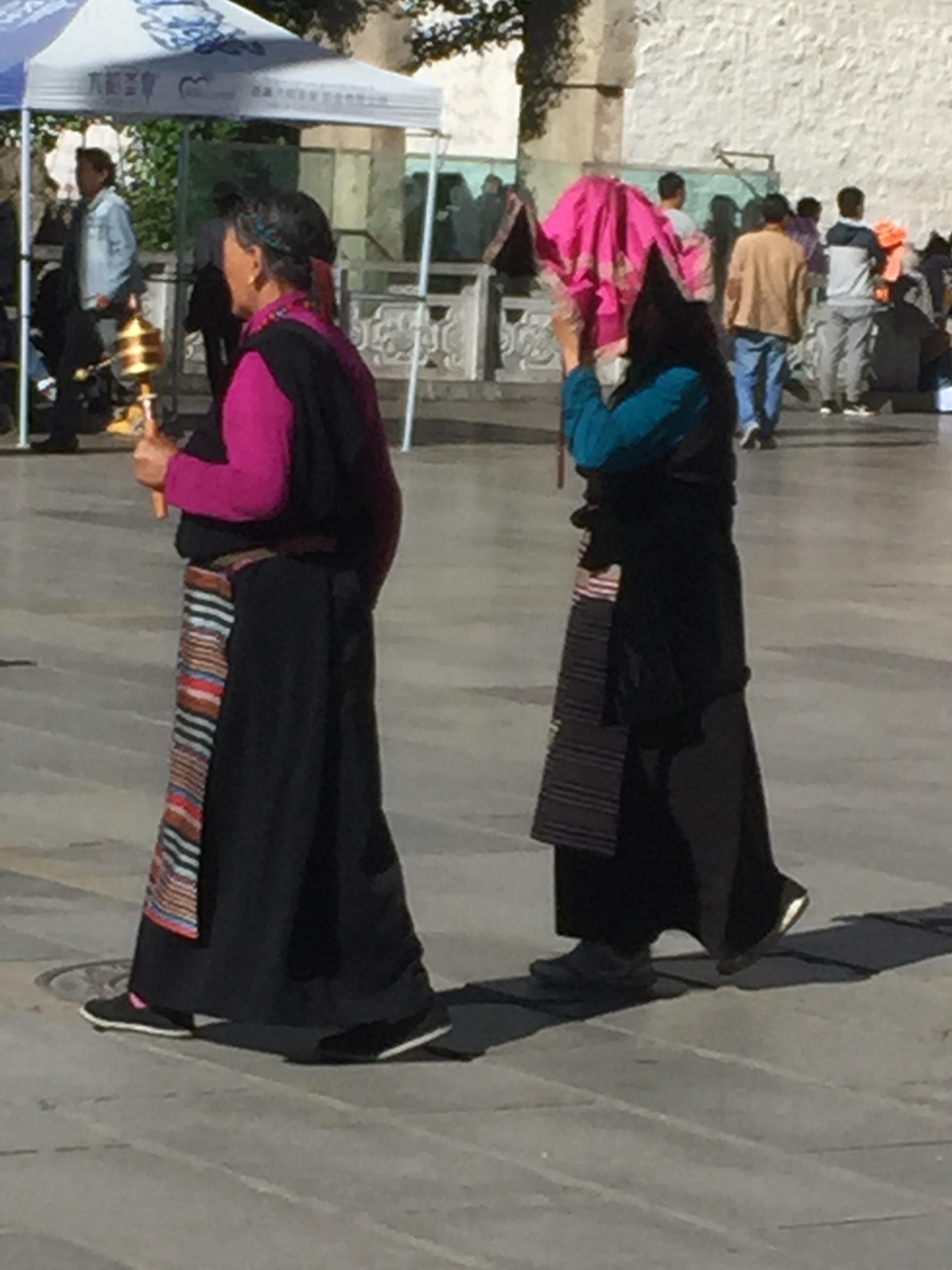
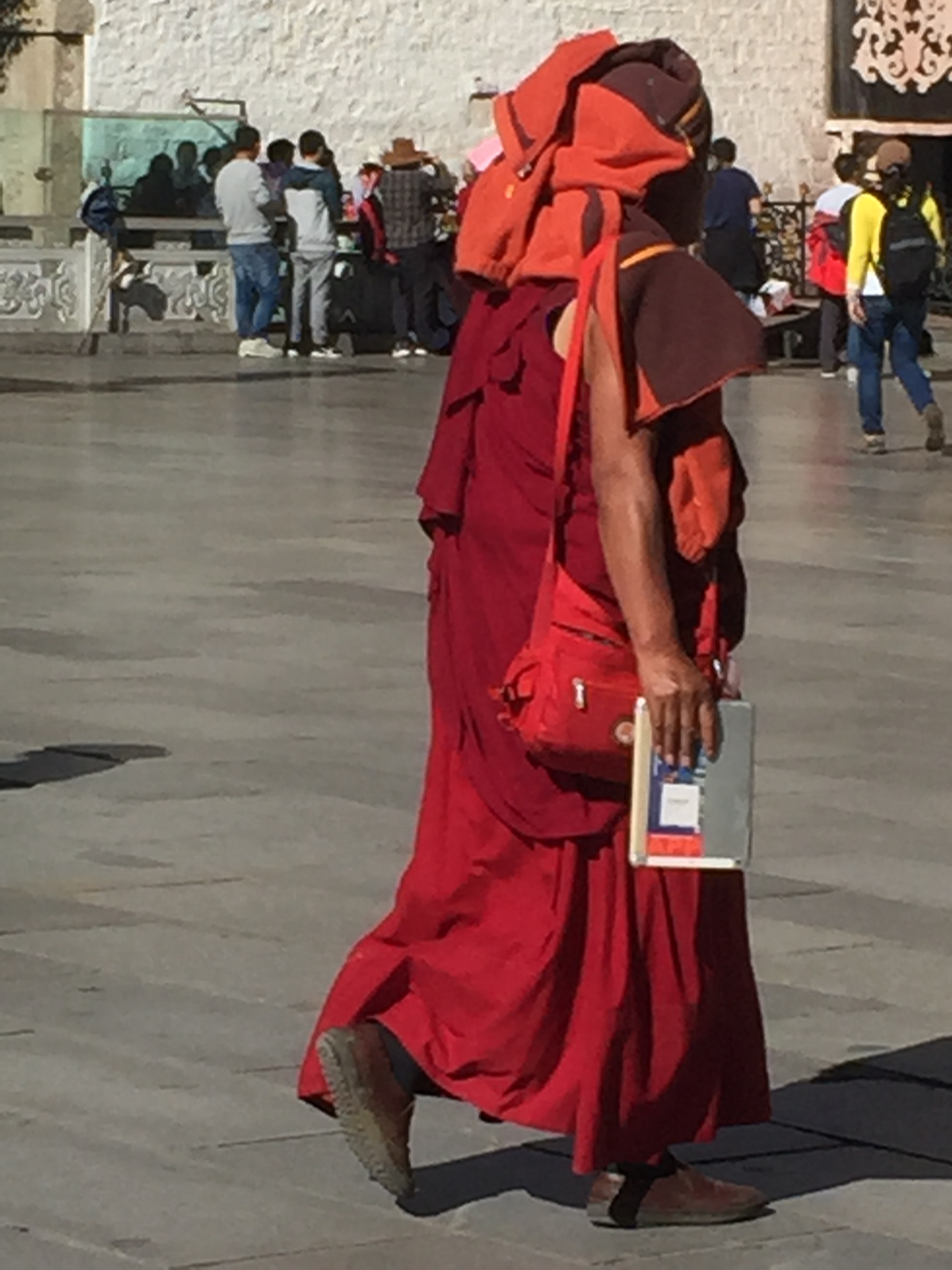
The Temple was built in the old city of Lhasa in 674 AD. This is the holiest of sites for Tibetan Buddhists and the focus of a huge pilgrimage by people from all over Tibet. You see a myriad of faces, characters, 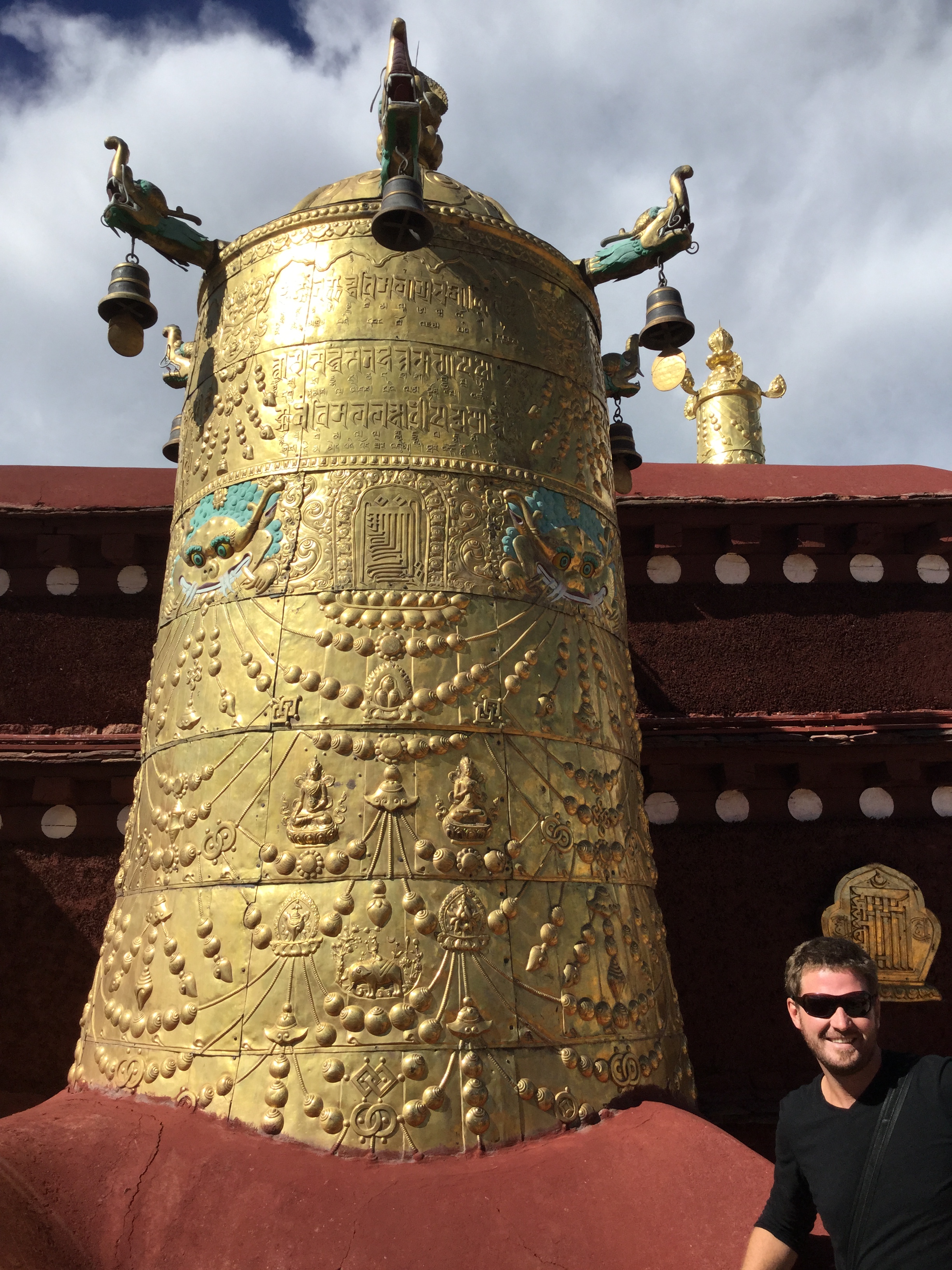 costumes and decorations with some of the hair decoration being intriguing. It isawesome to see all the old people making their way among the crowds performing the Kora pilgrimage around the streets of old Lhasa. Kora is a Tibetan word meaning circumambulation or revolution and in this case it involves walking through the streets circling the Jokhang Temple. An aspect of the pilgrimage which is fascinating is where people prostrate themselves either staying in the one location or following the pilgrimage they prostrate themselves continuously slowing advancing around the route.
The people prostrate themselves and would have themselves padded on both hands and knees to protect their bodies from the constant punishment. The devotion of the people is awesome and enthralling.
Our Tibetan guide escorted us through the Temple explaining both Tibetan Buddhism and the meaning of the various Thankas, Buddhas and other statues. Tibetan Buddhism is complicated and consists of 4 sects identified by the hats they wear, Black Hats, Red Hats, Yellow Hats and White Hats. The current Dalai Lama is from the Yellow Hat sect. When we reached the top of the Temple it was absolutely beautiful to look out at the surrounding mountains and also the beautiful domes of the Temple.
Friday 18th September 2015 – Lhasa
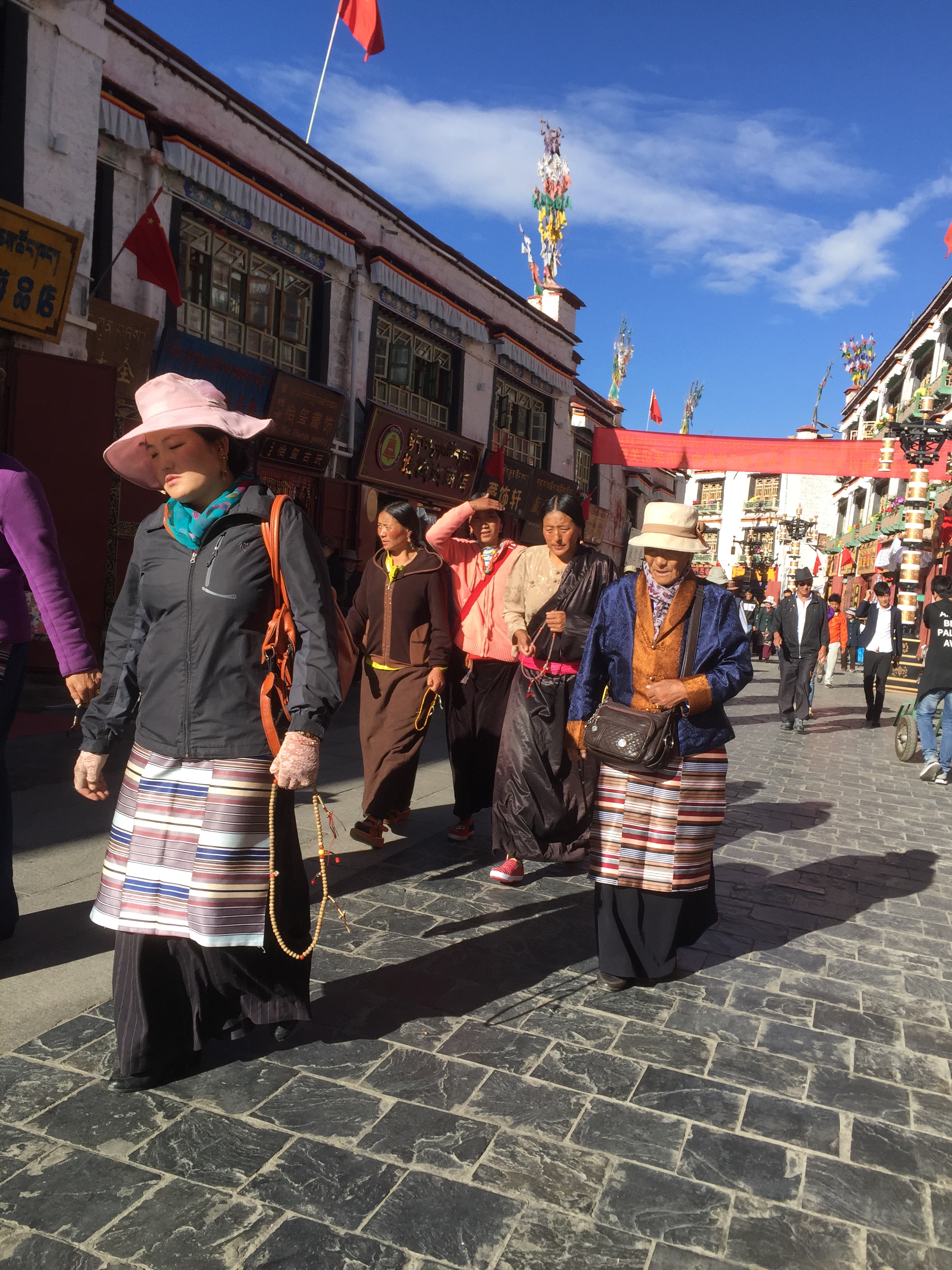
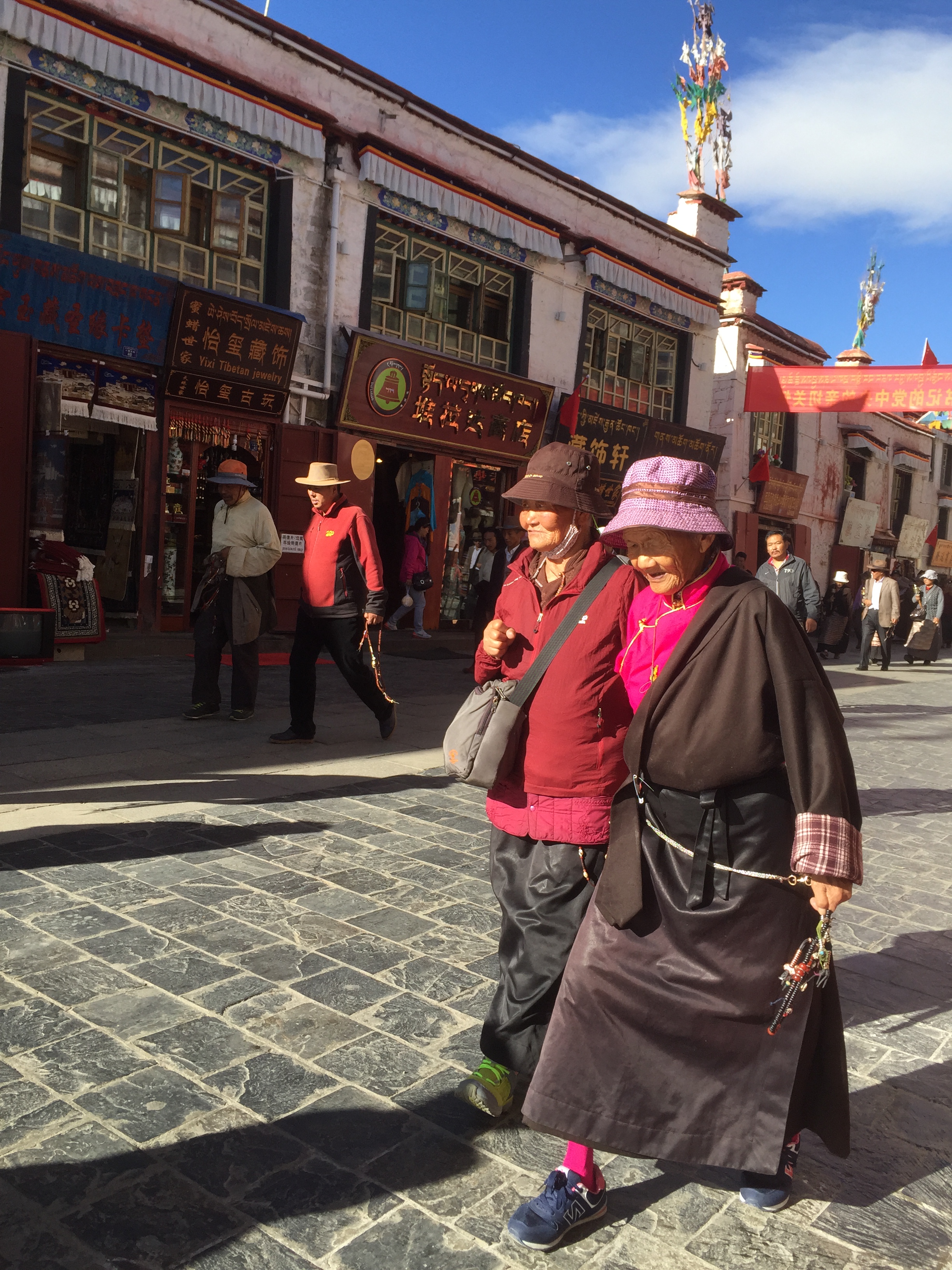
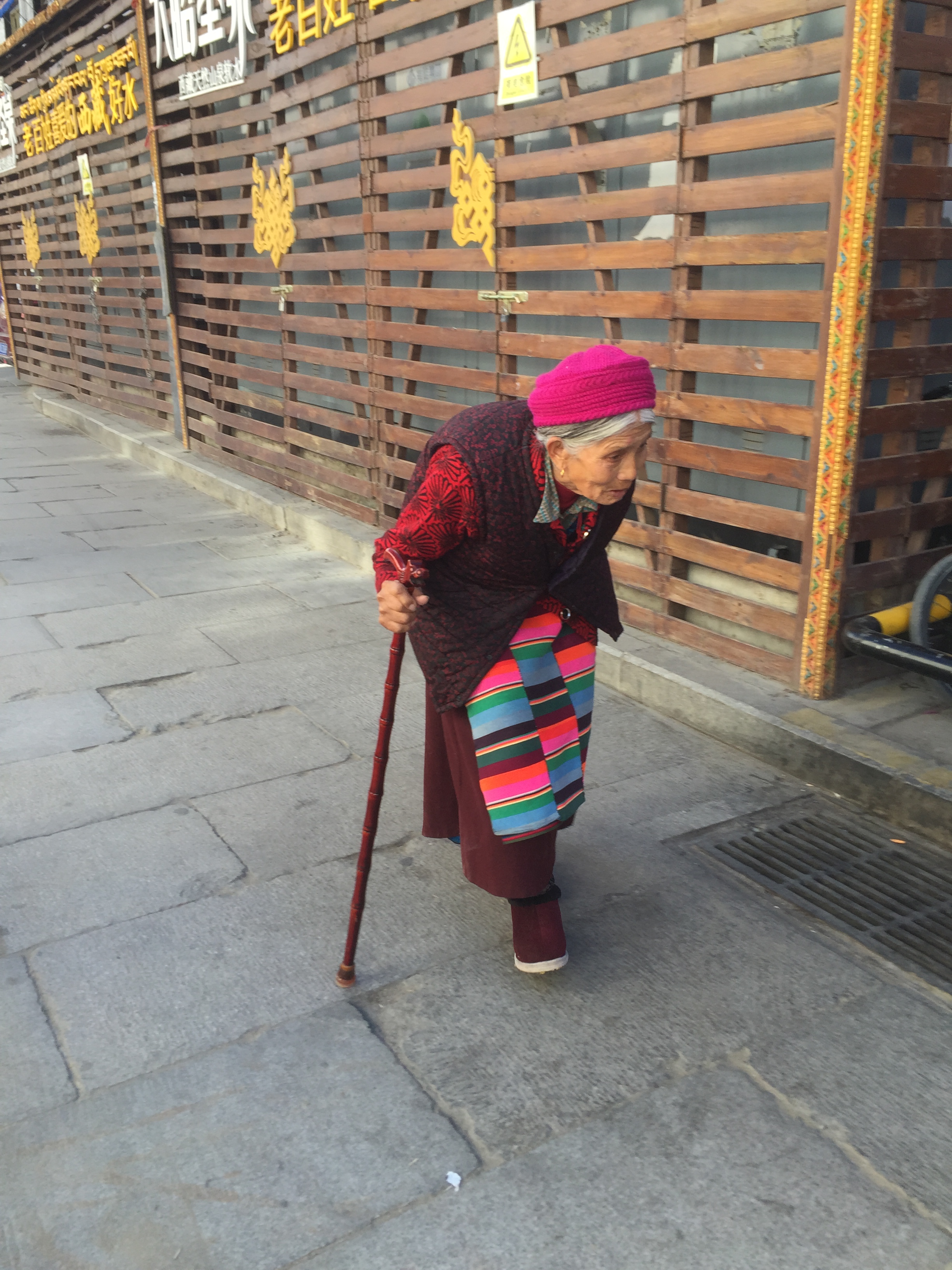
Went for a stroll in the old town this morning and came upon streams of pilgrims on the 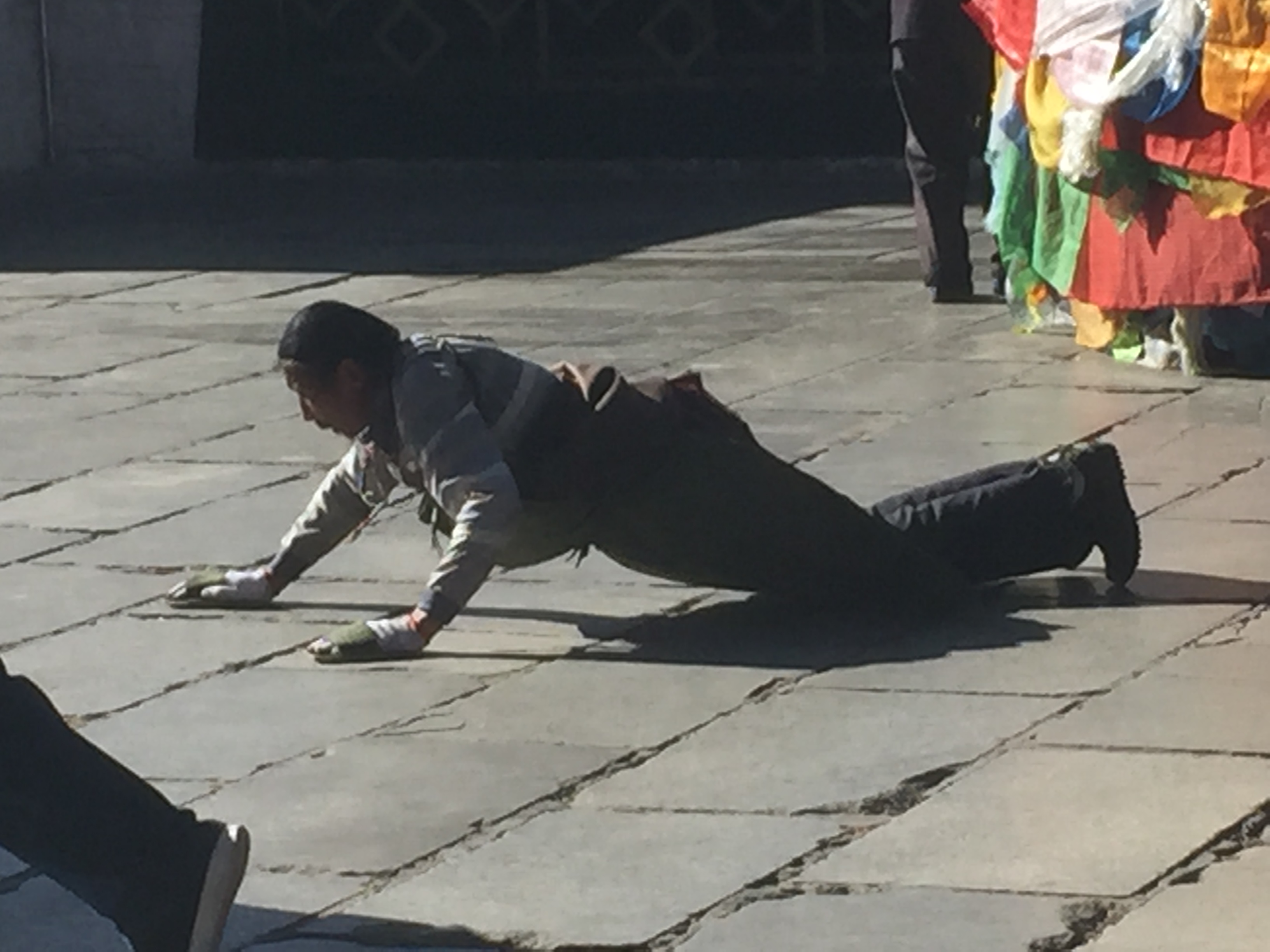 Kora pilgrimage. Again some wonderful characters with great facial features, dress and ornamentation. Lots of people if you catch their eye will smile.
Later I went with Kelly to a Bank of China Exchange
Machine down the street from our hotel. These machines will convert your U.S. Dollars into Yuan. You have to scan your passport and then insert your cash into the machine. Unfortunately when I
scanned my passport and inserted a $100 dollar bill it was rejected. I reckon that because I was using an Irish passport and trying to change dollars that this did not match as it would be expecting me to change Euros. Kelly used her passport and the machine exchanged the same $100 dollar bill.
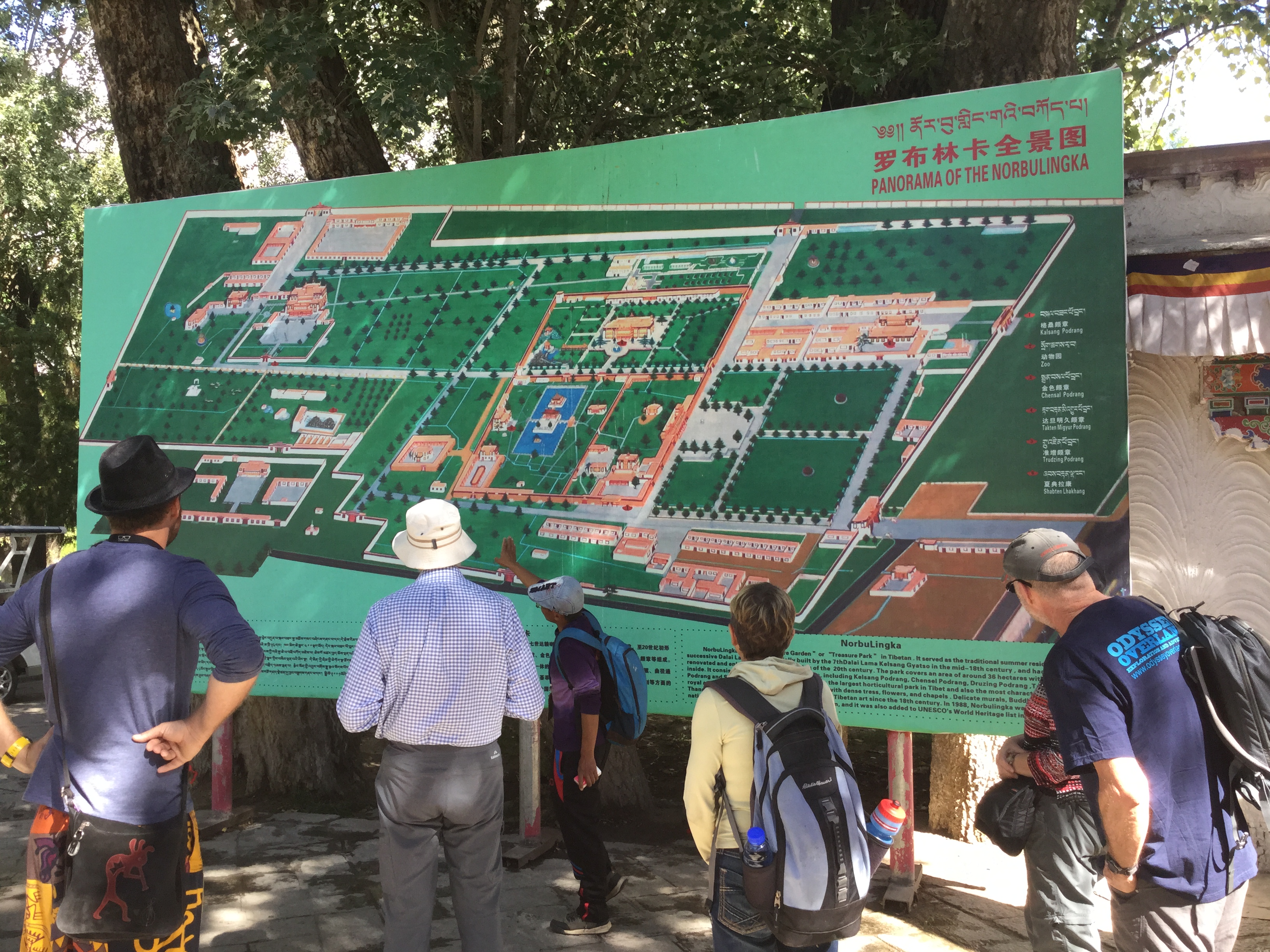
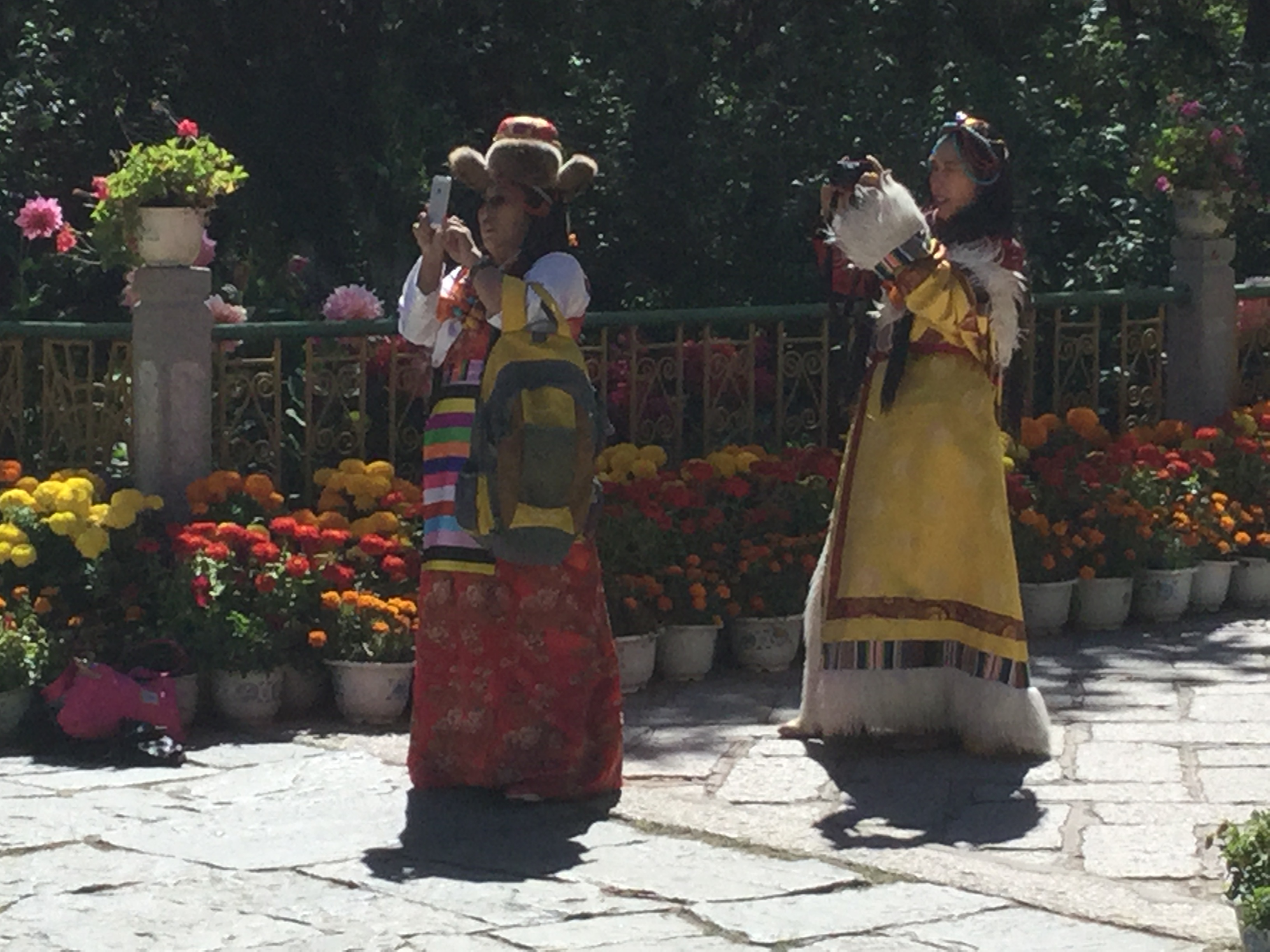
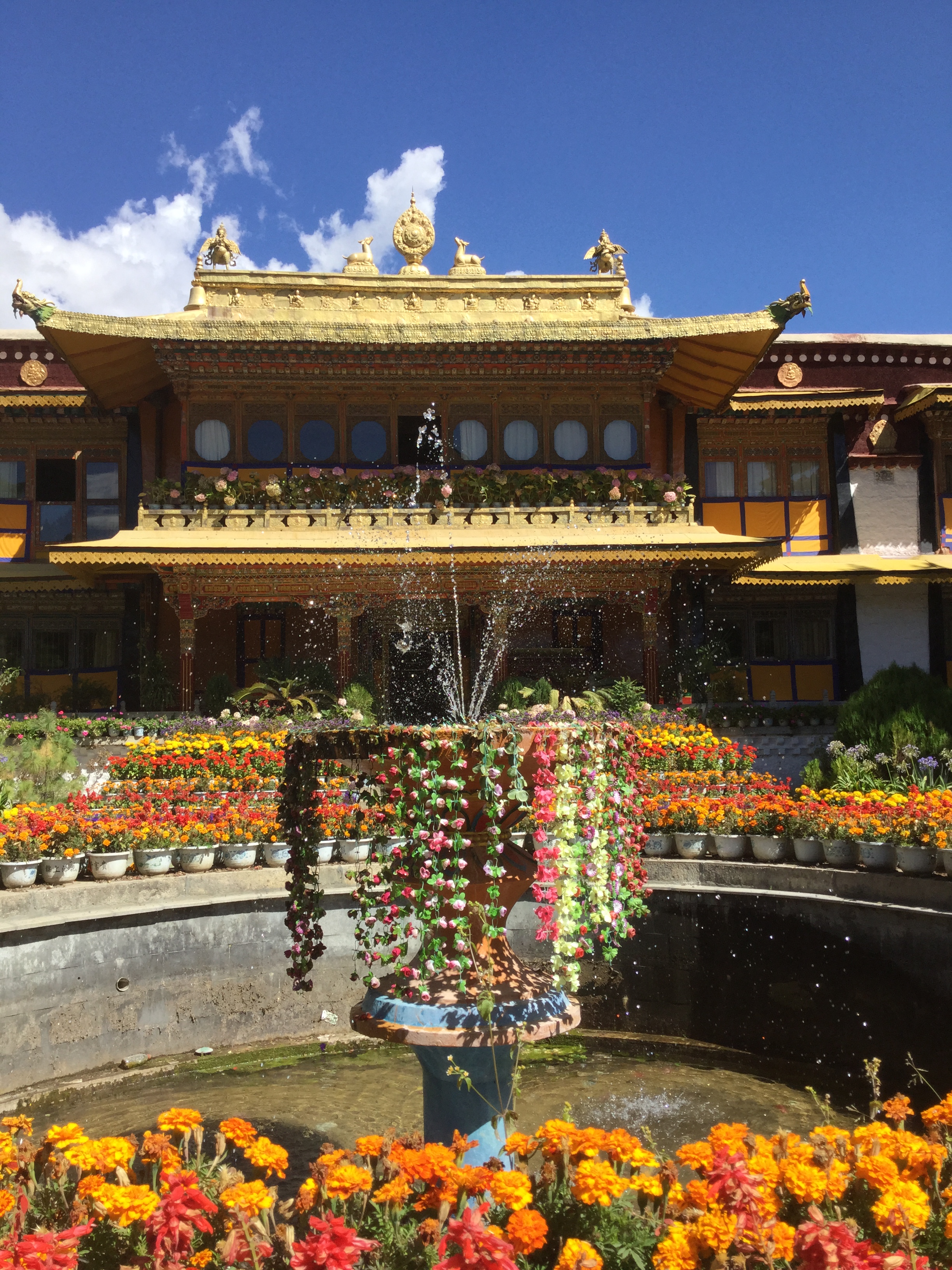
At 10.30 a.m. we went to Norbulingka which was the traditional summer residence of the Dalai Lama’s. The name Norbulingka means Treasure Garden and was built by the 7th Dalai Lama in the 18th century. Norbulingka has been a UNESCO world heritage site since 2001.
The gardens cover an area of 36 hectares with 400 rooms distributed in several Palace complexes. This is a most beautiful place, peaceful with lots of walks, trees, 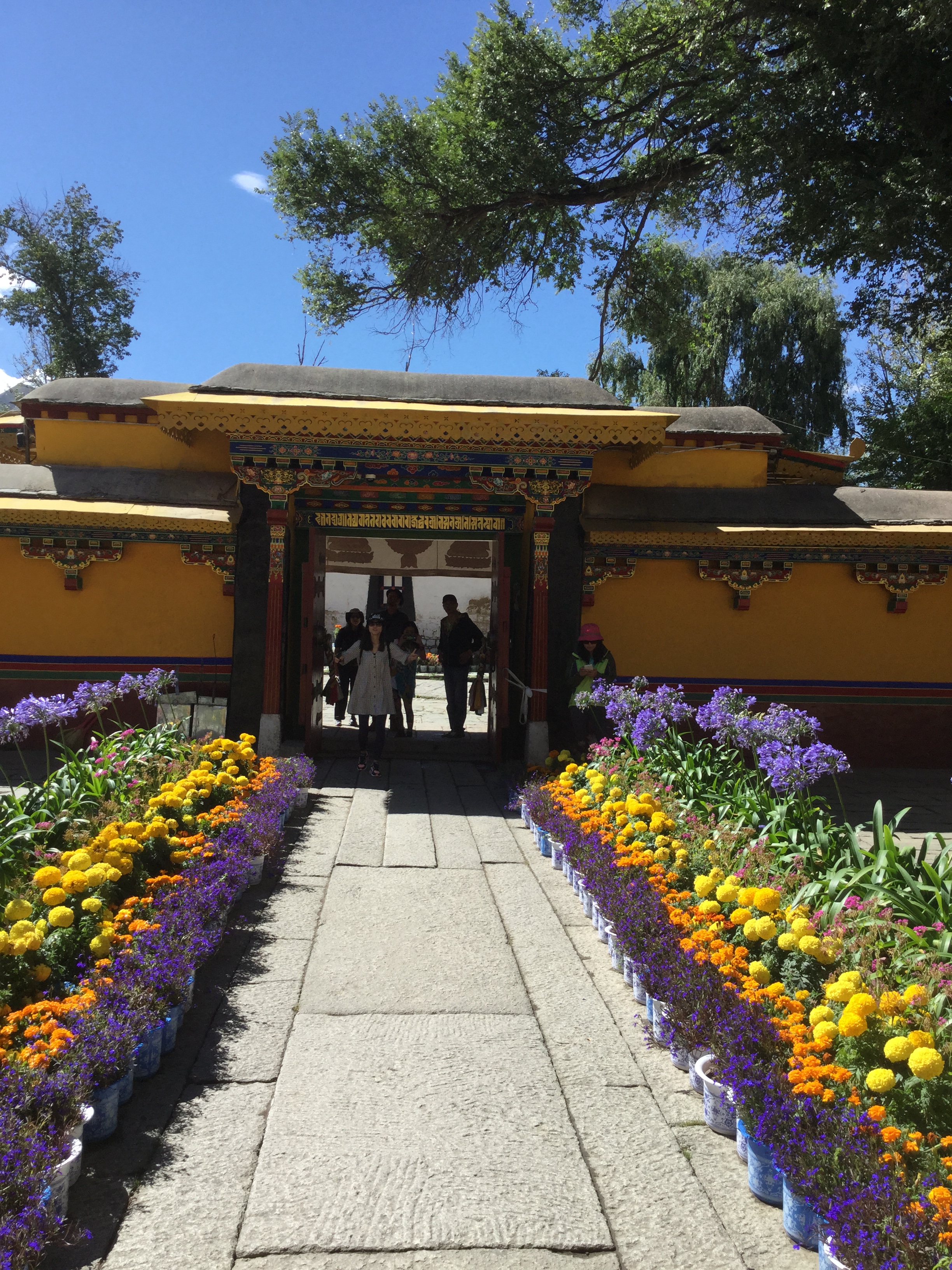 shrubs, flowers and it was the current Dalai Lama’s favourite place. In certain areas, the internal spaces, within the Palaces you could not take photos. Norbulingka was not as crowded as other Palaces we had visited but you still have pilgrims who revere the Dalai Lama and anything associated with him.
There are beautiful ornate buildings and doorways and walking through the gardens we visited a number of Palaces. One of the Palaces which is called the Dada Mingjur Palace was intriguing and was built by the 14th Dalai Lama (current Dalai Lama). The information board outside the Palace gives an explanation in English sets out the different aspects of 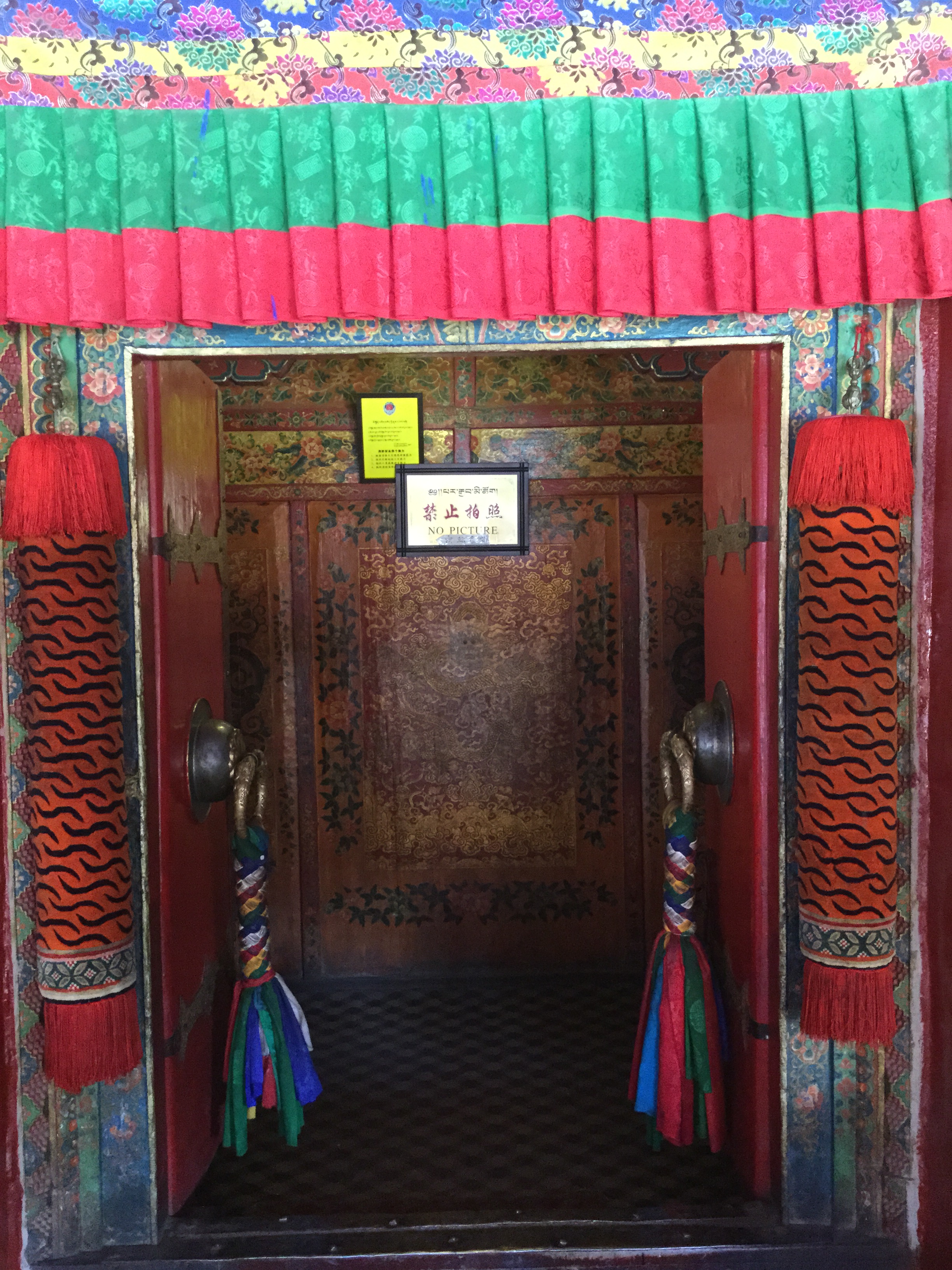 the Palace and when it was built. The Chinese version is different and states that the Chinese Government provided the funding for the building of the Palace. It is interesting that there is no mention of this in the English version, I wonder why. Our Chinese guide did not know about the Dalai Lama having to escape from Tibet in 1959 following a failed uprising.
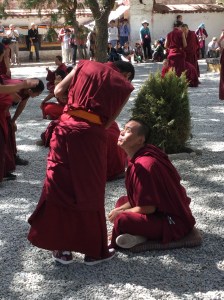
In the afternoon our group went on an excursion to Sera Monastery to see the debating monks. This monastery is just outside town at the base of some of the mountains surrounding Lhasa. At certain times the monks gather in a shaded courtyard of the monastery in order to debate topics relating to Buddhism.
The more senior monks stand over the novices who are seated on the ground and these senior monks put questions to the novices who respond or try to respond as the debate goes back and forth between 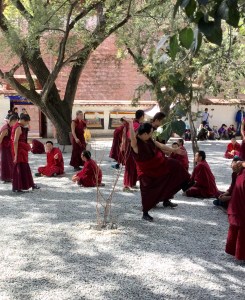 the two individual monks. Every so often the standing monk would with an angular motion strike the palm of his other hand making a cracking noise which I took to mean over to you.
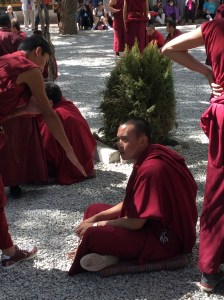
The whole process looked a bit intimidating and the facial expressions of some of the young seated monks appeared to show signs of 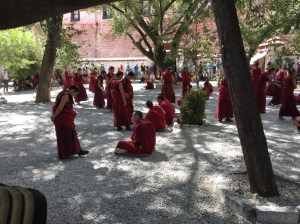 fear or their body language gave the impression that they were cowering. All the same it was an enthralling process and I walked around the courtyard observing the various debates taking place. Towards the end of the debating session there seemed to be some sort of role reversal and I suppose this is part of the learning experience for the novices. At the end on the way down from the courtyard I met a woman from Cork and had a brief conversation with her.
That evening I went to the The Snow Mountain Nima Tibetan Restaurant with Kelly, Kent, Ed, Rob and Maree. We had all been to this restaurant before but were quite happy to return again as the food had been excellent. This restaurant is traditional Tibetan, frequented by local Tibetans which is a good sign and we have seen no tourists there. We ordered two yak dishes, one of these spicy hot, a potato dish, broccoli and rice. We thoroughly enjoyed this meal and the cost was 45 Yuan or less than 8 US Dollars.
The weather has been good since we arrived in Lhasa generally over 20 degrees centigrade (68 degrees Fahrenheit) and not too cold at night.
Once again a number of us gathered in the corridor outside my room as the wifi signal is stronger there but it can be very frustrating as the signal drops from time to time.
Saturday 19th September – Lhasa
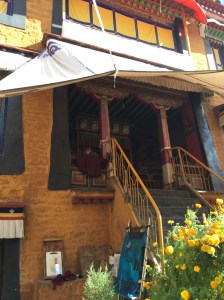
Up this morning at 7.00 am as we are going to visit a local nunnery. At 9.30 we set off walking to the Tsamkhing Nunnery which is the only nunnery established within the old city of Lhasa. The story is told that during the 7th century the Tibetan King Songtsan Gampo who established the Tibetan Empire and introduced Buddhism to Tibet meditated in a natural cave reciting prayers to pacify the danger of flooding from the Lhasa River.
The nunnery which was established in the 15th century is named after the meditation cave over which it was built. To get to the nunnery we had to stroll through the narrow streets on the old town.
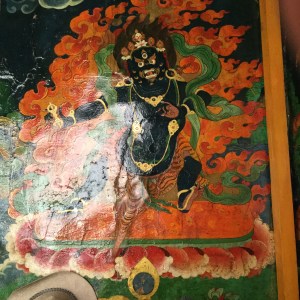
When we arrived at the nunnery the nuns were chanting their prayers but we were welcomed, allowed to enter, listen and take photos. This was a really nice, peaceful experience and we sat for a while to listen quietly as the nuns chanted. All the nuns have their hair cropped and wear the same robes as the monks.
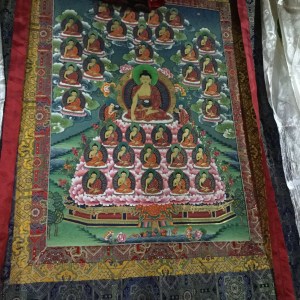
This nunnery together with all the various temples we have seen are exquisitely decorated with painted wood, magnificent Thanka’s (Tibetan Buddhist painting on cotton or silk usually depicting Buddha),
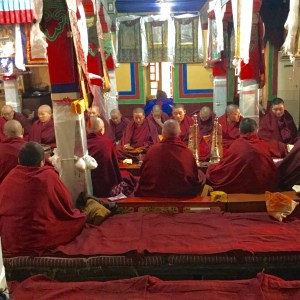
other ceiling hangings and a variety of representations of Buddha and Dalai Lamas. Again as with all other sites people come to pray, make offerings both monetary and yak butter for lamps.
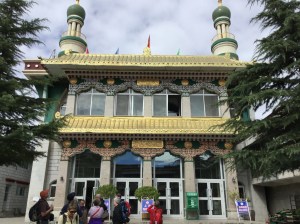
When we had finished in the assembly hall we were shown the cave from which the nunnery takes its name. The cave has now become a small area of retreat for the nuns with a low entrance door and a small space with a seat where the nuns can sit meditating or reading scriptures while facing the cave opening. The cave drops down about 8 feet but the opening has been closed off with glass. Following our visit to the nunnery we walked through the Muslim quarter and stopped at the local mosque to take some photos. Our guide then took us to a traditional handcraft shop which had leather goods, toys, jewellery and rugs. I bought a small stone inscribed with one of the symbols from one of the Tibetan Buddhist chants which translates as “To have peace”. I would have liked to purchase more but I had made a conscious decision early on that I would limit myself to very small purchases as I do not have the space in my backpack.
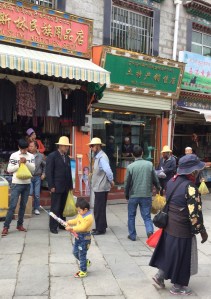
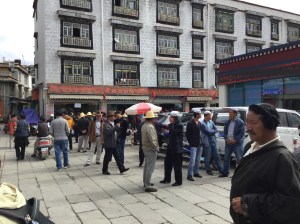
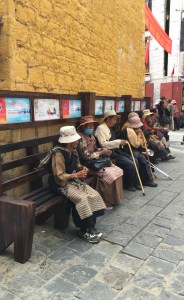
When we had finished our visit to the handcraft shop Kent and I walked back to the hotel with Kelly as she had to go to the local hospital to continue her course of I. V. Antibiotics for her ear infection. Myself and Kent then went to a local market as I was looking for Tibetan fridge magnets as my mission is to collect fridge magnets for each country we visit. I managed to find magnets with Tibet and a photograph of the Potala Palace.
That evening we met at 7.00 to go for a group dinner at the Snowland Restaurant. After the dinner we had a pass the parcel event which was great fun and I ended up with a bracelet and trinket box. The music was the Beatles and we all sang along. When we had finished I sang the Wild Rover as I knew that a lot of our group would know the song and be able to join in the chorus. This attracted great interest from the restaurant staff who all came with their phones to get photos.
Sunday 20th September – Lhasa to Golmud
This morning I went to the supermarket to purchase some food to take on our train
journey back down from Tibet as we travel to Golmud, Qinghai Province to continue our way through China.
Our group is travelling on two different trains, one group at 12.10 p.m. and the second group of 5 at 1.10 p.m. When we transfer to the station we have to go through security checks at least three times both getting into the station and onto the train. I even had a full body scan by a little female security guard.
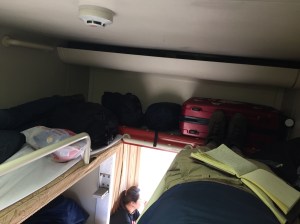
 This time we are scattered throughout the train with myself and Eamonn having the top berths numbers 11 & 12 in carriage 1. There are four Chinese ladies in the berths below us. We spend most of the first five and a half hours in our berths due to the limited seating available.
Walked up to carriage 3 to talk to some of our group. Had a long chat with John who was in a compartment with a lovely old Chinese 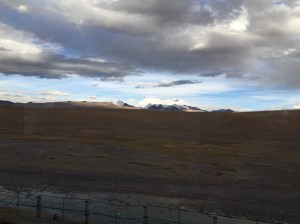 couple who invited me to sit down on the bottom bunk. John asked me about Margaret and I told him the whole story of Margaret’s illness.
Later in the journey I managed to make a phone call to my son Eoghan to wish him a happy birthday as he is 32 today.
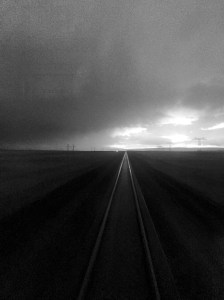
On the trip down to Golmud it was interesting to look at the landscape and it was open spaces, plains with mountains in the background. You could see herds of Yaks, Sheep, and Goats. Our train lost time as we journeyed and we did not arrive at Golmud until 2.30 a.m. We were booked into a local hotel and we got to bed at 3.00 a.m.
 theoldmanontheroad