Thursday 10th September Chengdu
Today is one of those days which are eagerly anticipated by most of the
 Map of Chengdu Research Base of Giant Panda Breeding
group as we are visiting the Chengdu Research Base of Giant Panda Breeding. We arrived at the Base at 8.15 in order to be there early and therefore ahead of the crowds who descend on this place. We spent 3 hours going through the site which is effectively a large park with a series of gardens.
Our guide Anita was wonderful as she knew her way around the site as Chengdu is her home town. I was really excited about the prospect of  seeing the Pandas in fluffy, cuddly reality. We had no sooner arrived and entered the Base when we saw our first adult Panda who was in an open enclosure feeding on Bamboo. Today was a good day to visit the Pandas as it was raining and they prefer this type of weather. It was a privilege to actually see a Panda in real life and it was a truly wonderful experience. The talk in the group was about how lovely they were and there was a nice buzz within the
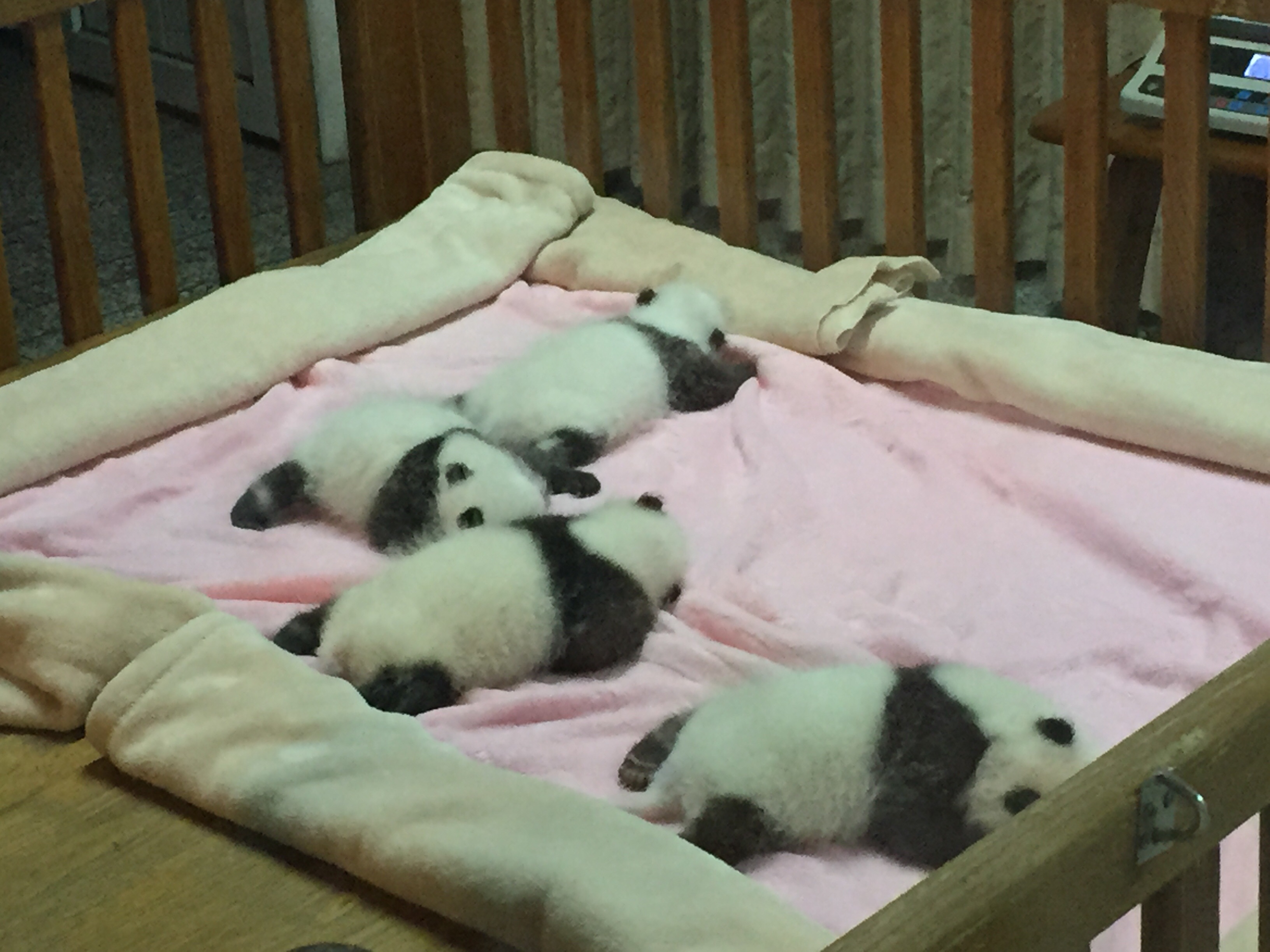
 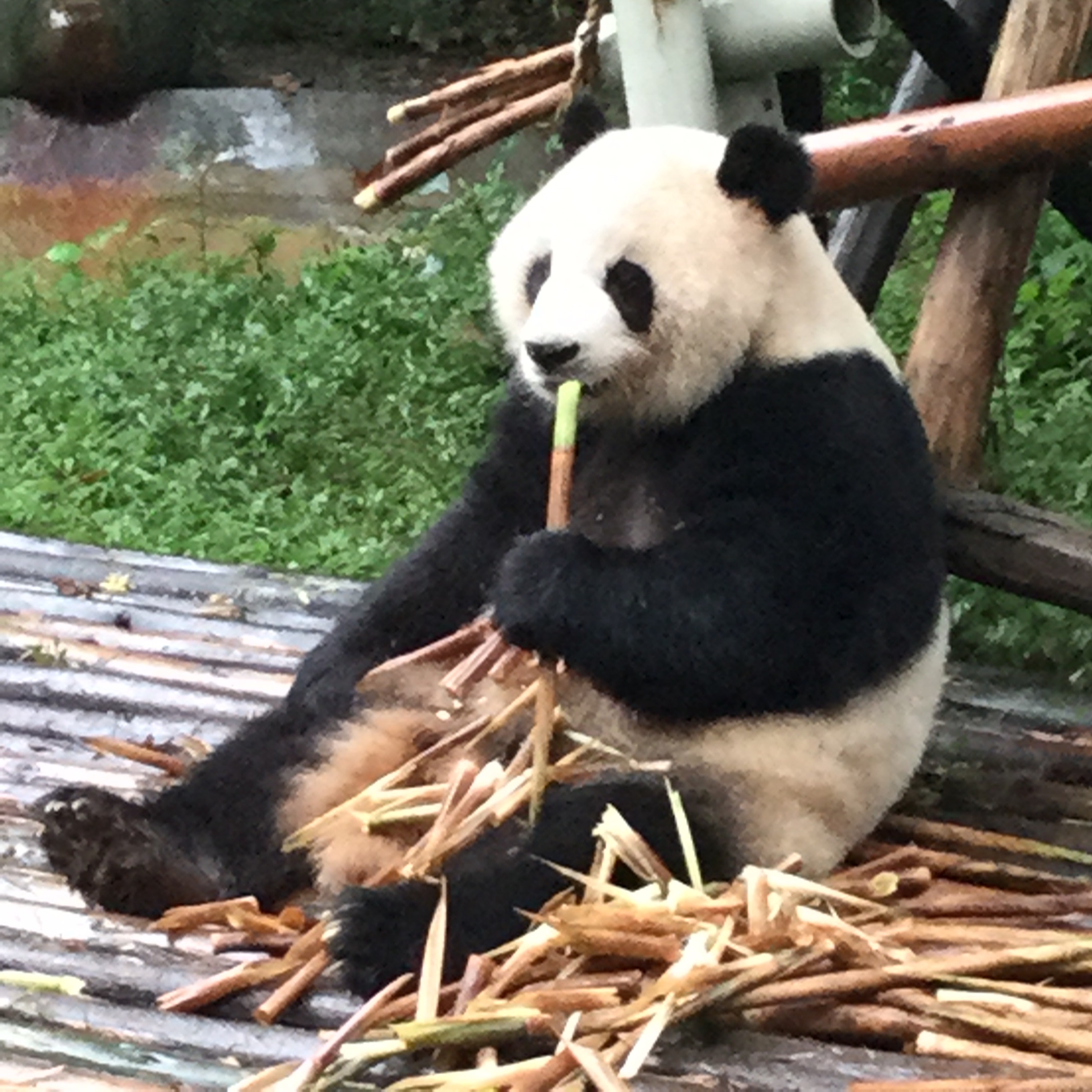 general visitors. Morning time is one of the ideal times to visit the Pandas as they are most active then in terms of eating. The Pandas spend about 60% of their time sleeping and 40% eating. We then visited the baby Panda unit and this area is set up similar to a maternity hospital neo-natal unit. There were 4 lovely baby Pandas in the
 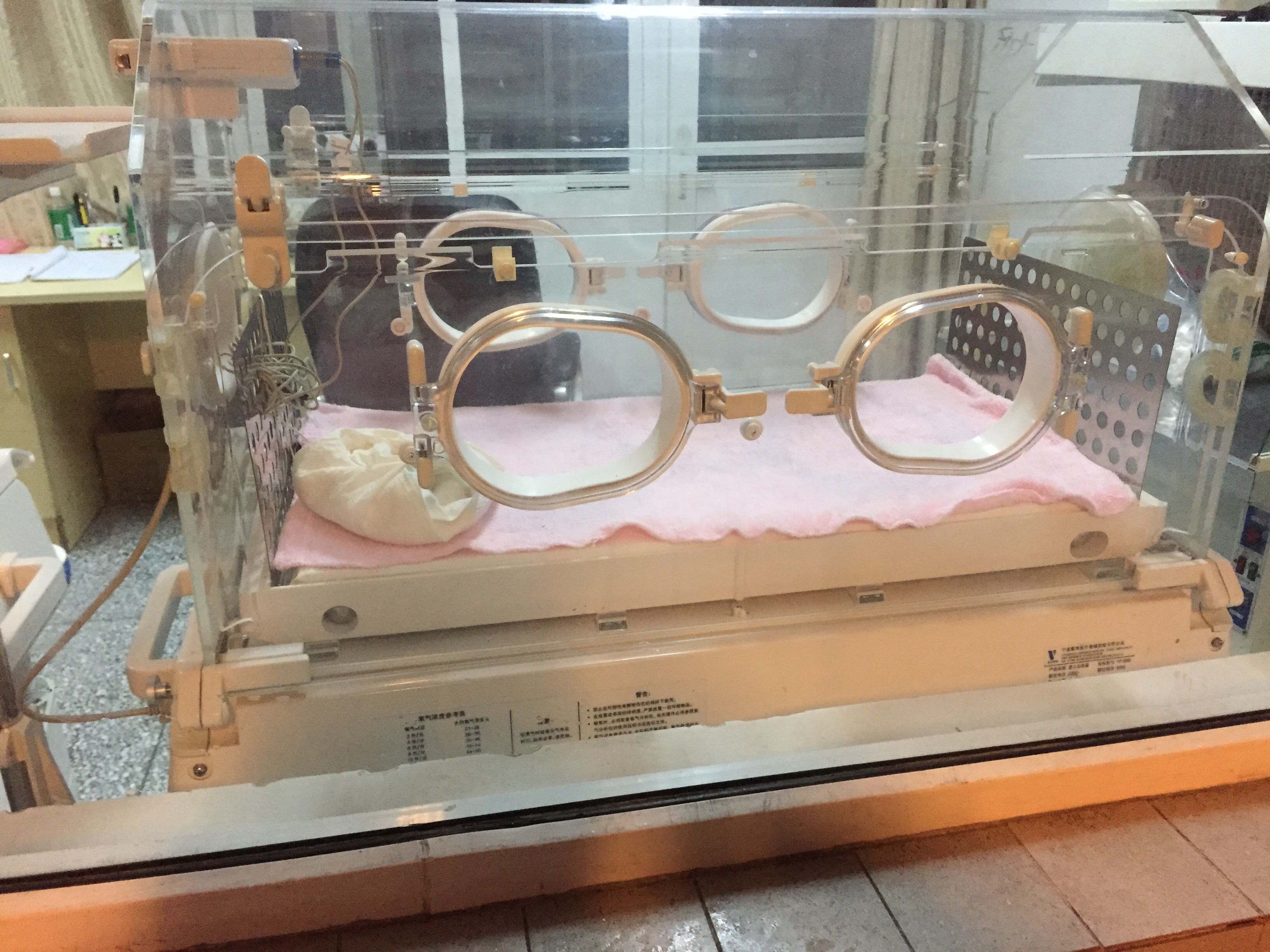 unit in a cot and they are viewed from the corridor through glass. We also saw other baby pandas further on in our walk through the base.
Along the way through the base I noticed a couple who were obviously from my part of 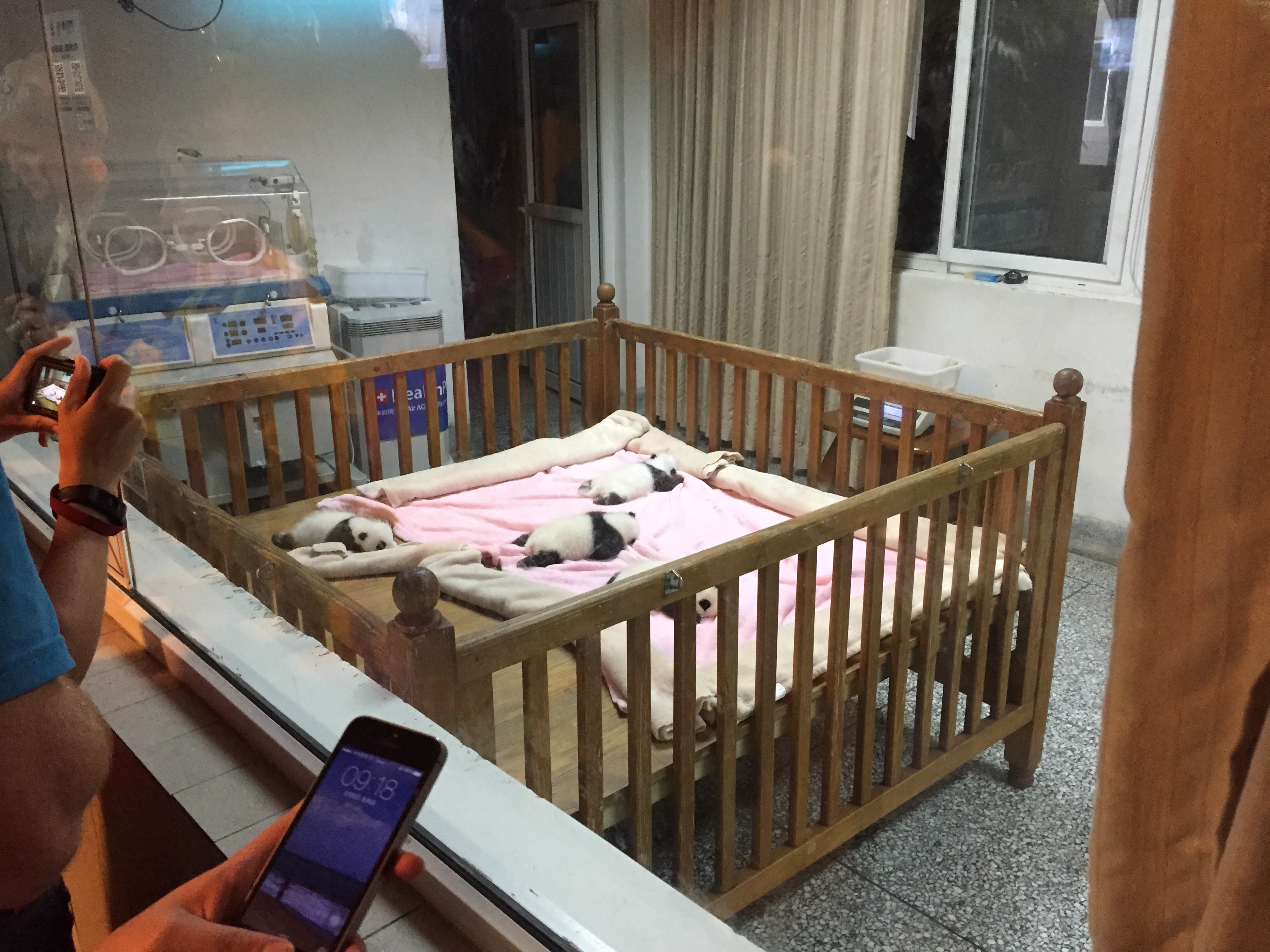 the world and the man was wearing a Celtic Football jersey. Later as we were watching one of the Pandas climbing a tree I found myself beside this couple and we started chatting. Well the world has become a very small place as this couple, Ger and Eileen Clery are
  from Limerick and were visiting the Panda base with their daughter who works in Beijing. We started trying to make connections and it turns out that Ger is related to my friend Pat Cross. My group could not believe that I had met someone from my home town and that we were able to trace connections.

The next area in the base is the section set aside for the Red Panda. The Red Panda is most unlike the Giant Panda and remind me more of a raccoon. These are fascinating creatures and even though they are housed in enclosures there are openings in the fences to allow them move around the site.  Our group had a number of interesting experiences in this area. A number of the Red Pandas wandered
 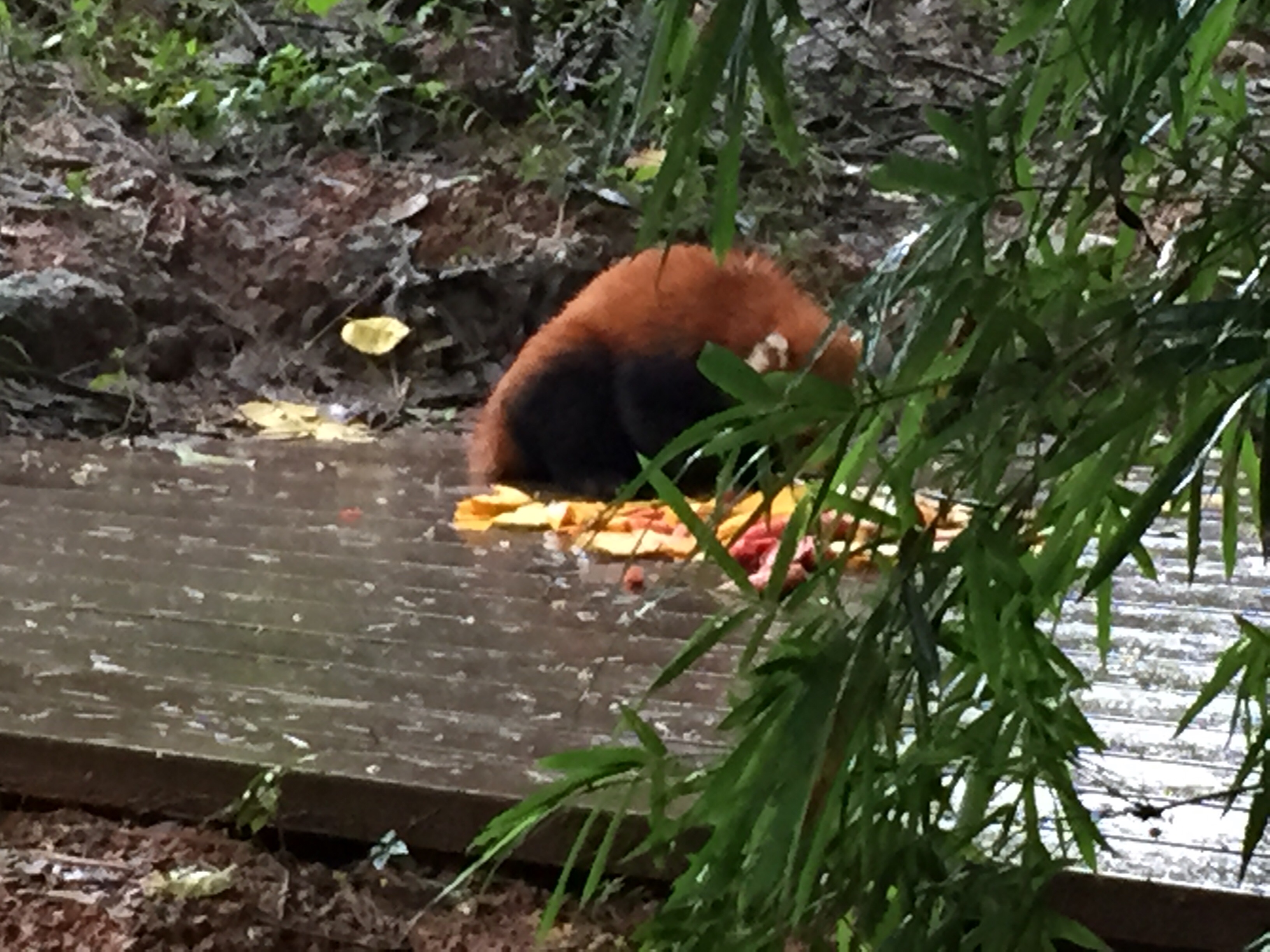 out onto the walkways as we were passing through and coming quite close made their way around some of our group who remained still to allow these creatures to pass. The Red Pandas are supposed to be aggressive by nature but this side of their character did not manifest itself during our visit.
Something which was noticeable at the Panda Base was the number of western tourists visiting this site.
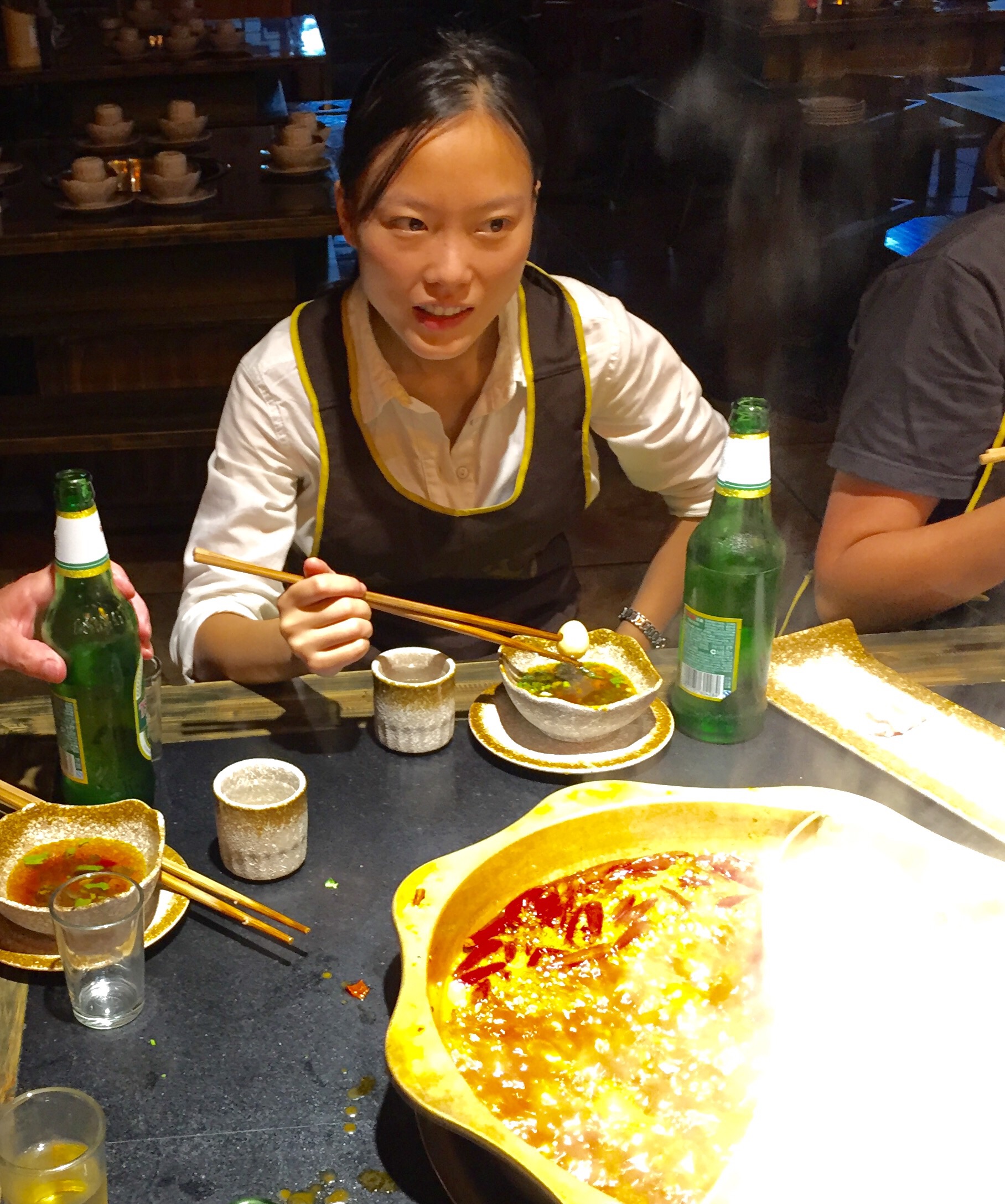 Anita our guide discussing the finer points of hotpot
Following our visit a group of 10 of us went for a hotpot meal. I was  looking forward to this meal as our guide Anita was accompanying the group and therefore would explain the hotpot from a local perspective. The hotpot has a split bowl with 2 different cooking sauces, one which was spicy and the
 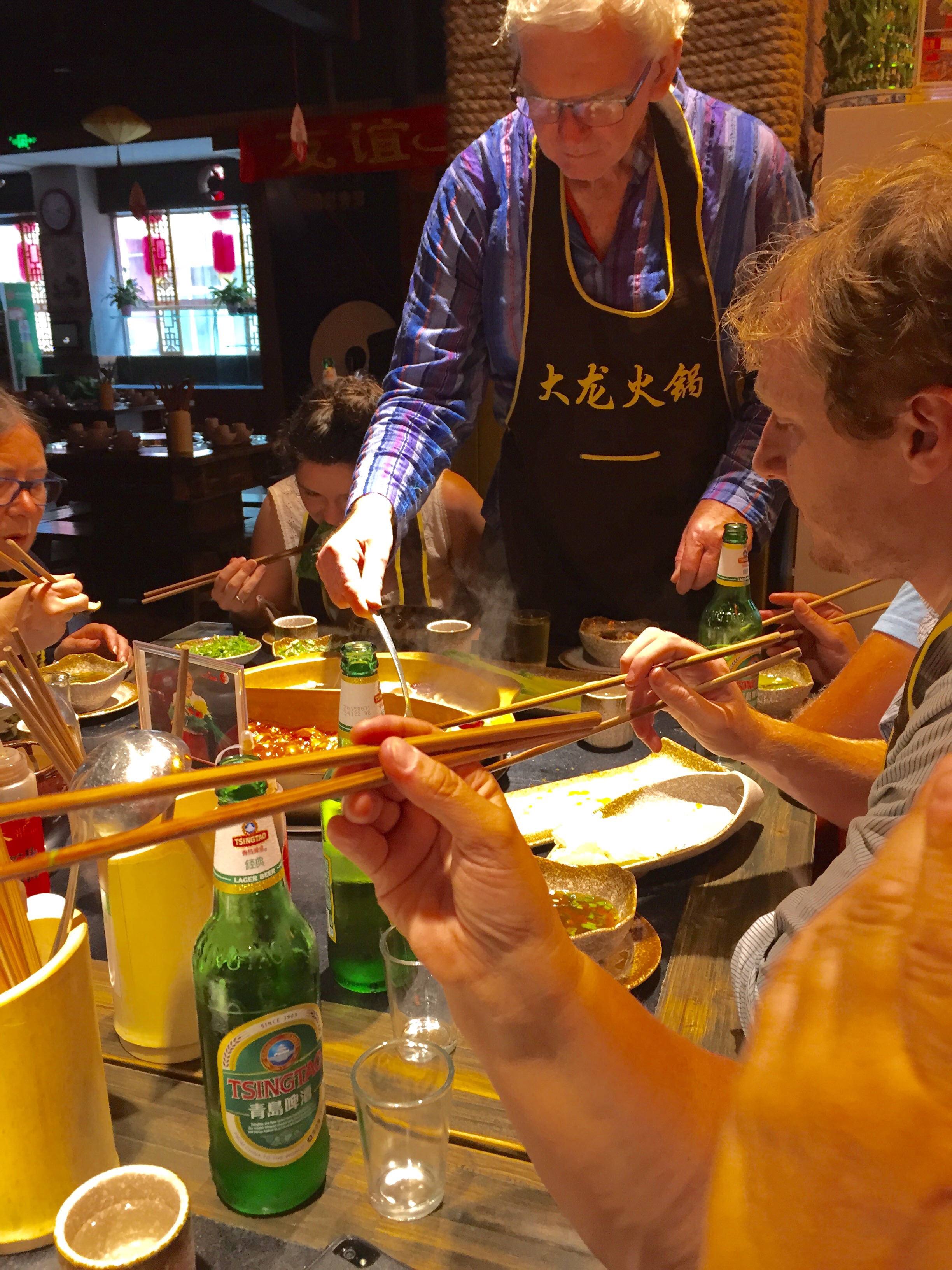 other non spicy somewhat like a stock. Anita ordered some pork, lamb, meatballs of pork, mushrooms, potatoes, quail eggs, and Chinese cabbage. The non meat dishes were split half and half and we put these in the 2 cooking sauces. Each person gets a small bowl of oil and bowls garlic, coriander and spring onions are generally provided. You can then mix your own sauce of oil, garlic, coriander and spring onions to your own particular liking. Using your chopsticks you pick the uncooked meat and hold it in whichever cooking sauce you prefer until it is cooked and then dip it in your own bowl of sauce which you have mixed. This is a most enjoyable way to eat a meal and you have great interaction across the table during the meal. As we are in Sichuan Province rice is not served with the hotpot. We also consumed 2 beers with the meal and the individual cost of the meal was just over 8 U.S. Dollars.

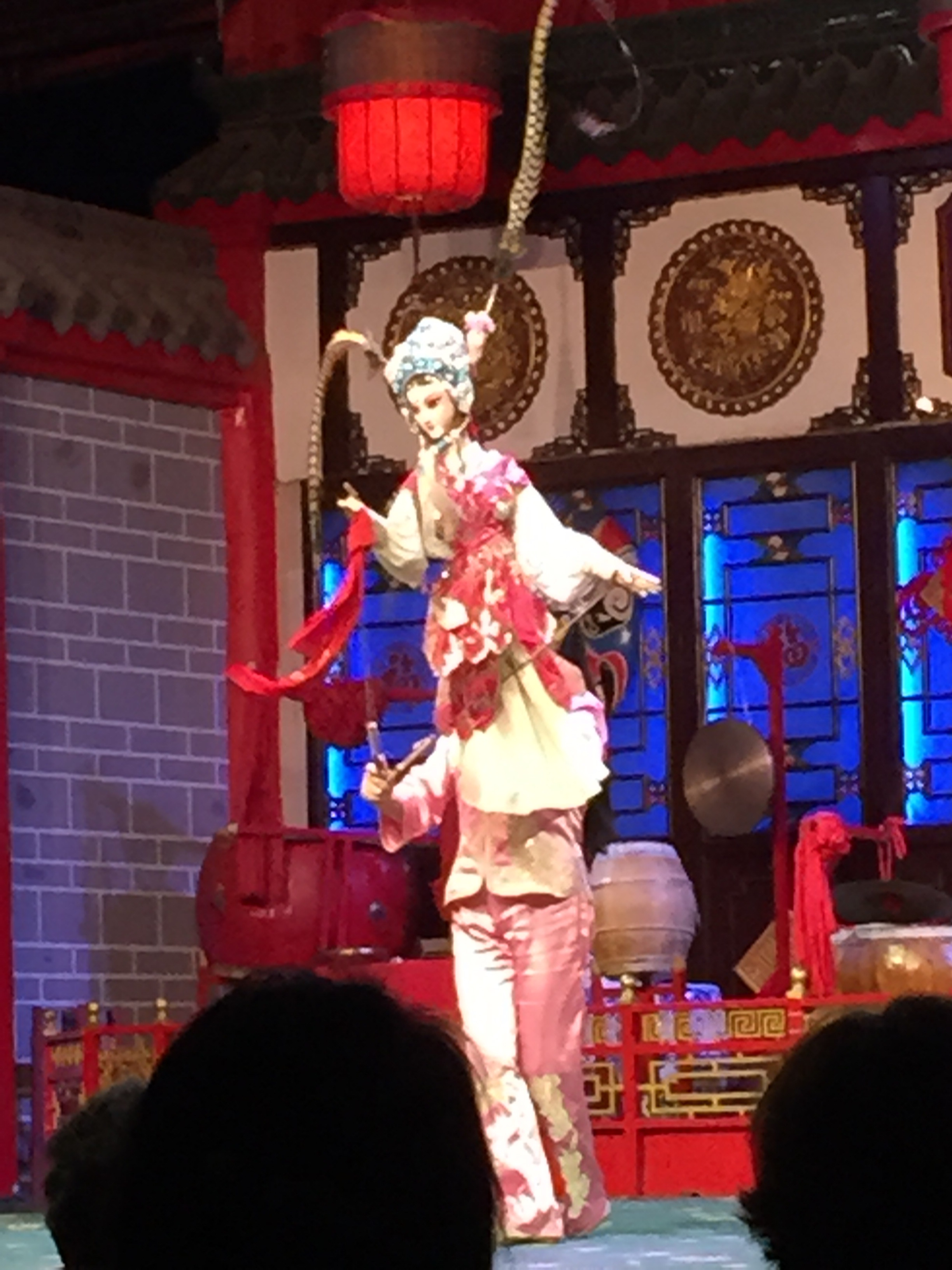
That evening we went to the Shu Feng Ya Yuan Sichuan Opera and Traditional Folk Arts. To get to the Opera House we had to travel on the metro and we were an interesting sight as it would be so unusual to have 18 western tourists travelling together on the  metro. The metro system is very clean and efficient, cost us 2 Yuan each way which comes to between 60 and 70 U.S. Cents. The Opera and show included Face-changing Opera, individual musician, orchestra, puppetry, sketches and shadow
 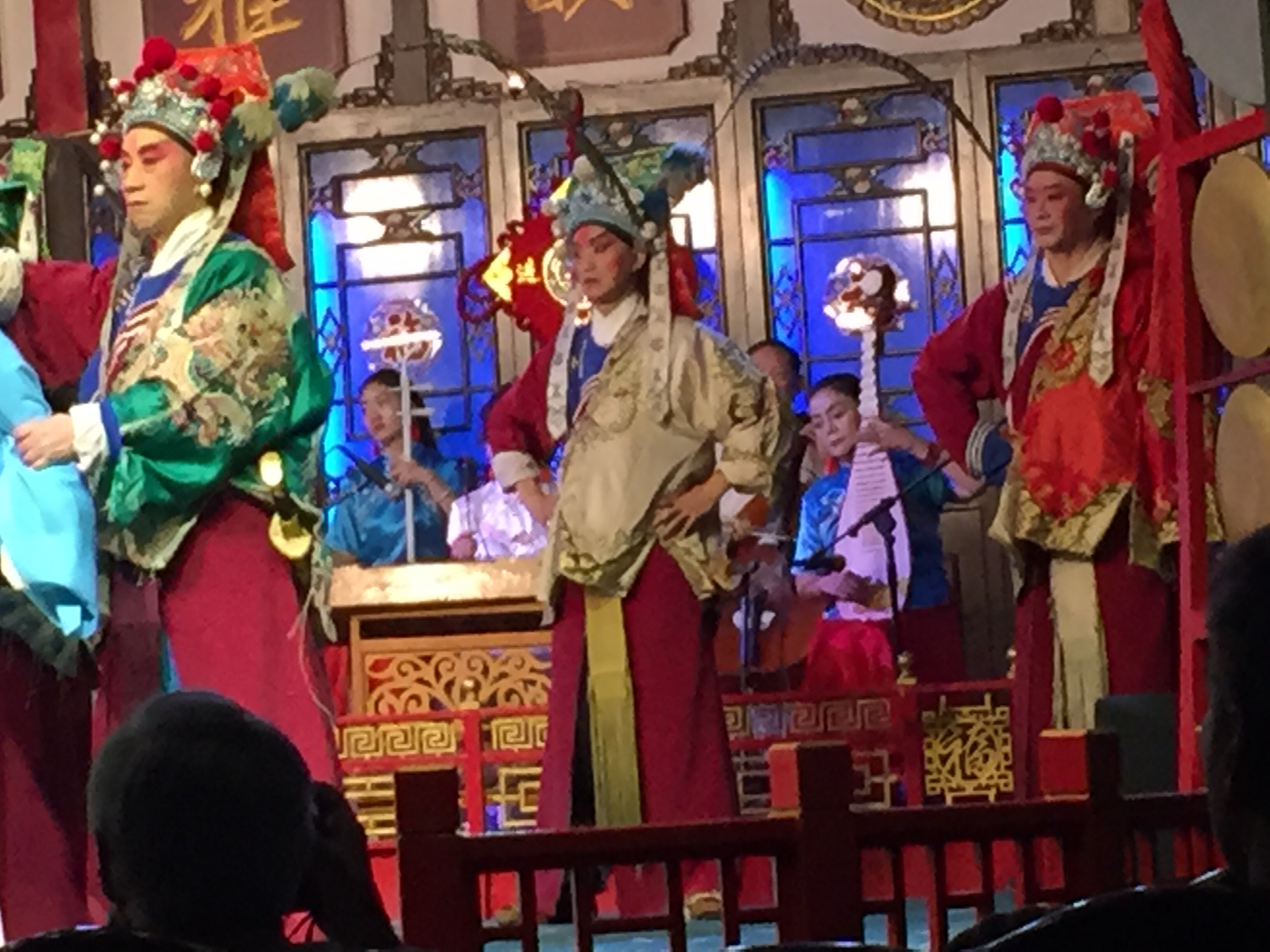 puppetry. The show is performed for approximately 90 minutes and during the show you get Green Tea, nibbles and also one of 4 dishes such as dumplings and sticky rice.
Our whole day today has been filled with amazing highlights.
Walking around Chengdu both during the day and night one feels as if you are in any big city. Chengdu is a modern city with good infrastructure and a young population who have adopted western ways and forms of clothing. While you still see elements of the old world the new modern world is in the ascendancy.
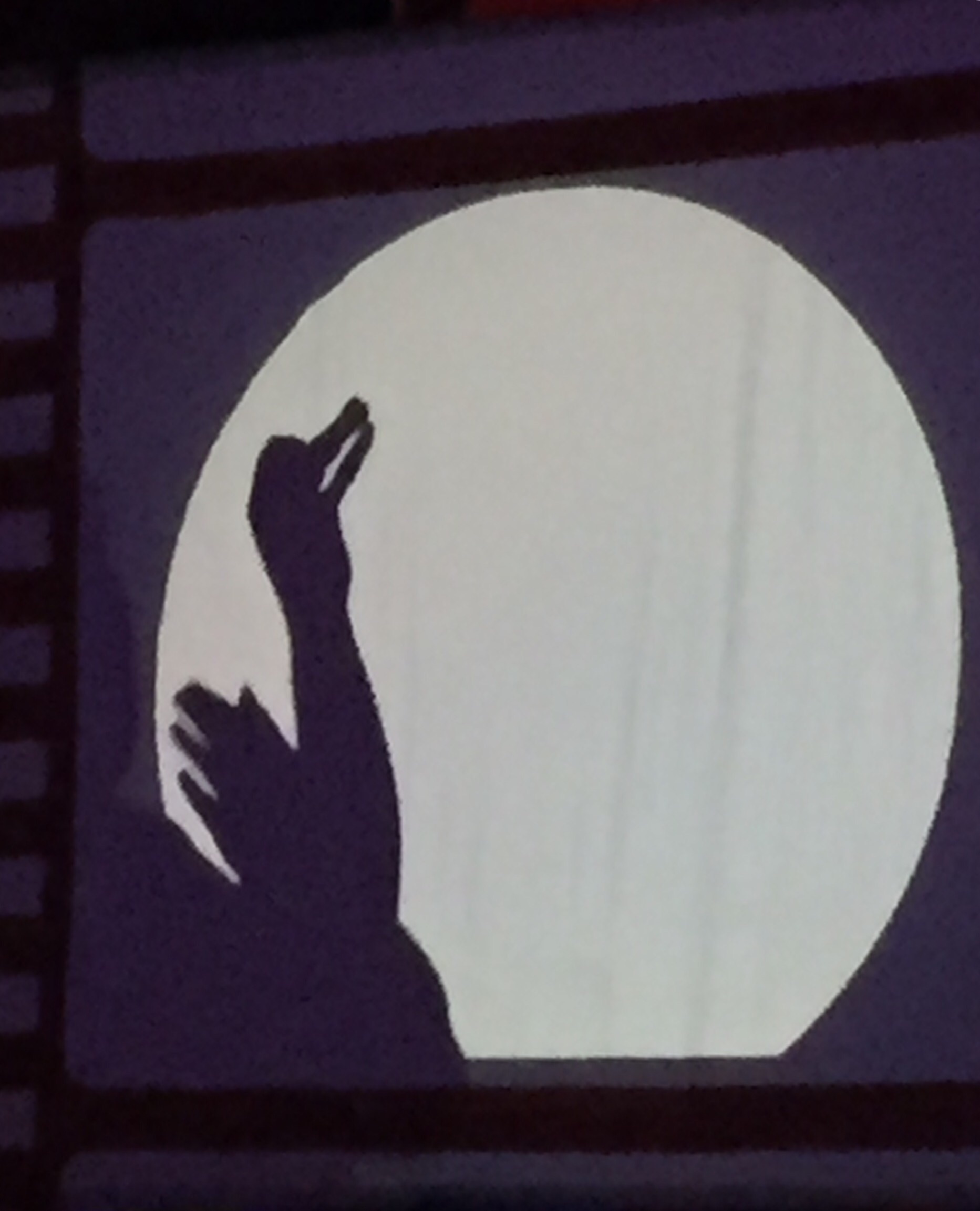

These photos are images taken during the shadow puppetry section of the show which was extremely entertaining and the skill of the puppeteer was extraordinary.

Photograph on the left is taken during sketch where an inebriated man returns home to his wife and she is not at all impressed. Obviously he is full of the joys of life but his wife makes him place a candle on his head and she tells him to perform various tasks such as crawling under a coffee style table. If he allows the candle to drop then it is off to the dog house for him that night.
Friday 11th September Chengdu to Xian
Up by 5.00 this morning as we are leaving the hotel at 6.30 on a  journey of between 10 and 13 hours as we travel to Xian, home of the terracotta warriors and historic terminus of the Silk Road. Xian has a wonderful history and it is an incredible feeling to be journeying there to hopefully absorb some of that historic atmosphere. This journey is over 800 kilometres but luckily we are travelling on motorway and the journey does not seem particularly long. Xian is a large city, a modern city and when we arrive there I am amazed at the size of the city, the large number of apartment blocks but also at the industry which is scattered around the suburbs of the city. The drive into the city was particularly challenging and there is a considerable buildup of traffic with buses almost hugging our truck as we make our way to the hotel. It has taken us over 12 hours to get to Xian and it is a relief when we arrive at the hotel. On the journey to Xian we came to an area of mountains where we were driving through an amazing gorge with the mountains rising up on either side. Some of the engineering for the motorway were miraculous with further upgrades ongoing. Our hotel is the Dynasty Hotel situated just outside the old city walls and is very convenient.
Saturday 12th September Xian
Up at 6.00 this morning as today we are going to see the Terracotta 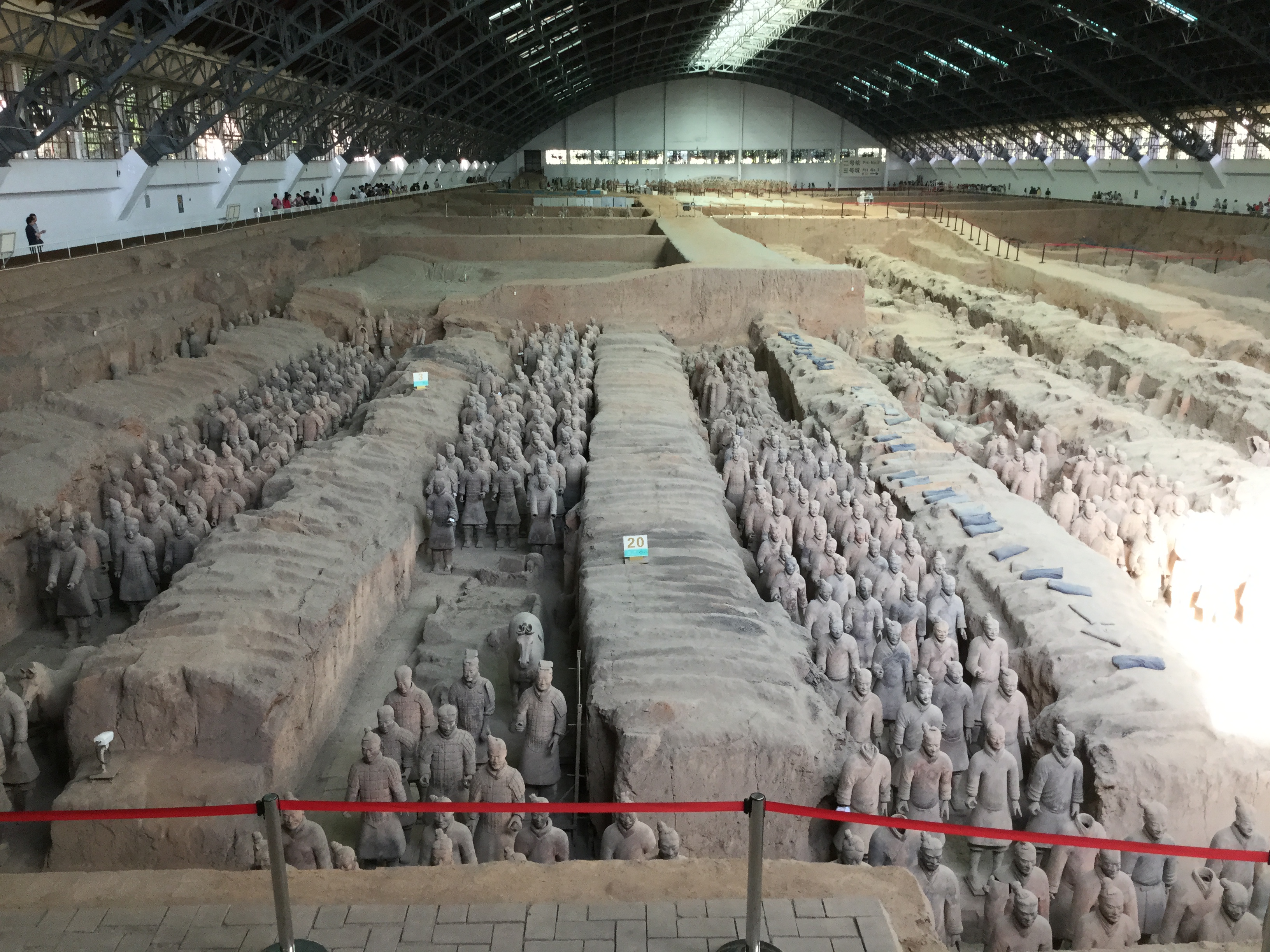 Warriors. Again this is one of the highlights that I am really looking forward to seeing and when I saw the revised itinerary for the overall trip I was extremely pleased to see the Terracotta Warriors included as this would be one of the things to do on my bucket list. Left the hotel at 7.30 and our journey took 45 minutes.
 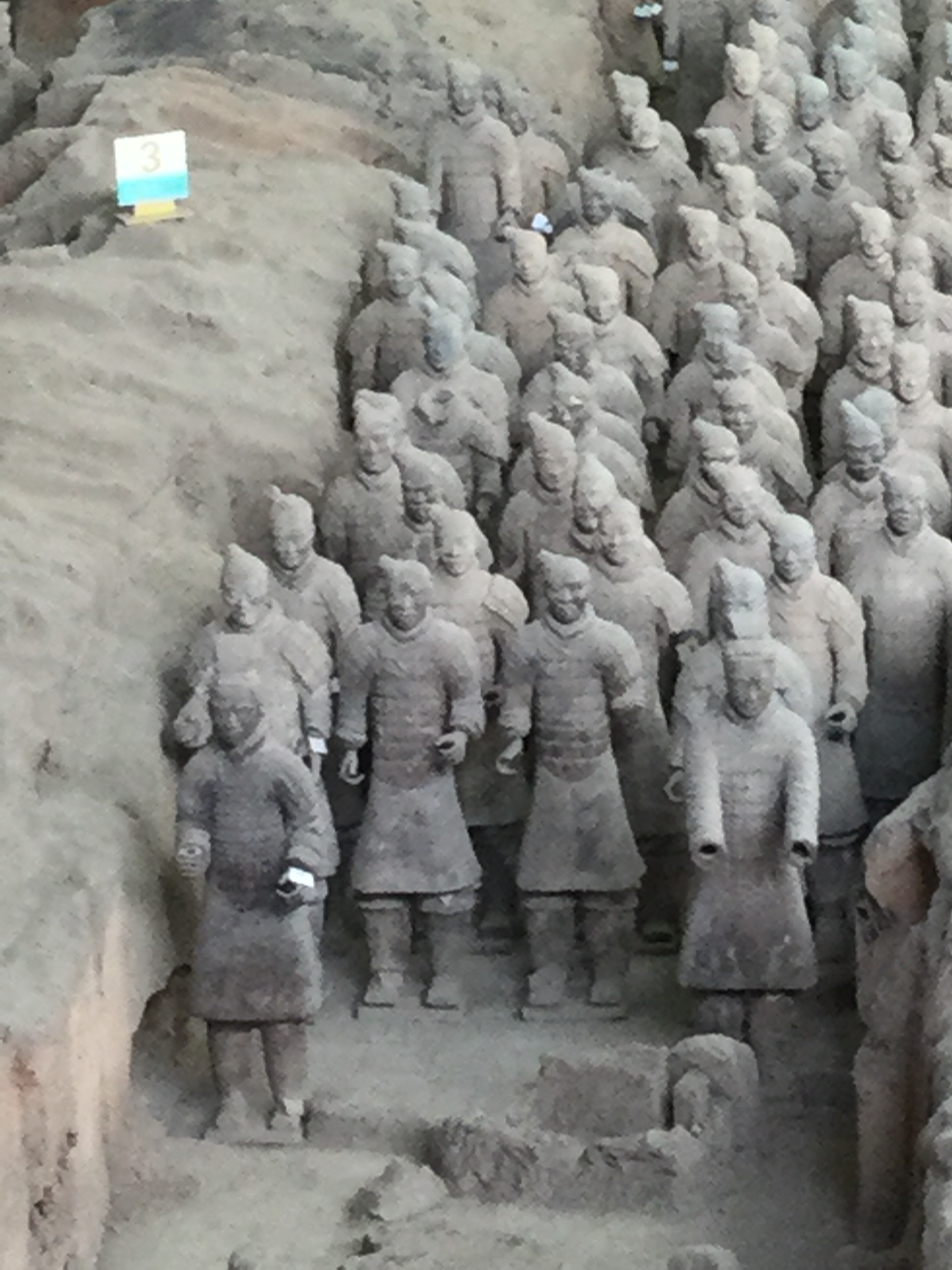 Even though it was early morning there was a considerable number of visitors at the visitor centre.
Our Chinese guide Anita had organised a local guide with an in depth knowledge of the site and it’s history. Having the local guide was wonderful because it made it much easier for us to get around the site and also gave us a great opportunity to understand the site, it’s inception, history and raison d’etre.
The first Chinese Emperor Qin 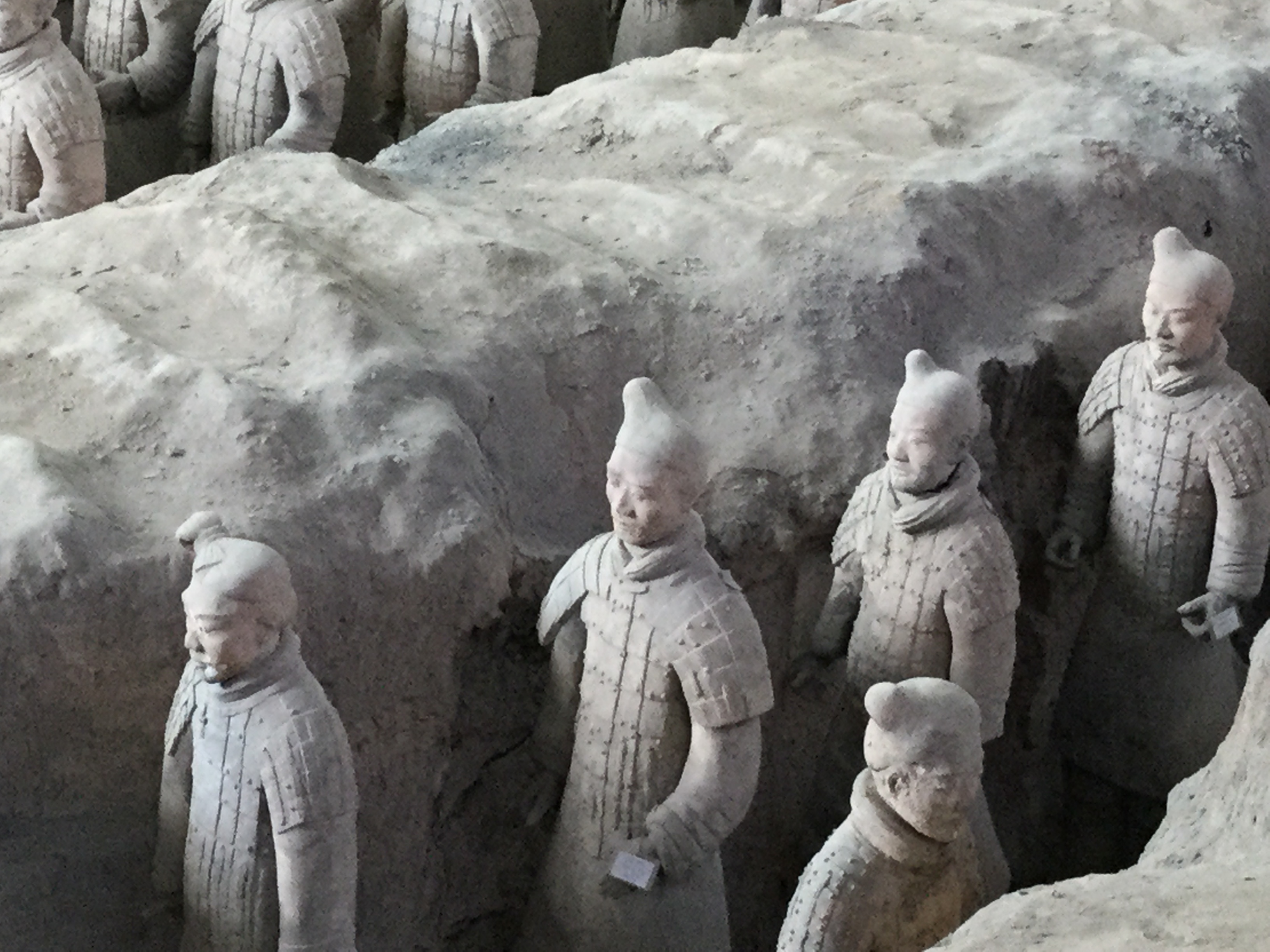
ordered the creation of the Terracotta Army with the purpose of it being interred in his Mausoleum with him in order to protect him in the next life. Construction of the tomb began in 249 B. C. with over 700,000 craftsmen and slaves involved and all were killed to keep the Mausoleum a secret. I have seen many 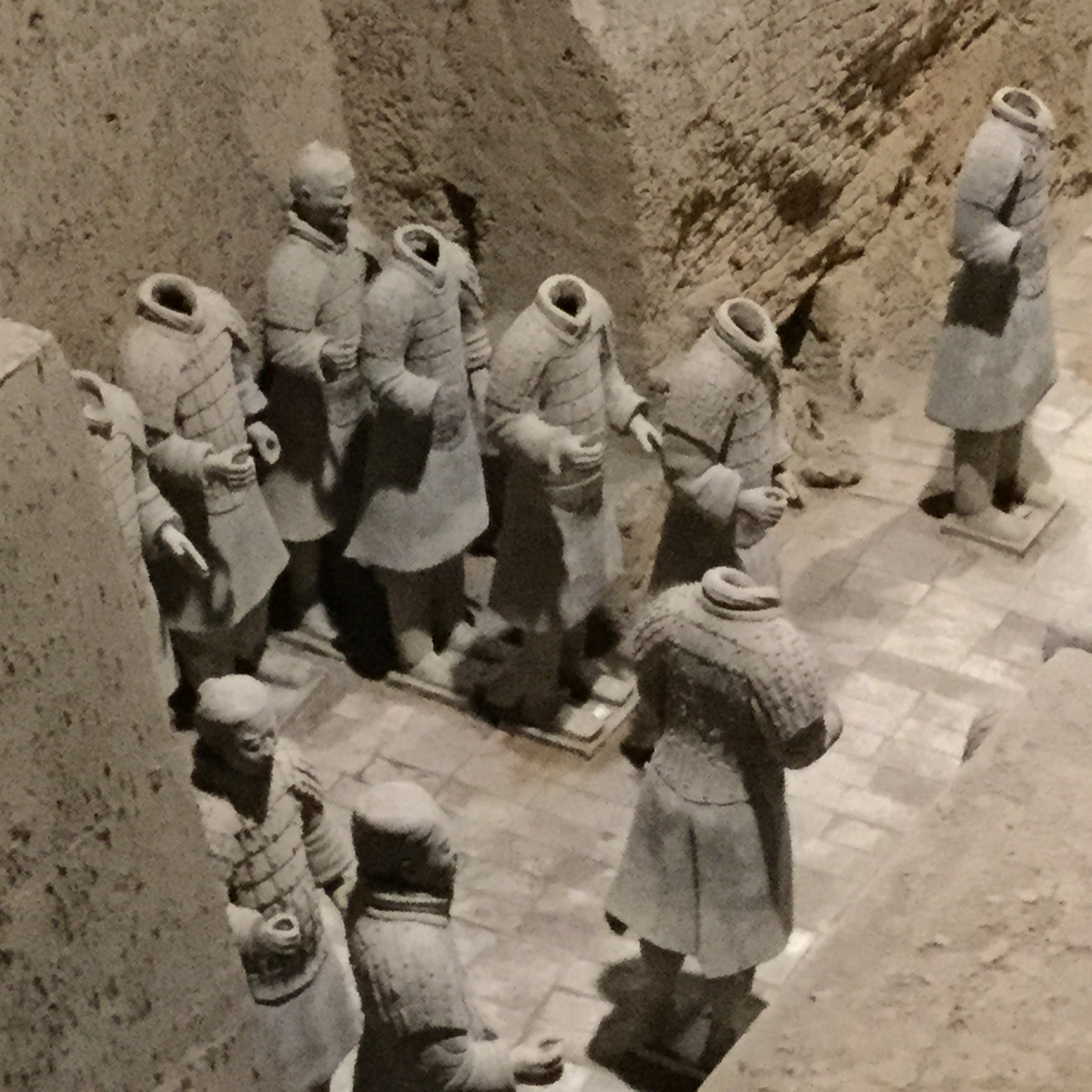 r presence gives you a real sense of history.
I have seen many 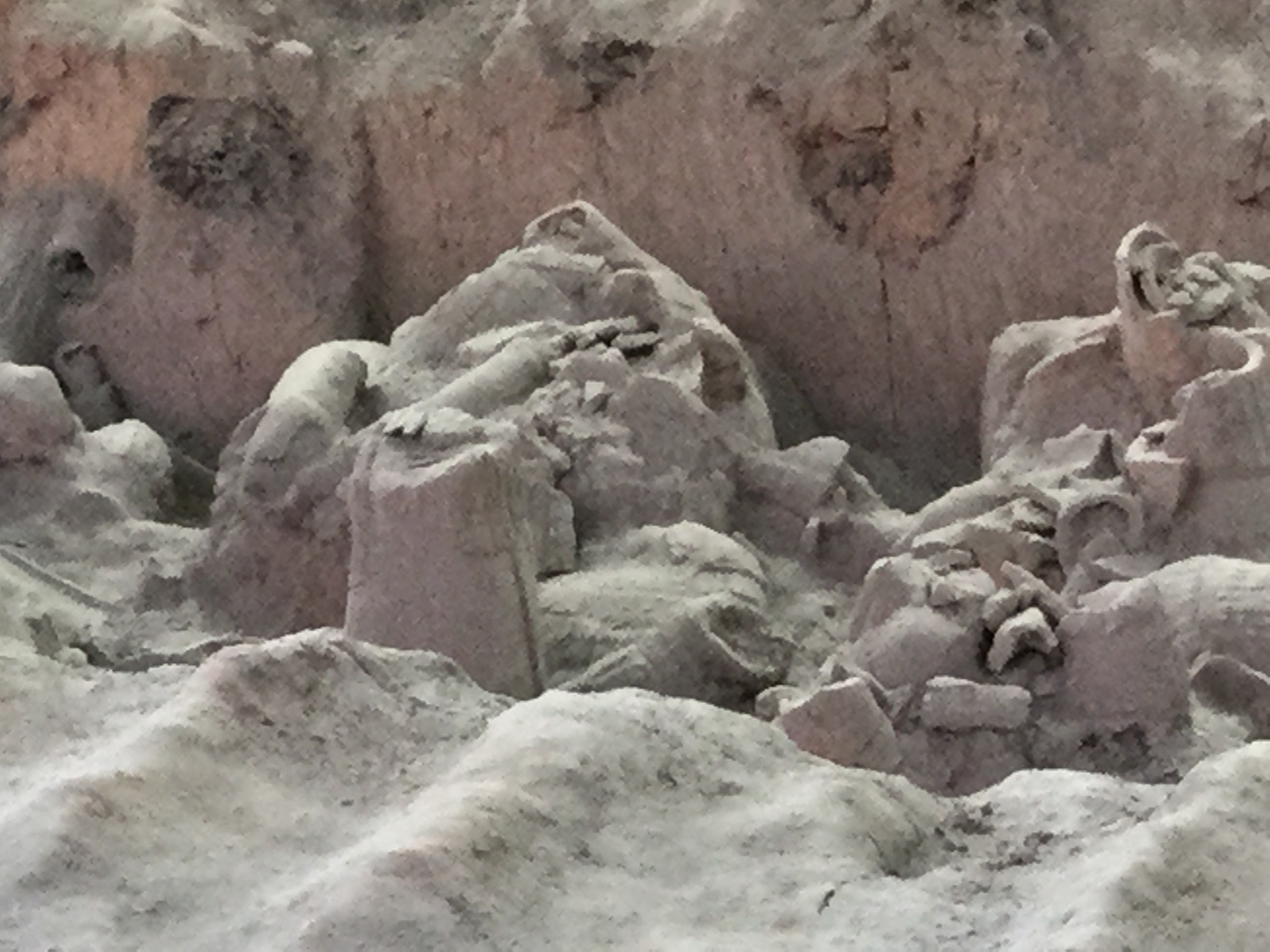 documentaries showing the Warriors but to be in their presence gives you a real sense of history.
The Warriors are over 2,200 years old and it is reckoned that the overall site is the world’s largest ancient imperial tomb complex covering an area of 6 square kilometres (almost 4 sq. miles).
There are 3 buildings within the complex and the first of these  contains Vault No. 1 which is the original site discovered by a farmer digging a well. This is the vault which you normally see in documentaries. Vault No. 1 has been excavated and work is still ongoing in the form of an archaeological dig with some warriors on display in various stages of repair as the archaeologists endeavour to
  reconstruct them. Currently there are approximately 1800 life size statuettes uncovered. There are infantry, archers and Warriors of all different ranks together with horses and chariots. All the Warriors were originally painted in vivid colours. It is known that there are thousands of other Warriors in the surrounding countryside
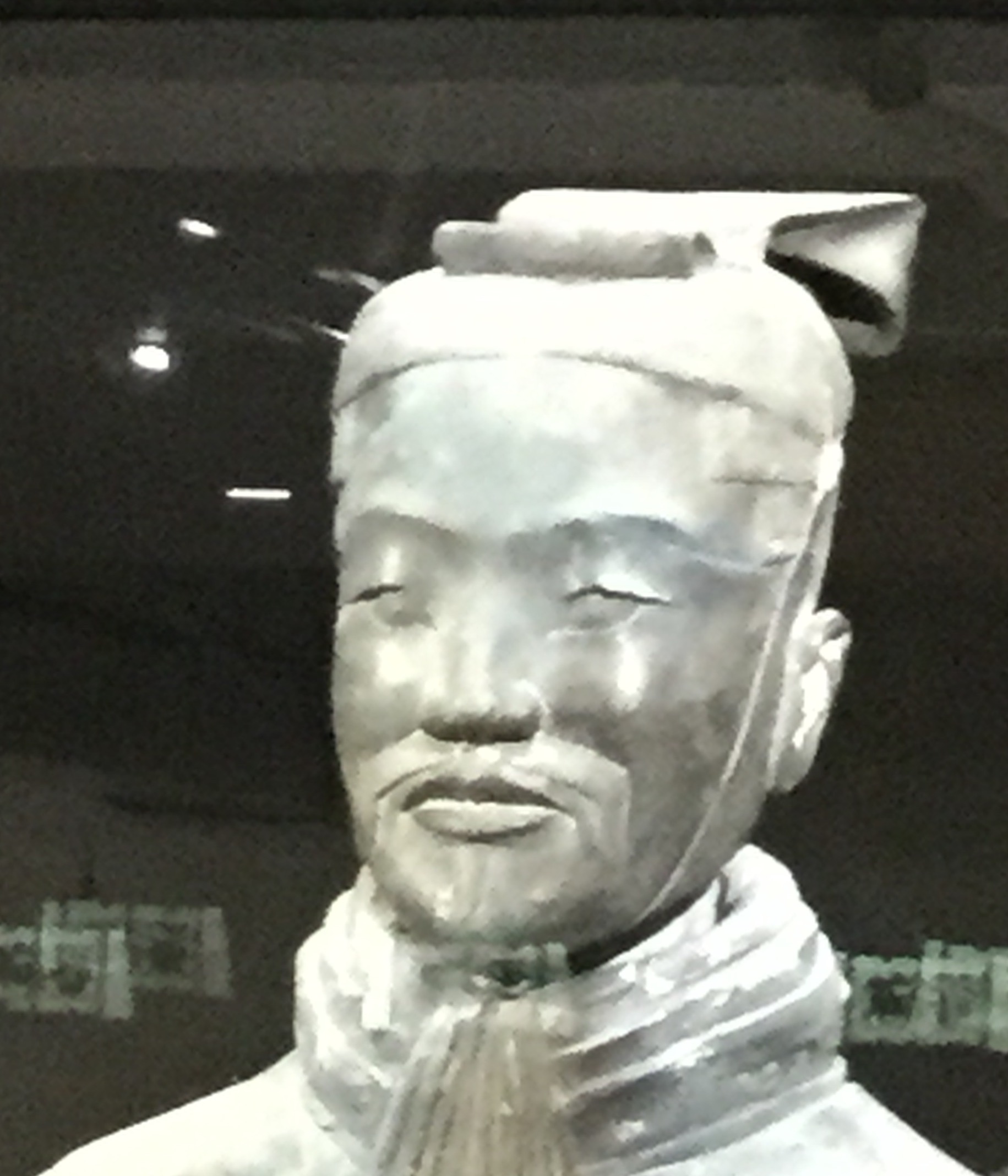
 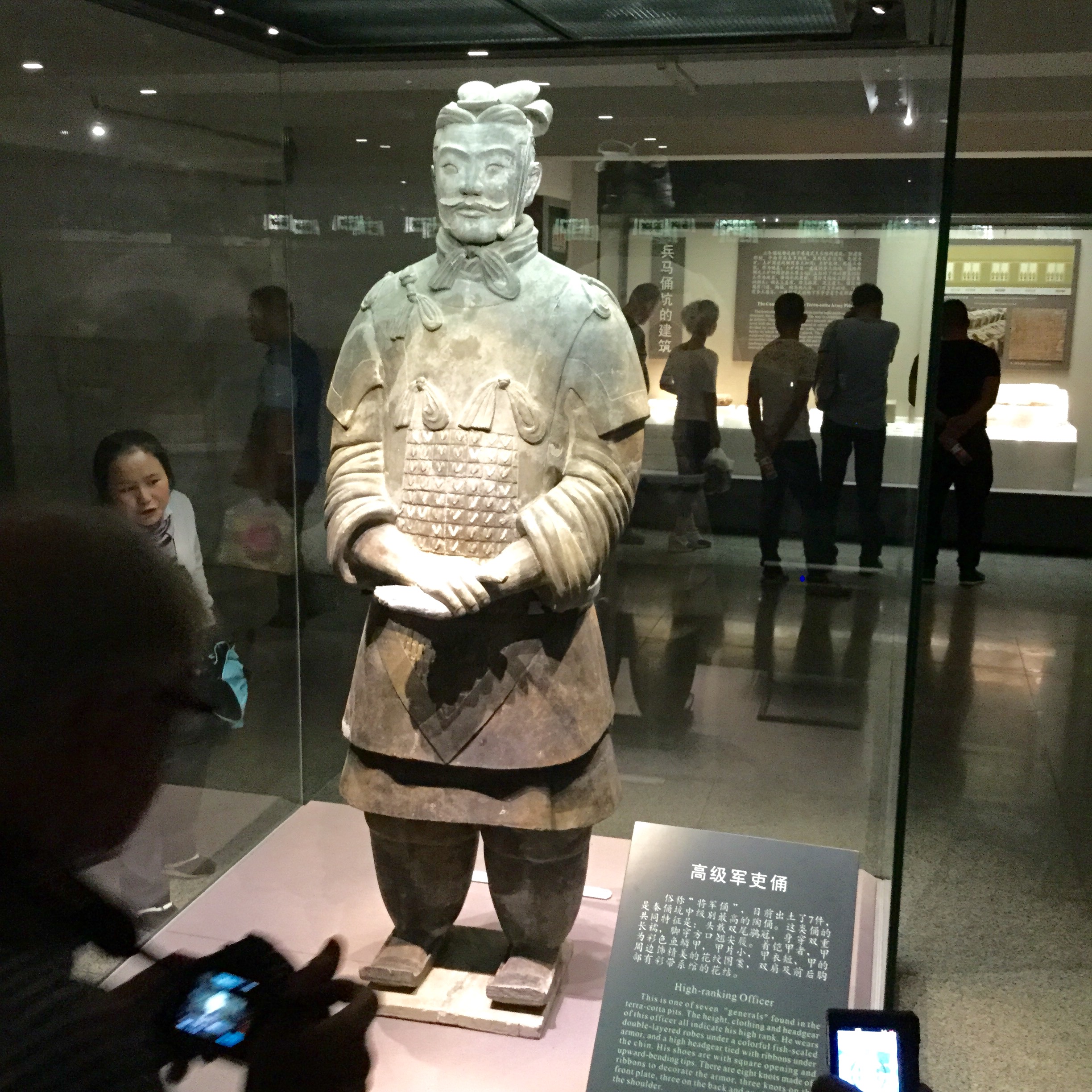 but no further excavations will take place until the technology has been developed which will allow the preservation of the paintwork and it could be another 30 to 50 years before the remaining Warriors are available to view in all their glory. Vault No. 2 contains archers, cavalry and chariots and Vault No. 3 contains the command post with 68 figures including officers, some soldiers and a chariot. The detail on the Warriors is incredible and no two Warriors have the same facial features.

 Our journey back to the hotel was a much slower affair as we encountered a buildup of traffic and it took considerably longer.
Traffic in Xian is a bit of a disaster and apparently it builds up each day.
We discovered that trying to cross roads at pedestrian crossings is a case of playing chicken with the drivers as they do not consider that they should have to give way to pedestrian and will swerve around you if they can while you are crossing.
In the afternoon a group of us decided to go to the Muslim quarter and visit The Great Mosque. The old city walls are almost 14 kilometres long and within the walls there are a considerable number of very modern buildings. We walked down one of the main, modern thoroughfares before turning into the Muslim Quarter which is a complete contrast to the initial part of our walk. As we entered the Quarter the streets immediately became narrower and in some ways it was similar to entering a souk in many other parts of the world.
 Xian Muslim Quarter
Another noticeable aspect of the quarter is the features of people and these people are obviously one of the ethnic minorities who possibly hark back to the days of the historic Silk Road.
The population of Xian is almost 99% Han Chinese and there are approximately 20,000 Muslims living in the Muslim Quarter in a tight knit community.
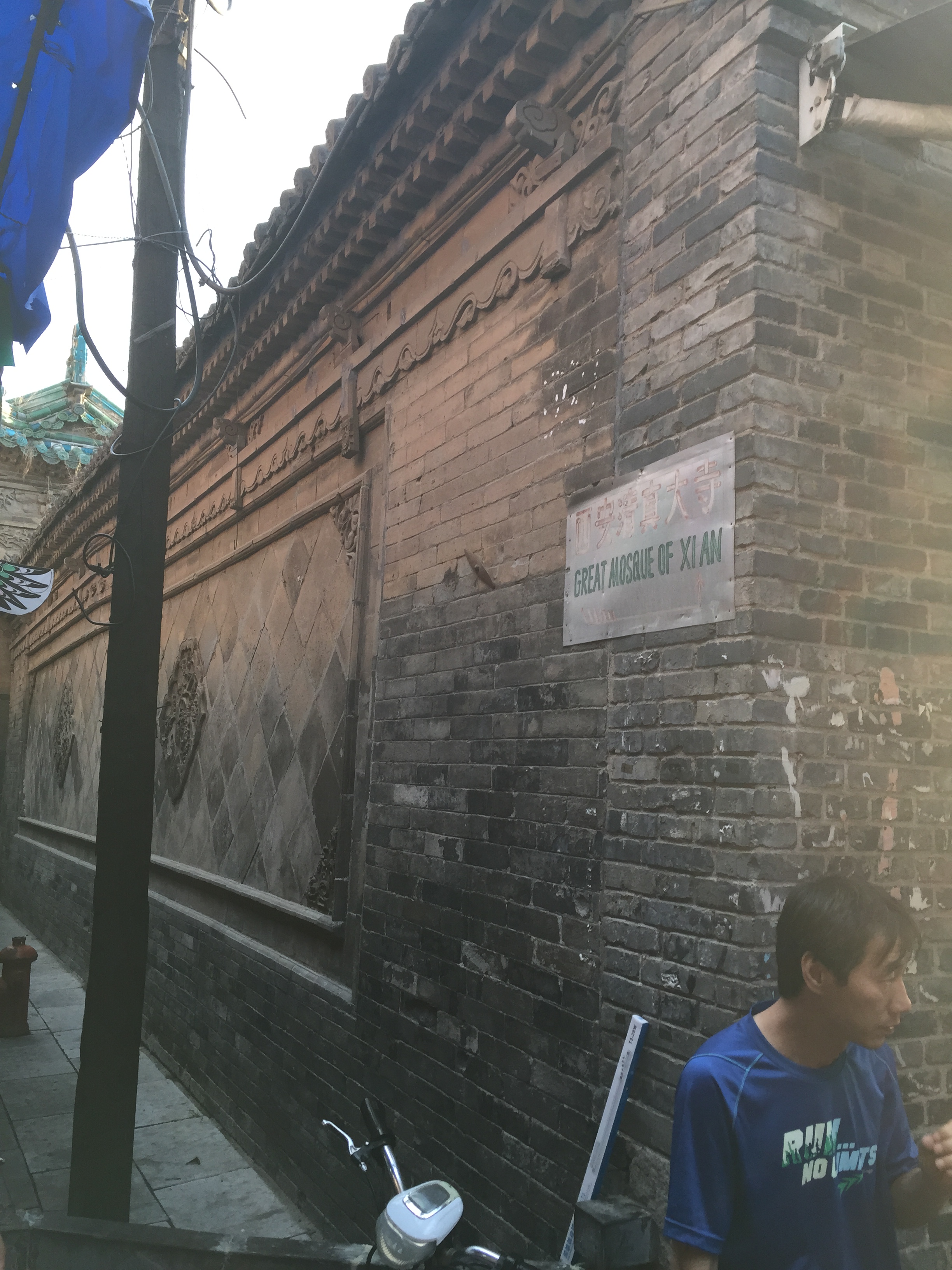 External wall of Xian Great Mosque
The Great Mosque is in existence since 742 AD which was during the Tang Dynasty and it occupies an area of 12,000 square metres.
Islam was introduced into this region by Arab merchants and travellers from Persia and Afghanistan. These merchants and travellers married into the Han majority and their descendants are the present day Muslim Community.
 Great Mosque Prayer Hall.
We spent quite a while wandering through the Mosque complex and you get an amazing sense of history as you view the ancient buildings but also a wonderful sense of peace.
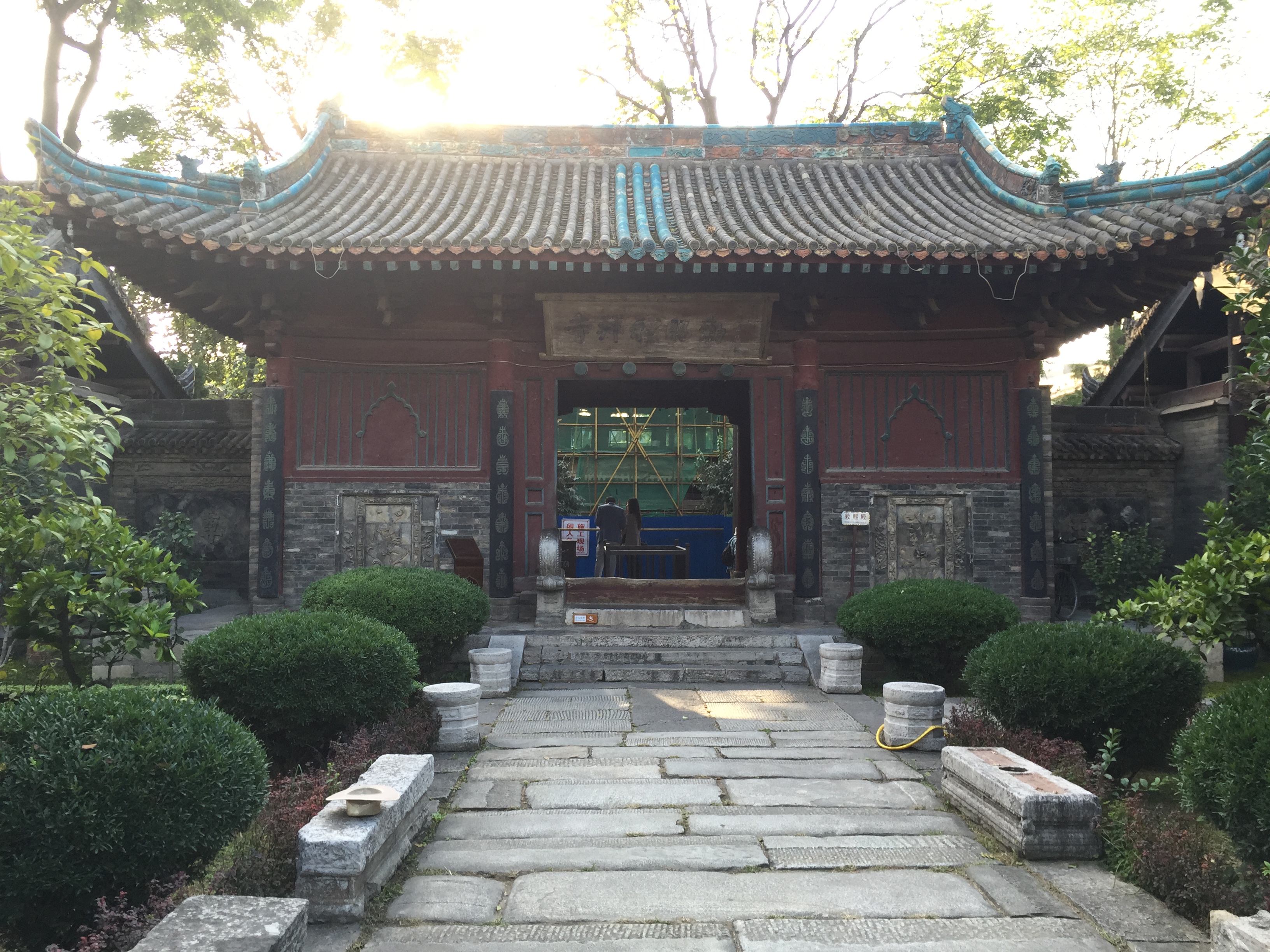 Entrance to Great Mosque second courtyard
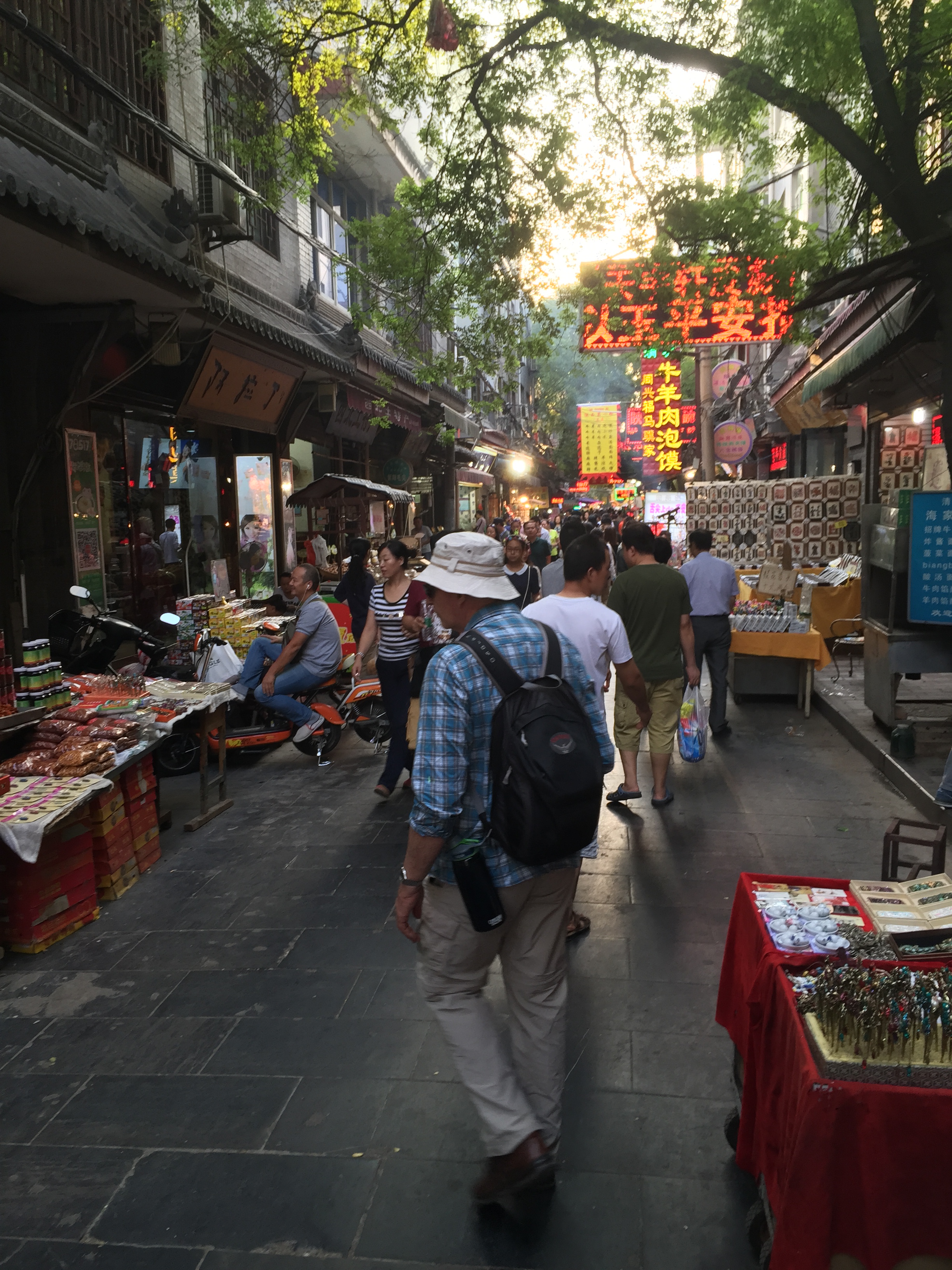 Ed strolling through the Muslim Quarter
When we had finished our visit to the Great Mosque myself and Ed decided to wander the streets in order to experience the atmosphere, sights, aromas and people within the quarter. There is enormous activity on both sides of the streets and the scene is a riot of colour with clothes and souvenir stalls. Also the restaurants have food stalls on the streets where food is cooked barbecue style.
Sunday 13th September – Xian
 Ballroom Dancing in the park
Today some of us had decided that we would walk the Xian city walls. As I mentioned previously the walls are 14 kilometres long, 40 feet tall, 40 to 46 feet wide at the top and 50 to 60 feet thick at the bottom with a surrounding moat. There are only certain access points with steps allowing you climb onto the walls and there is a charge of 54 Yuan, approximately 9 U.S. Dollars.
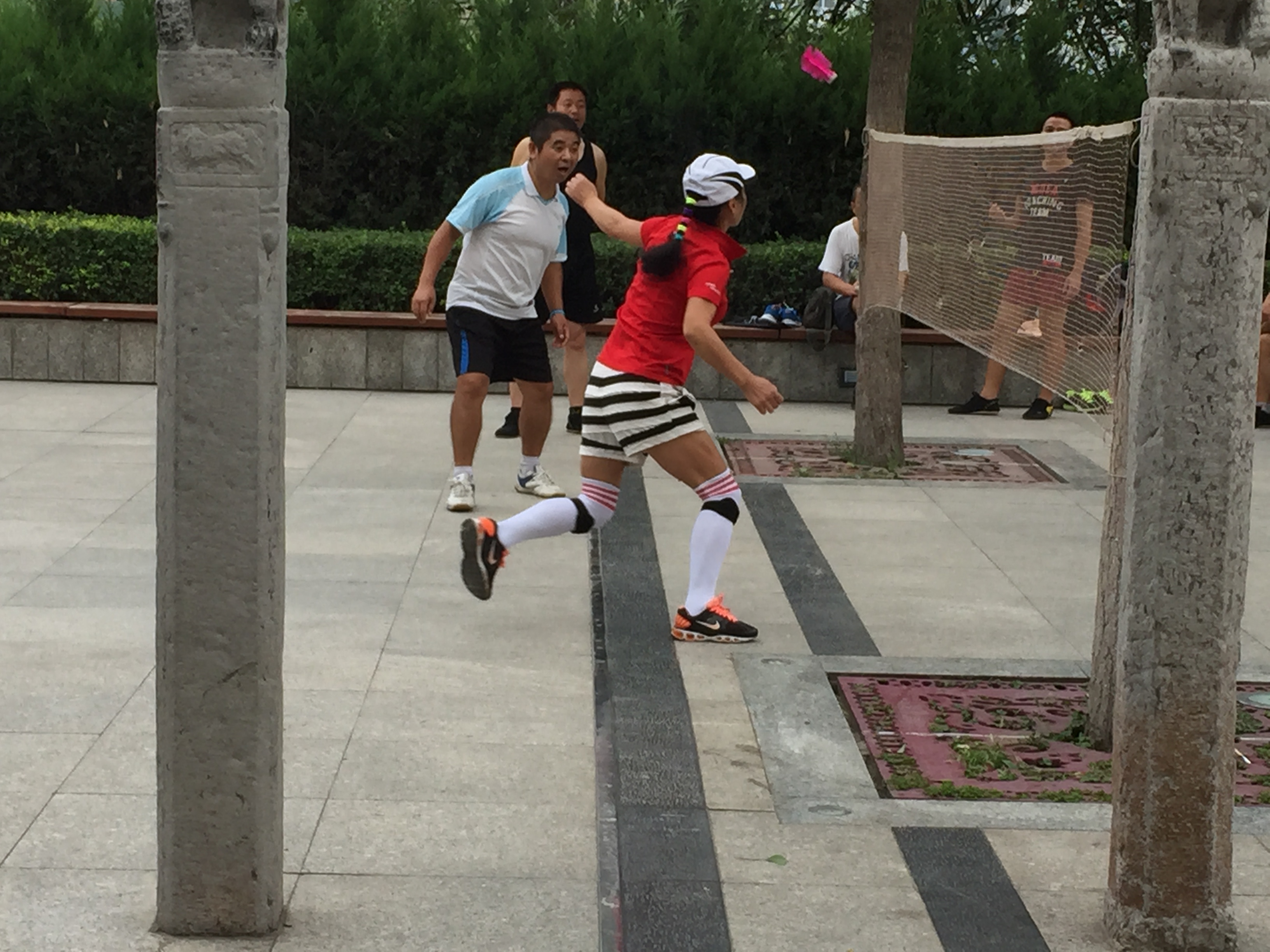 Foot Badminton in the park
To get to the nearest access point we walked through the parks which are situated around the outer edge of the walls. In these parks many types of physical activity are underway, such as Tai Chi, Ballroom Dancing, Foot Badminton and Physical Exercises. When we stopped to watch the Foot Badminton a number of people came over to us and started kicking the shuttlecock (this is larger and more
 Serving at Foot Badminton
robust than the traditional shuttlecock) to
us. We spent 15 or 20 minutes kicking back and forth with these people and even though we could not verbally communicate it was great fun. In some parks all the activities were taking place side by side.
When we finally made our way up onto the walls we visited a tourist centre and shop where two of my companions had some fun with a rickshaw which was on display.
 Ed and Anil test driving a rickshaw
As we started out to walk along the wall it was interesting to note that you could take a trip around the walls on a small transporter and also that you could hire bicycles. We decided to enjoy the walk, the sights, sounds and the views out over the city. At different points along the wall we could hear music being played.
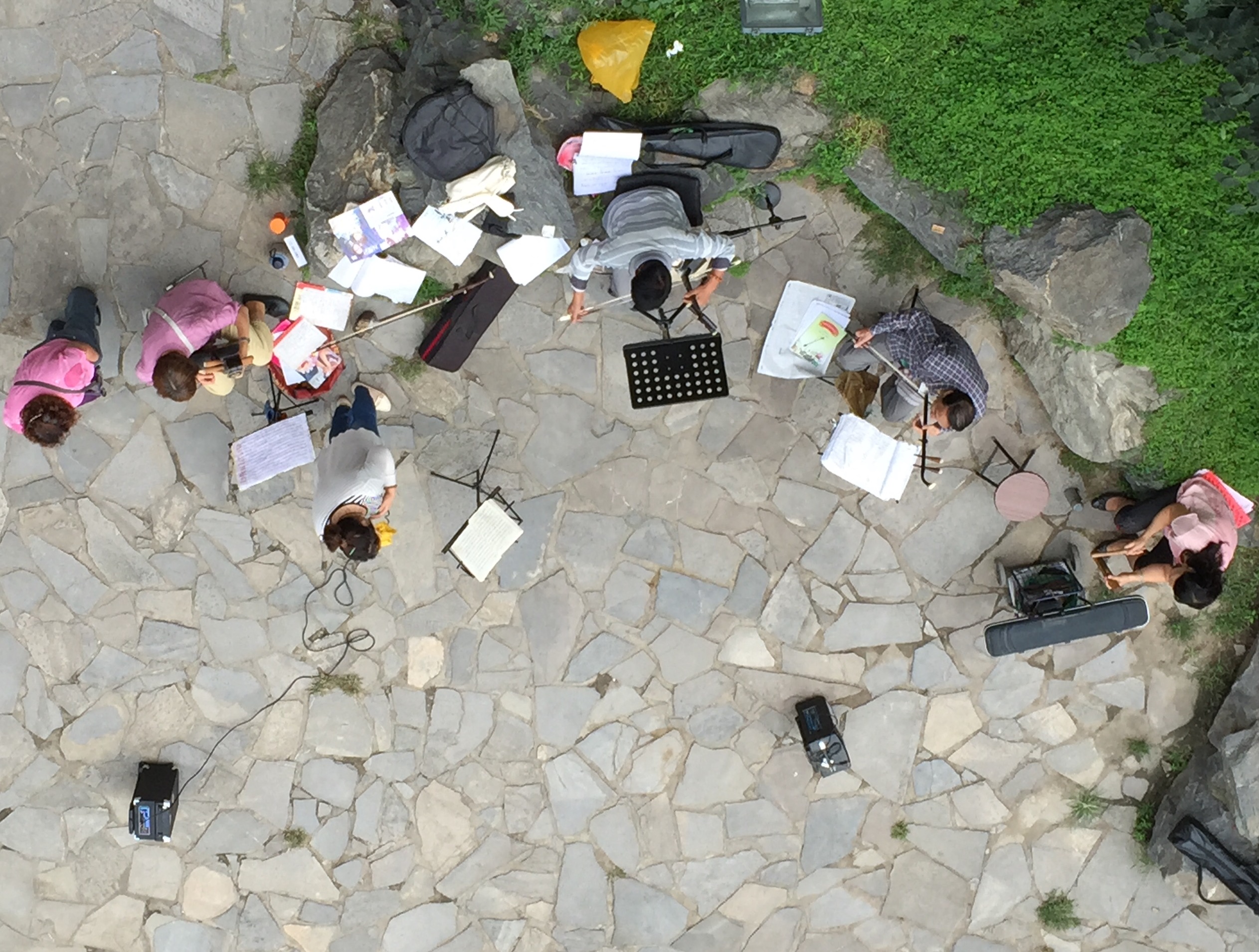 Musicians in park below Xian walls
Looking out from the parapet we could see groups of musicians playing Chinese music in the parks below us. The music reminded me somewhat of an Irish music seisiun. Some of these groups of musicians are very organised and have small amplifiers. Others just seem to assemble one by one and join in as they arrive. It was lovely to hear the music wafting up over the walls.
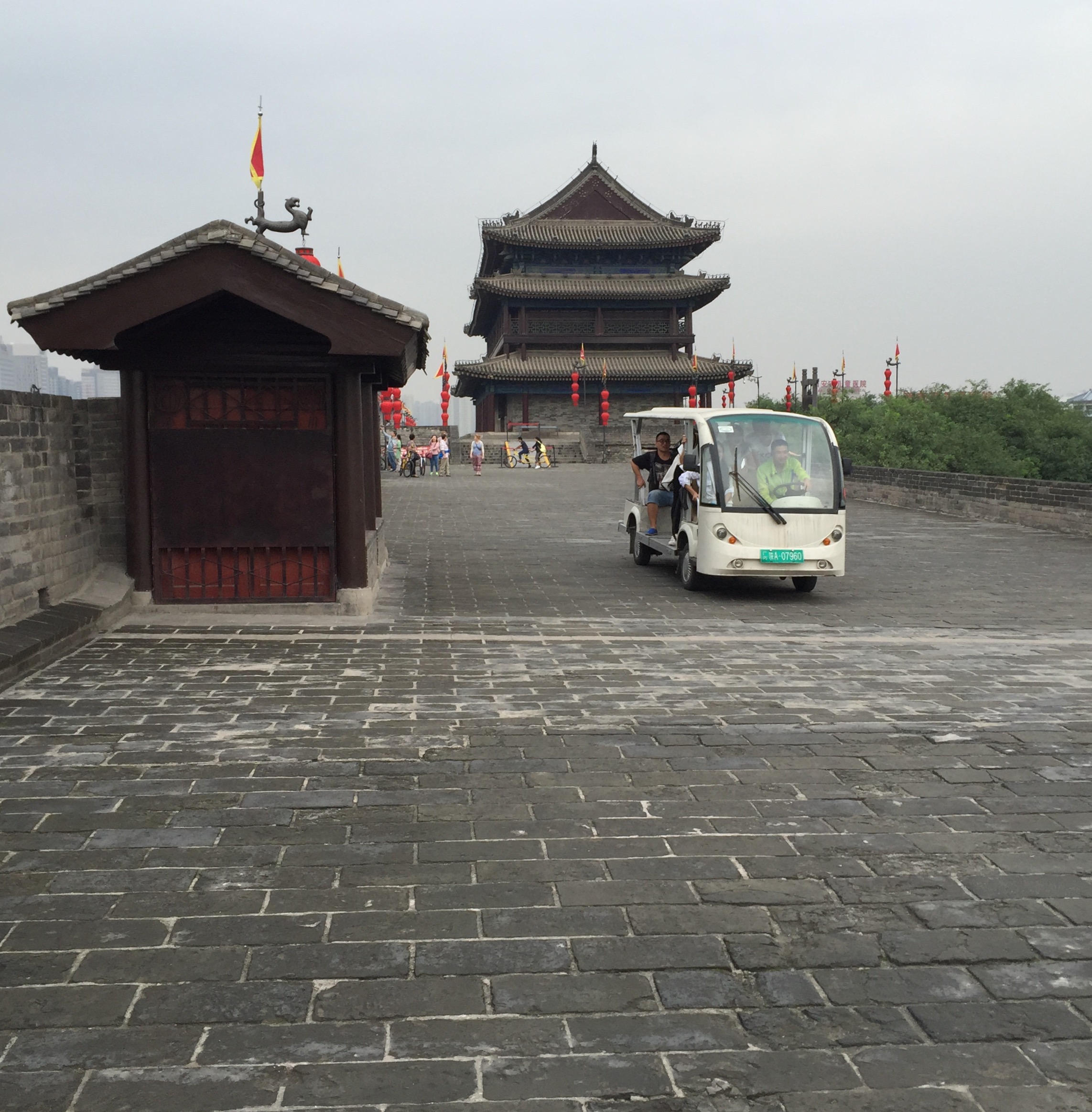 Tourist transport on Xian walls
Again we were attracting attention and the most interesting aspect of this attention was a Chinese army battalion who were walking the walls and wanted to have their photographs taken with us. These soldiers appeared to be recruits and were also visitors to Xian. They were smiling, saying hello, the only word they seemed to know and shyly indicating that they would like to have a photograph with us. We duly obliged. We walked two sides of the walls and decided to get off in order to walk through the Muslim quarter once again.
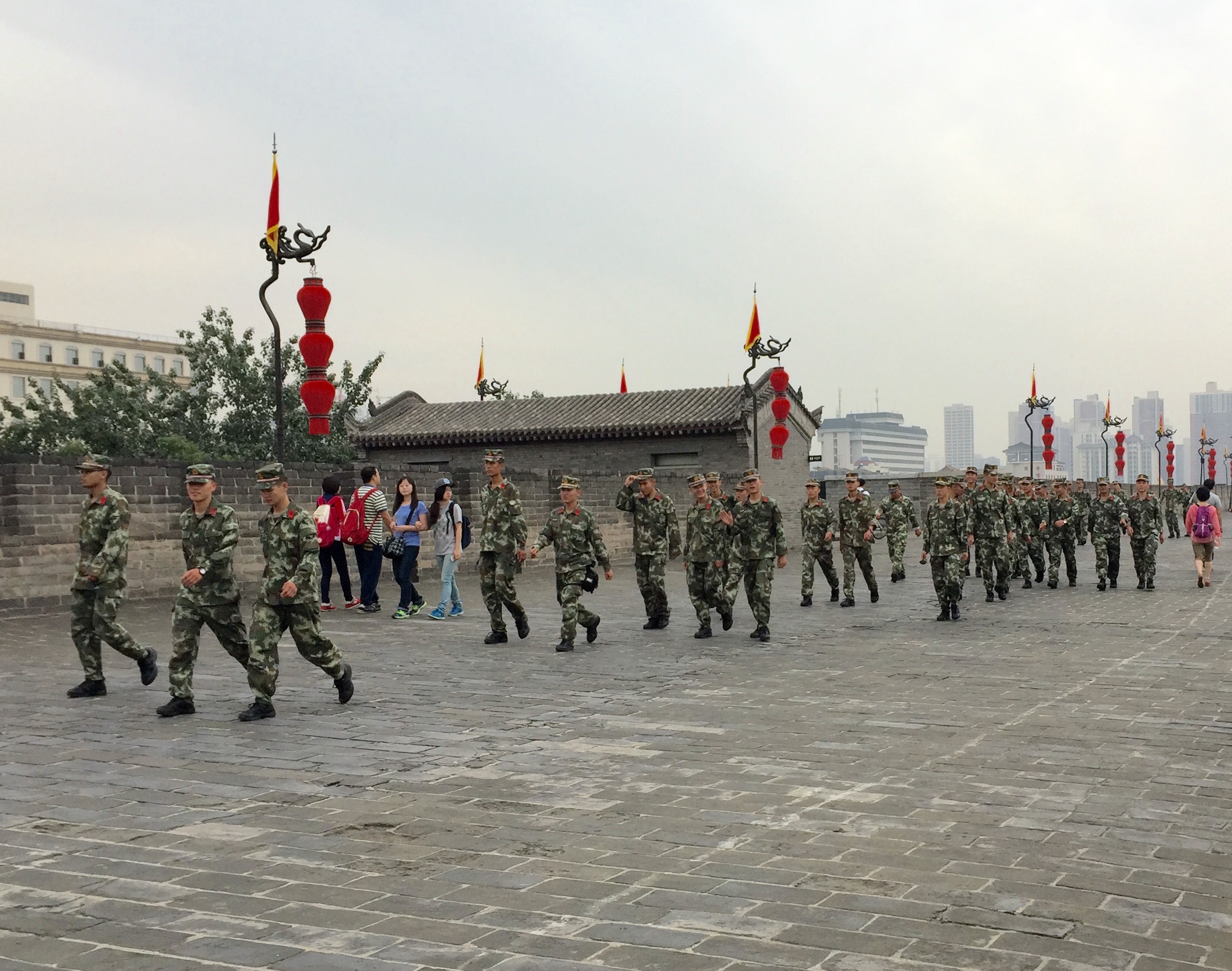 Chinese soldiers sightseeing on Xian wall
As experienced the previous afternoon the quarter was a hive of activity, a riot of colour and even more crowded. What was noticeable today in terms of food was the different types of breads, mainly flatbreads, the meats being cooked on the side of the street, peanut candy being pounded with mallets. You can also see the candy man stretching the mixture from a hook in a post on the side of the street and extending it to about 8 feet in length. Ed was invited to swing the mallet which you do with a second person and therefore have to fit in with the rhythm of alternating swings.
 Stretching candy mixture
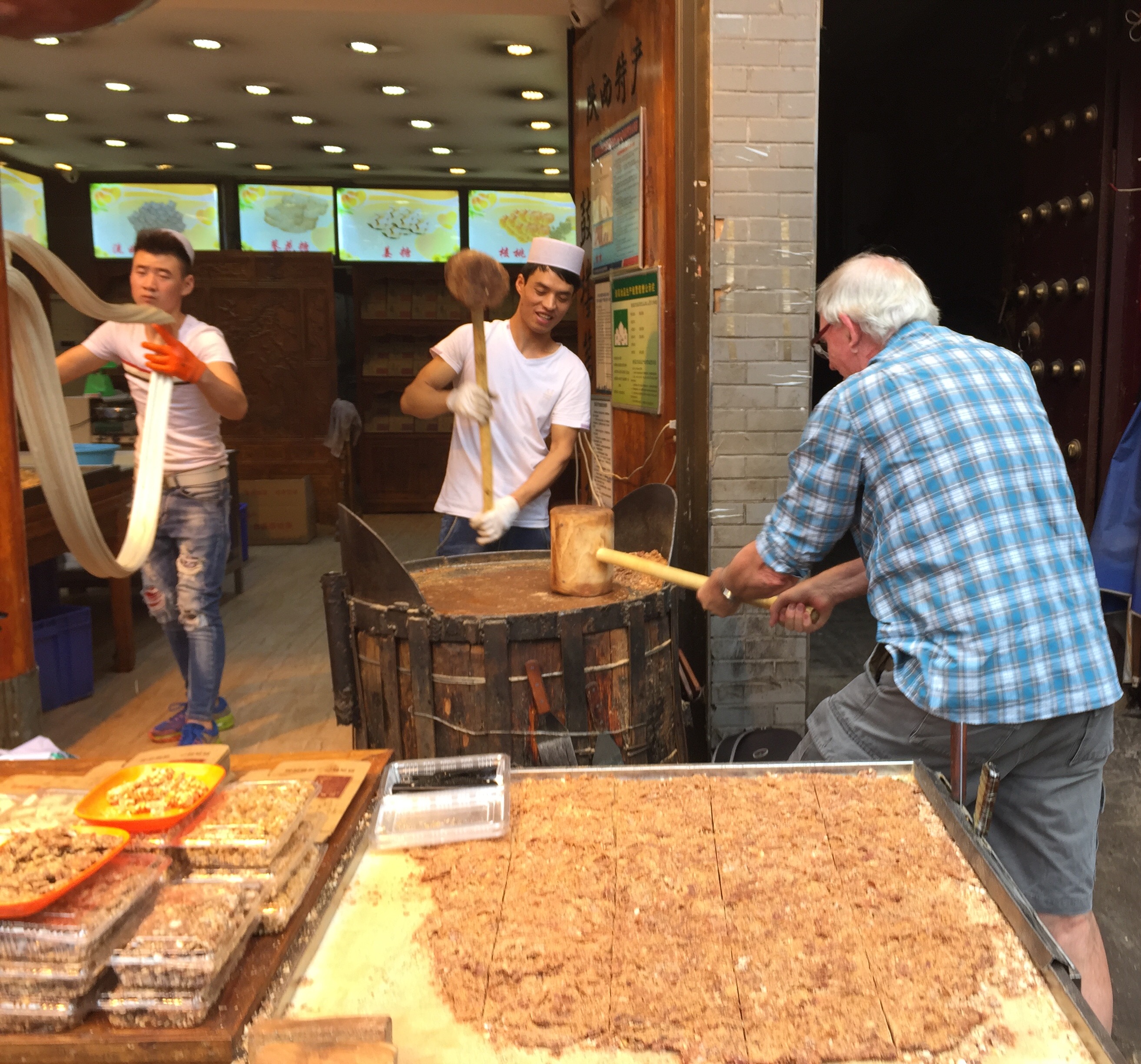 Ed getting into the rhythm
 Muslim quarter market
The variety of fruits, nuts and spices in a multitude of forms is very attractive. We wandered further the Muslim quarter and the market and towards the end there was an open market area. Almost on the edge of the area there was a woman with a butcher stall who was butchering the meat by the side of the street. It was fascinating to watch her at work. Another interesting sight were some card games taking place in back streets and away from prying eyes.
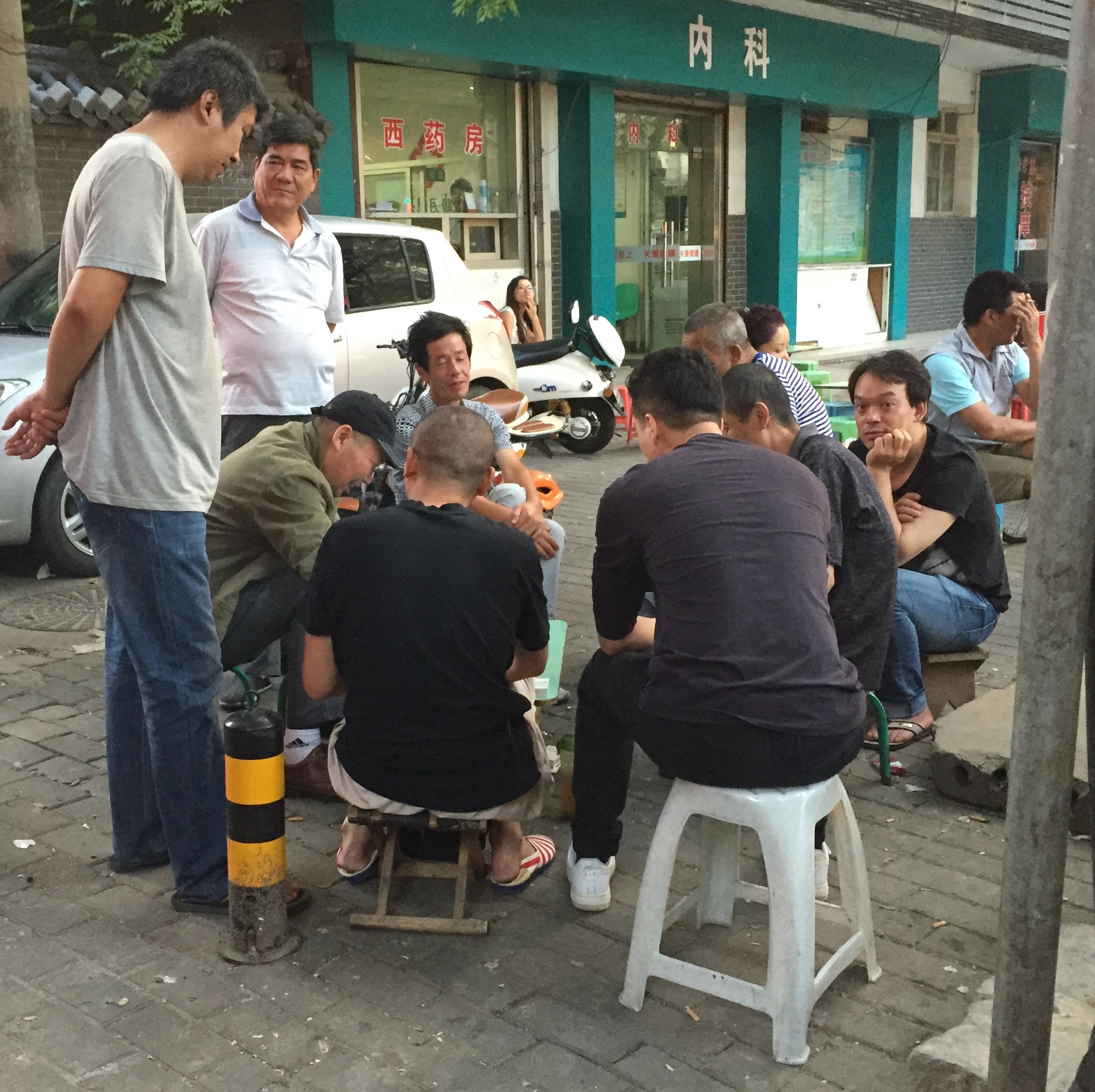 Card game in progress
 The Butcher Girl
We made our way back to the area where our hotel was located and myself and Ed went
 Anita, Anil and Kelly at dinner
in search of lunch. We settled on a small family run place which was very quiet. We picked a dish from a photograph on the wall as there was only a Chinese language menu available and in fairness to the owner he made efforts to communicate with us but we did not manage to understand each other. The owner was obviously fascinated by us and suggested that we should eat with a spoon but we opted to use chopsticks. The owners young daughter came into the restaurant and sat down watching us eat. The meal for both including two beers came to 36 Yuan or just under 6 U.S. Dollars.
That evening most of our overall group ended up back at the same restaurant and the
 Xian street at night
owner welcomed me with a handshake thinking that I had brought the group to his restaurant. Once again our guide Anita picked a selection of dishes which some of us shared and she also helped to select individual dishes for those who did not wish to take part in the shared dishes.
As we were making our way back to the hotel we came upon people ballroom dancing in a nearby park and we stopped for a while to watch the dancers.
 Dancing in the moonlight
 Ballroom dancing at night in Xian
Monday 14th September Xian to Lanzhou
On the road by 7.00 this morning as we have over 600 kilometres to cover today. The trip through the countryside was a new experience as the landscape changed to a scenery of sandstone mountains and tunnels. We passed through the longest tunnel on our journey so far at 12.6 kilometres (approximately 8 miles). One of our bathroom breaks was at a service station in an area where apples and pears were produced. We had three fruit sellers arrive on our truck and it was difficult to persuade them to leave but eventually left after some people purchased their fruit.
When we got to Lanzhou we were pulled over by the local transport police but after 5 minutes of explanation by our guide Anita we were on our way
 Fruit sellers on the road to Lanzhou
again and located our hotel.
After we had booked in we wandered through the streets looking for a restaurant. The night markets were in full swing. We eventually stopped at an unusual restaurant where the manager had a reasonable understanding of English. The method of operation for this restaurant was that you took a basket and picked your meat and vegetables from display shelves.  When you had finished your selection you took your basket to the counter where you paid on the basis of what you had selected. My basket came to 25.50 Yuan (just under 6 U.S. Dollars). My basket was tagged and sent to the kitchen to be cooked. I was given a number which was announced when the food was ready. I had selected some chicken skewers, pork, broccoli, mung beans, mushrooms and Chinese cabbage.
After dinner it was back to the hotel to sort out a small bag for our trip up to Tibet. We were leaving our large backpacks with Penelope our truck as we would be travelling up to Lhasa on the train.
 On the road to Lanzhou
 theoldmanontheroad